Chronicle Editor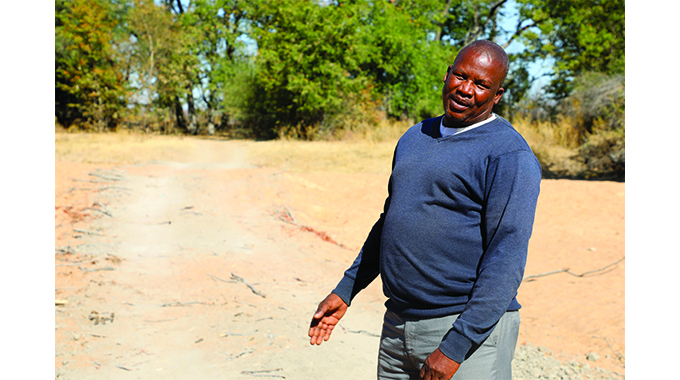
Vusumuzi Dube, Zimpapers Elections Desk
SINCE assuming power, President Mnangagwa’s Second Republic has been characterised by a strong emphasis on inclusivity and development, living up to the commitment that no individual or community should be left behind.
In line with this commitment, one noteworthy example of the government’s efforts can be seen in the upliftment of the San community in Tsholotsho.
By recognising the unique challenges faced by this historically marginalised group and implementing targeted initiatives, the government is working to bridge the gap and create opportunities for the San community, reflecting a heartfelt dedication to the principle of leaving no one and no place behind.
President Mnangagwa’s administration has managed to implement various empowerment initiatives, social programs, and cultural preservation efforts in a bid to uplift the San community and promote their integration into the socio-economic fabric of Zimbabwe.
From educational initiatives aimed at ensuring access to quality schooling, to economic empowerment programs that enhance self-sustainability, and cultural preservation projects that honour the rich heritage of the San people, the Second Republic has continued to deliver on its developmental objectives.
So impactful have these initiatives been such that they will have a lasting impact not only on the San community but also on the broader society, as increased inclusion and opportunity for one marginalised group sets a precedent for the equitable development of all communities within Zimbabwe.
In the spirit of leaving no one and no place behind, President Mnangagwa’s Second Republic stands out as a beacon of hope, seeking to address historical inequalities while fostering a united and thriving nation.
Known as the Bushmen, abaThwa in isiNdebele and Basagwa in Kalanga, the San inhabit remote areas of Southern Africa, in Angola, Botswana,
South Africa, Zambia, Namibia and Zimbabwe. In modern day Zimbabwe, the San community is found in Matabeleland North’s Tsholotsho District and Bulilima District in Matabeleland South where they have lived under the dominion of BaKalanga and Ndebele ethnic groups for the past century.
The San community has over the years raised concerns on marginalisation which has seen them face high levels of impoverishment and lack of key identity documents. In a bid to resolve their plight, the Second Republic under the leadership of President Mnangagwa committed itself towards the development of the area which saw 4 000 Identity Documents being issued during the recent special exercise by the Civil Registry Department.
The government also built Mtshina Primary School in Gariya Village, which became the first primary school in the San community and was commissioned in December 2019 by the Ministry of Primary and Secondary Education. The establishment of the school effectively reduced the walking distance for the learners who were walking 20 kilometres to access education.
In 2021, three students from the San Community made history by enrolling at the Midlands State University for degree programmes, something that had never been achieved by children in that community before.
Projects so far identified by line Ministries to improve the livelihoods of the San communities include goat rearing, market gardening and dam scooping. The Ministry of Primary and Secondary Education has since met with the Tsholotsho Rural District Council to identify possible sites on which to build primary and secondary schools.
In March this year, the government installed the inaugural Chief Goledema as the Second Republic moves to address concerns of this previously marginalised community.
Chief Goledema (59), born Christopher Dube, became the first chief from the San community after they lobbied Government to have a traditional leader.
In an interview with Zimpapers at his homestead last week, Chief Goledema said the journey they had travelled to date was testament to the Second Republic’s commitment to uplifting the San community.
He revealed that over the past couple of years, the San community has made huge strides from getting formal employment, education and even the revival of their culture through his installation as the inaugural chief of the area.
“When you look at where we are coming from and where we are today, it is honestly shocking. At first it was even difficult to believe that there was such a community living in these backward conditions but the Second Republic took our plight and delivered on their promise of leaving no one and no place behind.
“I am confident that in the next five years, we will be very far and we will also have our language being revived with our children getting formal education and employment and also having the community as a whole getting a number of developmental projects,” said Chief Goledema.
He noted that in terms of education, not only did the Second Republic lead the way in the construction of schools for the San community but they had also provided employment through the Zimbabwe Prisons and Correctional Services and Zimbabwe Parks and Wildlife Management Authority.
“Right now, we have an intake of 15 that is training to be part of the Zimbabwe Prisons and Correctional Services (ZPCS). This is after two other initial intakes, which means so far, we have about 50 of our children who have been trained and employed under prisons.
“Zimparks has also taken some of our children, which is also quite impressive. To add on to this is the number of children that have also managed to get places within our universities. This has honestly gone a long way in having our children avoid the issue of drug and substance abuse, through these opportunities availed to them by the government,” said the Chief.
He further commended the government for the documentation blitz and revealed that previously, a majority of the San and also neighbouring communities in Tsholotsho did not have any form of documentation.
“The government helped us a lot to an extent that at times we even joke about it while we relax, asking each other if there is anyone who still does not have any documentation. The few that do not have maybe could have crossed to Botswana during this period but the government has promised to also assist those that missed the blitz.”
In the long term, Chief Goledema said they wanted to take advantage of their proximity to the Hwange National Park to identify sites and construct lodges so as to further improve their Gross Domestic Product.
Turning to the revival of their Tjwao language, Chef Goledema said the challenge was that the youth do not want to learn the language but they were working on rebuilding the interest with their local school now offering it as an examinable subject.
“We are continuously encouraging them to take advantage of the few elders who are still there and can speak the language so that we also have our language out there.
Government is also assisting us, where the Education Ministry is coming through to further research on our language, with the aim of also having our language included in the curriculum.
“We have two of our young boys who are studying at the Midlands State University, who are on work related learning here at Mtshina Secondary School. This in itself is a welcome development because the entirety of our children are attending that school and they also wish to be examined in their native language,” said Chief Goledema.
Zimpapers also spoke to Tsholotsho Council chairperson, Councillor Esau Siwela who lauded President Mnangagwa’s administration for their role in the upliftment of the San community.
“When President Mnangagwa reiterated on his mantra of leaving no one and no place behind, people just dismissed him but just go to the San community and you will witness for yourself that surely the President is a man of his word.
“We talk of documentation, schools, income generation projects and even borehole drilling, the government has surely moved in to ensure that the community rids itself of the marginalised tag,” said Clr Siwela.
He expressed confidence that President Mnangagwa’s goal of having an upper middle-class economy by 2030 was well on course with such projects as were being implemented in Tsholotsho.
“It is not just about the San community but Tsholotsho as a whole. We were recently granted a town board status, which shows you how serious the government is in having this upper middle-class economy, which I feel can even be achieved well before the targeted year 2030,” said the council chairperson.
As President Mnangagwa stated, “Our vision is of a Zimbabwe where no one is left behind, where every community, regardless of their background or location, has equal access to resources, opportunities, and a chance to thrive.”
This vision has guided the comprehensive approach adopted in uplifting the San community, ensuring that they are not only empowered economically, but also supported in preserving their rich cultural heritage.
Through educational initiatives, economic empowerment programs, and cultural preservation efforts, the government has created an enabling environment for the San community to flourish. Access to quality education has opened doors for their future, economic empowerment programs have enhanced self-sustainability, and cultural preservation projects have celebrated their unique identity and contributions to the nation.
The impact of these initiatives extends beyond the San community in Tsholotsho, inspiring hope and setting a precedent for equitable development throughout Zimbabwe.
By uplifting one marginalised group, President Mnangagwa’s Second Republic embodies a transformative journey towards a united and inclusive nation.
While challenges may still exist on the path to full inclusivity, the progress witnessed in Tsholotsho serves as a model for how targeted interventions and genuine commitment can bridge long-standing gaps.
By continuing to prioritise the upliftment of marginalised communities, President Mnangagwa’s government is paving the way for a more prosperous and equal Zimbabwe. In the spirit of leaving no one and no place behind, President Mnangagwa’s Second Republic remains steadfast in their dedication to a Zimbabwe where every citizen, regardless of their background or location, has the opportunity to thrive, contribute, and shape the nation’s future.



 Online Reporter