Online Reporter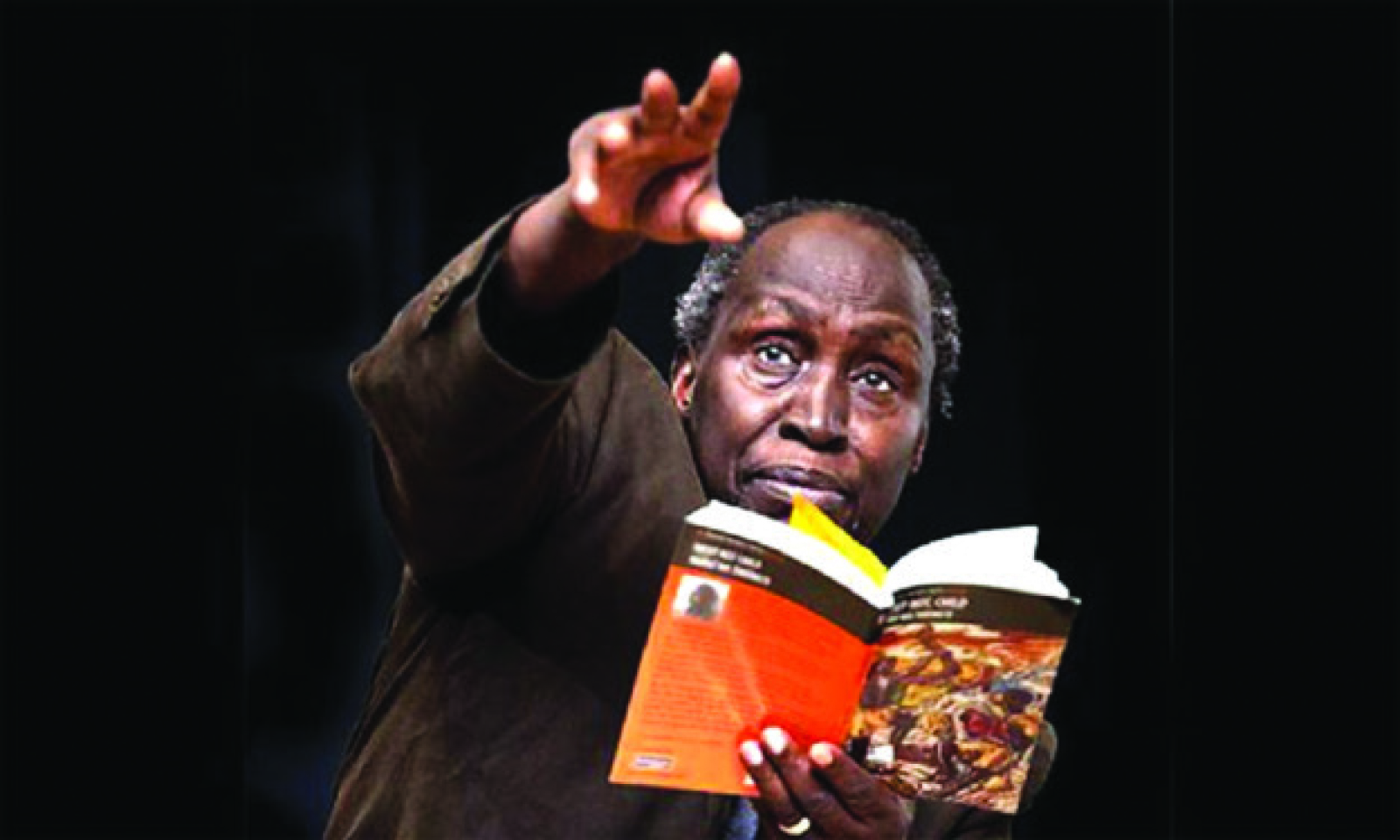
Elliot Ziwira-At the Bookstore
SATIRE has always been literature’s most incisive mirror — cutting through the layers of social facade to reflect humanity’s true face.
Dr Samuel Johnson, as cited in Pollard (1970:2), defined satire as “a poem in which wickedness is censured.”
Although his description focuses on verse, satire is not confined to poetry alone.
It is a literary mode that crosses into prose, drama, essays and even popular culture. Its aim is not merely to entertain, but to expose human folly and vice, often with the hope of correction.
Jonathan Swift, the 18th-century English satirist, put it more pointedly when he notes: “Satire is a sort of glass, wherein beholders generally discover everybody’s face, but their own.”
The satirist holds up a mirror to society, reflecting not only its strengths, but also its weaknesses. He is often moved by a deep concern for moral decay and social injustice, and therefore, cannot help but point out the flaws he sees. As a kind of moral commentator, the satirist defends truth using tools drawn from what literary scholars refer to as the satirist’s spectrum – wit, irony, sarcasm, ridicule, cynicism and parody.
These devices are used not only to provoke laughter, but to encourage self-examination as well. The satirist compels readers to reflect on their own conduct and that of those in positions of influence through ridiculing of societal weaknesses.
Notably, satire has long been a vehicle for moral instruction. African folklore, for instance, uses animal characters to mirror human traits in a way that is both humorous and instructive.
In such stories, the clever hare, the boastful lion, and the slow but wise tortoise are all used to show how human beings navigate the intricacies of life. While the tales may amuse, they also carry deeper meanings about justice, honesty, humility, and responsibility.
Fables, allegories and parables rely on the same principles.
On the surface, they may seem like simple tales, but a closer reading reveals deeper social and moral commentary. Meaning operates at two levels: the literal, which appeals to our sense of humour and enjoyment, and the figurative, which offers a lesson.
The satirist does not flatter his audience. He exposes, unsettles, and challenges. His duty is not merely to amuse, but to hold society accountable by highlighting its contradictions, injustices, and absurdities.
The cartoonist, with his economy of words, power of caricature and depth of foresight, is one intriguing satirist. He captures societal woes, expectations and glee – social, political, or economic in a unique way. As an artist, the satirist functions as a teacher and a preacher. However, not all artists can use the satire trope.
In African literature, satire has long served as a tool of resistance and moral engagement.
Through irony, wit, exaggeration, and allegory, writers expose the shortcomings of the post-colonial nation-state in Africa, capitalist greed, cultural decay, and spiritual confusion. The satirist, then, is not a mere jester; he is a custodian of values and a voice for the voiceless.
One such powerful voice is Ngugi wa Thiong’o, the Kenyan literary titan whose passing on May 28, 2025, has been felt deeply across the continent.
His novel “Devil on the Cross” (1980), first written in his native Gikuyu while in detention, stands out as one of Africa’s most potent satirical works.
Ngugi and the weaponisation of satire
In “Devil on the Cross”, Ngugi uses satire to confront a society entangled in the contradictions of neo-colonialism.
The novel follows Jacinta Wariinga, a young Kenyan woman who becomes both a victim and survivor in a society ruled by the twin evils of capitalist exploitation and moral hypocrisy.
The narrative is framed around a surreal “Devil’s Feast” held in Ilmorog, where the country’s businessmen, politicians, and foreign investors – gather to boast about how they exploit the underprivileged.
This satirical device, exaggerated, yet disturbingly believable, allows Ngugi to unmask the grotesque avarice, corruption, and betrayal plaguing the family unit, community and state.
Through biting humour and allegorical scenes, Ngugi makes it clear that colonialism may have been overthrown, but neo-colonialism remains, where local proxies serve foreign interests.
This message is driven home when Wariinga, having suffered abuse, abandonment, and mistreatment, finally finds her voice, and takes a radical stand against her tormentors. She is symbolically transformed from victim to fighter, signifying potential collective awakening.
Here, Ngugi’s satire is not frivolous. It is driven by a deep moral outrage. He believes, like many African writers of his generation, that literature must serve the people. The novel condemns not just individuals, but systems that entrench inequality and stifle shared aspirations.
In this way, Ngugi assumes the role of the satirist as conscience-keeper. He speaks truth to authority for the sake of social justice.
Through characters like Wariinga, Muturi, and Wangari, “Devil on the Cross” critiques the notion that education, religion, or wealth automatically confers moral authority. Instead, these pillars are portrayed as compromised; tools of domination when unmoored from ethics.
Yet, as Ngugi shows, satire is not always about despair. It is also about consciousness.
The exaggerated world he builds, where avarice is publicly celebrated, is designed to shock readers into awareness. Laughing at the absurdities, readers begin to recognise the traits in their own societies and are challenged to confront them.
While Ngugi’s “Devil on the Cross” is steeped in African realities, its concerns are global. Avarice, corruption, hypocrisy, and the manipulation of religion and politics are not uniquely Kenyan. They are issues that reverberate across the continent, and indeed, the world.
As an allegory, the book can be read from two angles, which places it on the same pedestal as Jonathan Swift’s “Gulliver’s Travels” and John Bunyan’s “The Pilgrim’s Progress”. Though the context is different, the message mirrors Ngugi’s: power, when unchecked, corrupts, even when it begins with noble intentions.
However, Ngugi’s satire is not cold and clinical; rather, it is warm with cultural intimacy.
He draws on oral storytelling traditions, proverbs, and community experiences, making “Devil on the Cross” both a literary and a political intervention. His use of Gikuyu, and later English, reinforces the idea that satire, like all literature, must speak in the people’s voice to be effective.
Satire in Zimbabwean
literary tradition
Zimbabwe, too, has a rich tradition of satire, evident in the works of writers such as Dambudzo Marechera, whose “The House of Hunger” captures post-colonial alienation, and Ignatius Mabasa, whose humour often masks biting social critique.
Also, our folklore is awash with trickster tales and poetic jabs that expose greed, injustice, and misplaced pride.
The role of the satirist in such contexts is unambiguous. He is not merely an entertainer. He is a mirror, a prophet, and a moral compass. Whether in fiction, poetry, drama, or journalism, satire enables truth to survive in compromised spaces.
A reading of Ngugi wa Thiong’o reveals that the satirist does not speak for applause. He speaks so that truth is not buried; so that society remembers what it has become and what it can still be.
When done well, satire creates space for self-critique without descending into despair. It allows people to laugh at themselves, and in so doing, to heal, reform, and rise again.
Ngugi’s work explores the power of language in awakening consciousness. It continues to challenge and inspire; urging readers to examine the communities they live in, and their role within them.
In societies where truth appears relative and ideals are easily compromised; satire remains a vital tool. Indeed, laughter can be serious, and sometimes, it takes a joke to speak the hardest truths. And, when truth falls silent, satire speaks louder.
In every generation, therefore, truth needs defenders, and often, the satirist is the last one left standing.
For an immersive reading experience, visit Typocrafters (DigiHub) Book Shop at Herald House, corner George Silundika Avenue and Sam Nujoma Street in Harare.