admin
admin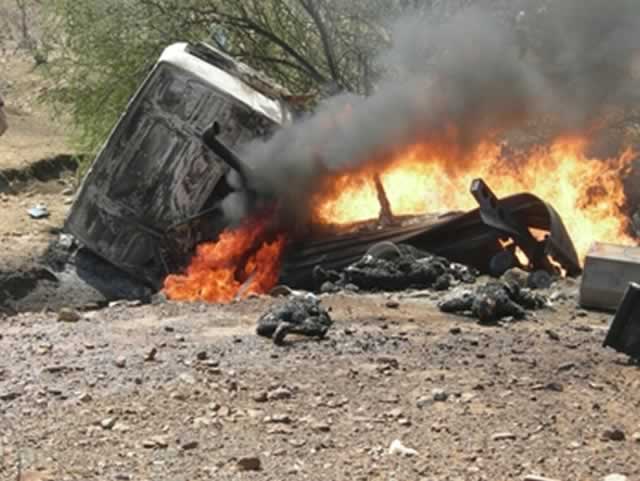
Herald Reporter
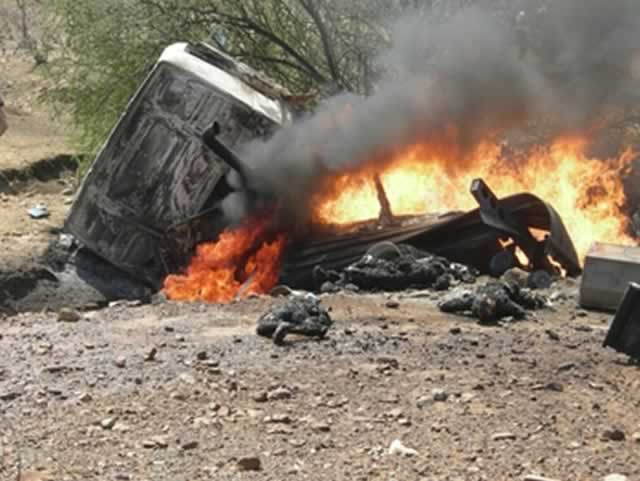
DEOXYRIBONUCLEIC ACID (DNA) profiling would have helped identify the horribly burnt victims, but Zimbabwe does not have a DNA forensic laboratory even though the technological breakthrough was made in the mid-1980s. DNA profiling (also called DNA testing, DNA typing, or genetic fingerprinting) is a technique employed by forensic scientists to assist in the identification of individuals by their respective DNA profiles.
DNA profiles are encrypted sets of numbers that reflect a person’s DNA makeup, which can also be used as the person’s identifier.
The director of pathology services in the Ministry of Health and Child Care Dr Maxwell Hove confirmed that Zimbabwe has not had a DNA forensic laboratory since 1980, a development that has seen most DNA tests being conducted in South Africa.
“The issue is being dealt with and we are trying to come up with the Coroner Law to be able to conduct DNA tests in the country,” he said.
“Government will pass the law soon in order to resolve the issue,” he said.
DNA profiling also helps in crime fighting because whenever a crime is committed, the perpetrator is bound to leave a trace of evidence, much of it unintentional.
Watching some American crime shows on television, one gets an appreciation of how traces of hair, skin, saliva, sweat or blood at a crime scene, all of which contain genetic material, DNA, can give away a suspect.
In these crime shows, forensic scientists are able to load the unique DNA profile recovered from a crime scene onto a system and match it to a database.
All this is not possible in Zimbabwe, despite the country’s famed literacy rate, the highest on the continent.
The lack of at least one dedicated forensic laboratory has hindered police and the justice system to solve crimes that have been pending for years.
On the other hand, the courts are grappling to deal with paternity disputes in maintenance cases, all of which can be solved by DNA
profiling.
Zimbabwe relies on South Africa for its DNA tests and the costs have been prohibitive.
South Africa has four DNA forensic laboratories to cover the whole country and these are situated in Port Elizabeth, Pretoria, Durban and Cape Town.
Last year, the African Institute of Biomedical Science Technology (AiBST) announced that it would set up the country’s first forensic laboratory, but the facility is yet to be launched. However, the institute’s founder, Professor Collen Masimirembwa, hinted that preparations for the setting up of the forensic laboratory are on course, with only a few loose strings yet to be sorted out.


 Online Reporter