admin
admin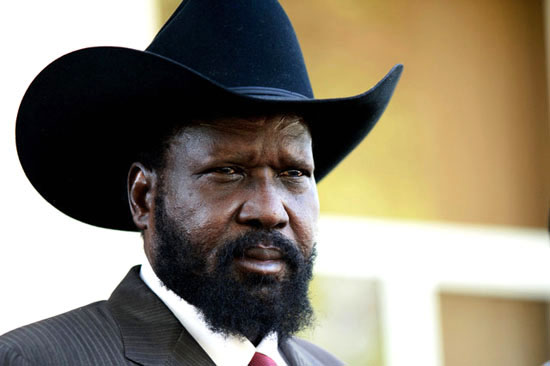
Baffour’s Beefs Baffour Ankomah
Before our very eyes, the regime change agenda to get the South Sudanese president out of power has started unfolding.
JUST listen to this one: The Economist, July 5, 2014: “Others say that South Sudan is simply not ready to run itself; foreign trustees should take over for several years, much as they did in Kosovo, East Timor, and Sierra Leone after their bloody conflicts. Local officials in South Sudan, about half of whom are said to be illiterate, would have to be trained anew.”
Well, last week I wrote in these columns: “ . . . As sure as the sun will rise from the east tomorrow morning, the Americans are going to press for the end of (President Salva) Kiir’s presidency (in South Sudan), unless their mischief is exposed and the whole of Africa begins to talk about it right now.”
Prophets, Jesus said, are never held in honour in their own home. Maybe since Zimbabwe is now my second home, I may be held in more honour here as a prophet than say in my native Ghana.
Which is why I have always wondered how all these prophets in Zimbabwe get away with it. For everywhere you turn, under a tree, in a classroom, under a bridge, you find one prophet or two, and they are prospering. Or are they?
Maybe there are more prophets now because the tendency today is to become a prophet by personal fiat. One does not even have to come out of bed.
And boy, do they not grow fast? The next time you see him, he is already an apostle. Thus, why we don’t have a pope yet in Zimbabwe, I don’t know. Maybe I haven’t looked hard enough.
No joke, I am looking forward, very keenly, to the first pope in Zimbabwe: Pope Trymore Maskati I. We shall see whether he will preach against sadza, and his wife will be one or two.
Or whether their first son will be called Angelbird or Reason or Sugar or Decision or Advance or Perish or Anything or Psychology or Forget or Anymore or Shame or Period or Manipulation or Drought or even Exuberant. But don’t worry just yet, just come with me to South Sudan. For the past two weeks, this ex-Ghanaian prophet has been writing in The Saturday Herald about President Salva Kiir Maryardit talking about attempts by the Americans to oust him from power because “they say that their companies are not allowed to invest in the oil industry here. But it is not our mistake,” Kiir added.
Now the Americans’ preferred choice for president is Riek Machar, Kiir’s former vice president turned rebel and opposition leader, who has offered, says Kiir, to chase away the Chinese and the other Asian oil companies in South Sudan and give everything to the Americans if they help him to become president.
“And they believe him,” Kiir adds sarcastically. “So this is my crime. I haven’t offered them what Riek has offered.”
Financial Times soft war
Dear readers, last week I said I had deliberately repeated here what I reported the previous week so that nobody would forget it when it finally came to pass. And right as I prophesied, it is coming to pass before our very eyes.
This week, the UK’s leading business daily, the Financial Times, reported under the heading, “Calls grow for sanctions on South Sudan officials”, that “Western and regional diplomats are pushing to secure support for UN sanctions against key figures in South Sudan’s civil war, as faltering peace talks resume in the face of looming conflict-related famine.
“In the six months of fighting since president Salva Kiir accused his dismissed deputy Riek Machar of plotting a coup — which Machar denies — the country’s army and civilians have become divided on ethnic lines.”
Take it from me: this is the first salvo in the soft war against President Kiir. And please don’t ask me who is behind it. For who already know. Modern warfare is conducted at two levels.
It starts with the soft war, the propaganda level, and escalates to the hot war, the bullets level. And the media are the vehicle through which the soft war is executed.
Living in the UK, I saw how effective the soft-war phase worked when they targeted President Mugabe from 2000 onwards.
It was total onslaught across the whole spectrum of the UK media, which incidentally has a massive influence on the reporting by the world’s media.
So in no time, the man who had been the darling of the British for the 20 years between 1980 and 2000 suddenly became a “Hitler”.
One British man, who will never, ever have the chance to meet President Mugabe, actually called to the BBC Radio 5 Live phone-in programme one morning to say that there were three men in the world he would never shake hands with: Hitler, Saddam Hussein . . . and guess the third man . . . Robert Gabriel Mugabe! I shook my head frantically as I drove to work that morning listening to the programme.
That is how the soft war works. It takes control of the mental faculties of the citizens of not only the war-mongering countries but also the citizens of the world at large, so that nobody will blink an eye when those powerful countries escalate the war to the bullet phase where they “shock” and “awe” their way through weaker countries and kill as many thousands of innocent people as they please.
So the Financial Times article on South Sudan, filed by one Katrina Manson from Nairobi, Kenya, should not be taken lightly. That is how the soft war starts — innocuously, and then drip, drip, drip, it becomes a mighty ocean ready to blow over tsunami-like.
The Zimbabwe experience
In fact at the height of the Zimbabwe onslaught, it became my hobby to cut out all the articles on Zimbabwe published in the UK — from the dailies, weeklies, magazines and, believe me, my haul came to a good mountain in 10 years.
I am keeping them in my personal library in Ghana for posterity, and particularly as teaching material for young African journalists whose eyes glaze over when they hear BBC, CNN, Financial Times, The New York Times, The Economist, The Times, The Guardian, etc, etc.
These are supposed to be the champions of the finest journalism in the world, but wait until you see the mountain of press cuttings on Zimbabwe that I have in my library.
It came to a point where my personal litmus test for fine journalism was how one treated the story of Zimbabwe. And not many of these so-called purveyors of fine journalism passed!
Anyway, let me bring you back to 2014. Katrina Manson files from Nairobi on South Sudan, saying: “Thousands have been killed in brutal ethnic reprisals in the world’s newest nation, one million have fled their homes and the UN has warned that 50 000 children could die this year as a result of the conflict.”
Truth or false?
Let’s stop here and do a textual analysis of the first three paragraphs of Katrina’s story.
Paragraph One: “Western and regional diplomats are pushing to secure support for UN sanctions against key figures in South Sudan’s civil war, as faltering peace talks resume in the face of looming conflict-related famine.”
Mark the words: “Western and regional diplomats”. I will concede “Western diplomats” to Katrina because they can say anything about African matters.
In fact I have always wondered how Western diplomats have the power to comment on, or interfere in, African internal affairs and yet African diplomats, say, in London or Washington, do not ever open their mouths to comment or interfere in UK and American domestic matters.
Is it because African diplomats have no teeth in their mouths or their tongues are short? Tell me.
So Katrina may be right about “Western diplomats” pushing for sanctions against South Sudan. But “regional diplomats”? Meaning African diplomats from “the region” — the East African region — “are pushing for UN sanctions against key figures in South Sudan’s civil war”?
And just look at the emotional blackmail softly thrown in by Katrina . . . “as faltering peace talks resume in the face of looming conflict-related famine”.
After reading this, anybody with empathy in his or her bosom will think about the victims of the impending “conflict-related famine” and say: “Heck, let’s get the bastards sanctioned. Or even shot!”
But are we very sure that “regional diplomats” are pushing for such sanctions? Or maybe yes. If the MDC could ask for Western sanctions against the same Zimbabwe they wanted and still want, to rule, what can’t regional diplomats ask for?
Truth, half truth and outright lies
So let’s go to Paragraph Two: “In the six months of fighting since President Salva Kiir accused his dismissed deputy Riek Machar of plotting a coup — which Machar denies — the country’s army and civilians have become divided on ethnic lines.”
This is a bunch of truth, half truth, and outright lies. Let’s begin with the truth. The fighting started in Juba, the capital, on December 15, 2013, so it is seven months from now. True.
But what Katrina does not add is that the fighting has now petered out into a war of attrition, as Machar and his supporters have been squeezed to their home state of Upper Nile close to the Ethiopian border.
From there, they have intermittently tried to spread the fighting to the oil fields in the two neighbouring states adjoining Upper Nile State, and that, in a sum, is what the fighting amounts to.
Transplant this to Zimbabwe: From where Harare is located, the fighting in South Sudan would be somewhere around Beitbridge and its environs. The rest of the country is free of the fighting.
South Sudan has 10 states or provinces as Zimbabwe and seven of them are absolutely untouched by the fighting and people there are living their normal lives.
Last month, I stayed for 23 days in South Sudan, so I know what I am writing about. I was able to travel 192km from Juba to Nimule on the Ugandan border and nary a bullet was fired on the way.
So by saying that “the country’s army and civilians have become divided on ethnic lines,” Katrina is pushing the envelope. Yes, it’s true that Riek Machar is a Nuer and those fighting for him are predominantly Nuer who killed Dinkas indiscriminately as they retreated from Juba to their home state up north. The Nuer in fact make up 65 percent of South Sudan’s armed forces. But it is not true to say that the “army and civilians have become divided on ethnic lines”, for there are still thousands of Nuer soldiers serving in Juba where the Dinka president, Salva Kiir, holds sway, a city where thousands of Nuer civilians also live in peace and safety and where Nuer officials and MPs still serve in high positions in Kiir’s government and in Parliament.
In my interview with Kiir on June 24, I asked him about an allegation making the rounds internationally that his forces deliberately targeted a particular ethnic group during the December fighting. Is it true, I asked him?
“It’s not true,” he said. “Look, if you go out of this room right now and ask the soldiers that you saw coming in, standing around the office here, go and ask them where they come from, you will find Nuers there.
“If our soldiers were targeting the Nuer, as it has been claimed, why would they not kill these people? The deputy commander of the Presidential Guard is a Nuer and he is still at his post.
“The accusation is not true. It is Riek Machar who is doing it. Because he has killed all the Dinkas around him, he hopes that I will do the same here so that we become equal criminals. But I have not done it.”
So Katrina is just playing with the emotions of her readers. I was in South Sudan myself, and I can confirm that “the country’s army and civilians have (not) become divided on ethnic lines” as she reports.
Of course there are ethnic allegiances or sympathies, which are natural everywhere in the world, but to say the country’s army and civilians have in reality become divided on ethnic lines is a bit below the belt.
Rubbish statistics
And then Katrina does one of those things that always bring a wry smile to my old African lips: “One million have fled their homes,” she wrote, “and the UN has warned that 50 000 children could die this year as a result of the conflict.”
So who actually counted this one million who have fled their homes? This is one of those statistics conjured up in the West to demean Africa — all the time.
It is like the one that says Africans live on less than $2 a day. So how do they know if they don’t come to any African home to see what is being eaten? To this day, the majority of Africans still live in rural areas where they grow their own food, vegetables, and fruit trees. Or fish in the streams and rivers or catch game in the bush. And all these are organic.
If what the African villager gets from his farm or from the bush and rivers for free is bought in a supermarket in London or New York, it would cost an arm and a leg. Not $2.
I live in the UK so I know. Organic produce cost so much in the supermarkets that only the intrepid ventures near those shelves. The ordinary Briton does not buy those things because he cannot afford them.
But because the African is getting this for free from his farm or from the bush, it is not counted as money. And he ends up living on less than $2 a day, a demeaning statistic thrown up to hold the African in utter contempt.
At New African where I am editor, I banned the use of such statistics. It’s just rubbish.
The same can be said of the UN’s “50 000 children [who] could die this year as a result of the conflict” in South Sudan. Pure cant! If fact if the UN would stop canting about such statistics, they might get somewhere.
So let’s get somewhere with Katrina’s Paragraph Four. She reports: “Western backers who helped create South Sudan which in 2011 seceded from the Khartoum regime in the north following decades of war, are considering punitive sanctions against top commanders and advisers.”
Remember, a “regime” is the modern insult used to describe a government the West doesn’t like. So they would never say the Ghanaian regime, they say the Ghanaian government.
The time they liked President Mugabe, his government was a government. When they didn’t like him, the same government became a regime.
Who are they?
But let’s concentrate on Katrina. In Paragraph Five, she identifies who these “Western backers” are. “The EU yesterday announced sanctions against the two military leaders active in the [South Sudan] conflict,” she writes.
“The EU will identify the pair today, but insiders said they were playing catch-up to the US, which in May issued the first asset freezes and travel ban related to the war, targeting Peter Gadet, an army commander loyal to Mr Machar, and Major General Marial Chanuong, head of Mr Kiir’s presidential guard.”
So we now know the “Western backers” – the EU and the US. Remember I reported over the last two weeks that President Kiir said it was the Americans and the EU that were putting pressure on the IGAD countries to change the government in Juba. So Katrina is right, the EU and the US are the ones pressing the buttons in South Sudan.
In Paragraph Six, Katrina quotes Alex Rondos, the EU special representative for the Horn of Africa, as saying: “This is not the last word, it’s the first world on this issue.” Rondos went further to say “the threat of further sanctions would hang over other key actors in the war like the sword of Damocles”.
And here the bottom fell out – in Paragraph Seven: “A US official yesterday confirmed the administration’s support for moving forward with UN Security Council sanctions, although the official declined to reveal targets,” Katrina reports.
So, like they tried to do with Zimbabwe, the Americans want to escalate the South Sudan matter to the Security Council. And nobody should believe that they would only ask the Council to impose sanctions on sinning army commanders. No. They will go for the real men at the top, including Kiir himself and his government officials in Juba.
China thrown in
And listen to this, in Paragraph Eight. Katrina writes: “China, a significant investor and oil customer for South Sudan, is also prepared to back UN sanctions, according to people familiar with its position.”
Amazing. Who are these “people familiar with” China’s position at the UN who are giving Katrina the uneducated leak that China, “a significant investor and oil customer for South Sudan”, will indeed support UN sanctions against the same South Sudan, when China and Russia vetoed such sanctions against Zimbabwe, and did not support such sanctions against Syria?
And more to the point: Riek Machar is threatening to sack the Chinese and the other Asians from the oil fields of South Sudan and hand everything over to the Americans. Would the Chinese be so blind and foolish to cut their noses and hand them piece by piece to the Americans?
But people who are not conversant with the intricacies of South Sudan’s affairs will read Katrina’s article and think, hey, if the Chinese are prepared to support Security Council sanctions against Kiir and his government, then Kiir must be truly monstrous, and so God bless him if he is overthrown or dispatched to an early grave. It is a tactic of the soft war.
Now the crescendo
In Paragraph Nine, Katrina reaches her crescendo by revealing: “Sanctions are yet to target Mr Kiir or Mr Machar but could now do so. ‘The idea is to sanction the circle around these two … but everyone knows they are the ones [to get] at the end of the day’, said a Western diplomat familiar with the UN.”
So you have it! “Everyone knows [that Kiir and Machar] are the ones to get at the end of the day”. I liked the mention of the two names in the same breath, Kiir and Machar. It was done for a purpose, because it would be a defeat of the soft war at this stage to mention Kiir alone as a target of UN sanctions.
But you would be a fool to believe that Machar, America’s preferred choice for president, will ever be tarred by any serious sanctions.
It didn’t happen in Zimbabwe where even the goats owned by President Mugabe and his top officials were sanctioned by the Americans and their European cousins, but not one MDC official ever came to be put on the sanctions list.
UN sanctions for what?
So, tell me, what purpose would Security Council sanctions serve in South Sudan? To end the war? To punish human rights violators? To weaken the president and his government for the jump?
South Sudan’s foreign minister, Dr Bernaba Marial Benjamin, told me in another interview, two weeks before the president’s interview: “We are seeing at the UN Security Council preference towards punishing South Sudan. With the recent troubles, you can see the Security Council and human rights groups saying there are human rights abuses in South Sudan, and so let’s punish South Sudan.
“But our message to them is that South Sudan does not need punishment, but peace, stability, and help. The priority now is peace, so work towards peace and help this young nation.”
Dr Benjamin went on: “We are not saying that South Sudan cannot be held accountable for wrongs done, it can be; but this is not the time for it. What the country needs now is assistance, so that it can resolve the challenges facing it; so that it can once more move into the path of stability, peace, and in fact develop.
“We will not deny that some cases of human rights abuses have happened but not on the scale that it is said by the media. There have been isolated cases of human rights abuses, yes; like in the recent rebellion which is a struggle for power, you get some people within the fighting structures getting out of control and committing isolated cases of human rights abuses, like targeting others without any reason.
“But the government of South Sudan have already reacted by forming an investigation committee which is headed by the former chief justice to investigate all cases of human rights abuses – where killings have happened, where raping of women have happened, where any other abuse has happened, so that these perpetrators are identified and punished. And I think this is the only civilised way of resolving the human rights abuses.”
The foreign minister in fact confirmed what President Kiir would tell me two weeks later: “It is not official government policy to target any ethnic group or community,” Dr Benjamin said.
“South Sudan is composed of nearly 64 ethnic groups, so whatever cases of targeting that have happened now is not the policy of the government. The policy of the government is unity in diversity; we want to build a nation that recognises all these cultural and ethnic differences, a nation that is happy in its diversity.
“So I can tell you now that a good number of the soldiers alleged to have committed human rights abuses during the current conflict has been arrested. There is also the African Union Commission led by the former Nigerian president, Olusegun Obasanjo, that is also identifying these cases, which will be brought to court later.”
UN sanctions indeed
So what else will the Security Council sanctions achieve over and above what Dr Benjamin describes here?
President Kiir told me in our interview: “I am one of the people who would not condone such abuses. Even during the war, we did not have any punishment for any soldier who raped a woman or a girl other than putting him before a firing squad in public.
“Now, as you say, if there are people on our side who are known to have committed such crimes, we will surrender them to [an] international tribunal if it is set up. We don’t have any problem with that at all.
And what about ending the fighting? Kiir said: “I am hopeful that we will stop the war, because I am very open. If only my brother [Riek Machar] would respond, we would stop the war tomorrow.
“I said it in Addis Ababa to one of the IGAD leaders, that I am the president of all South Sudan, and as the father of the people who are dying, whether they are dying in support of Riek Machar or in support of me and the government, they are all my people and I don’t want them to continue dying.
“The only gift that we can give to them is to stop the fighting and bring the people back to peace so that we can develop our country.”
So, is this the man to slap Security Council sanctions on? But his “regime” must be changed, so the Americans will press for the sanctions willy nilly.
For comments: [email protected]


 Online Reporter