Online Reporter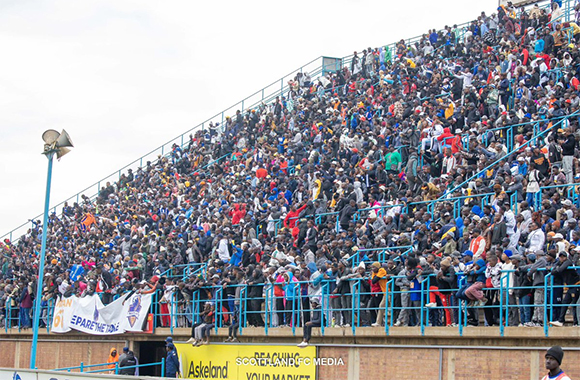
Inside ZIFA-Nqobile Magwizi
A Belgian revelation
ON October 10, 2022, I, along with a five-member delegation from Highlanders Football Club, landed in Paris — the first stop on what would become an eye-opening journey through Europe’s football capitals. From the training centres of Paris and London to the iconic stadiums of Barcelona and the elite academies of Antwerp, we were not there as tourists. We were on a mission — to study, to understand and to reimagine the future of Zimbabwean football.
But it was in Belgium, at Royal Antwerp Football Club, where the purpose of our tour became startlingly clear. Hosted by Dutch legend and sporting director Mark Overmars, we saw a football operation running with the precision of a Swiss watch: data-powered scouting, youth systems integrated seamlessly into the first team philosophy, and administrative operations grounded in efficiency and vision.
From the back office to the grassroots, every cog was aligned. There was no room for luck — only planning, investment and relentless execution.
I stood there and thought: This is not beyond Zimbabwe. We have the raw talent. We have passionate fans. What we need is the architecture — the systems, the skills and the standards that support world-class performance.
Competitiveness and quality: Where we stand today
Our top flight, the Castle Lager Premier Soccer League (PSL), remains a source of pride and passion. Clubs like Highlanders, Dynamos, Ngezi Platinum Stars, FC Platinum and Chicken Inn have shown flashes of excellence and organisational discipline. In recent years, FC Platinum raised the bar with their consistency, winning four consecutive league titles from 2018 to 2022. Their investment in coaching, facilities and structured planning provides a model of what is possible when vision meets execution.
Yet we must be honest with ourselves. Beyond a few examples, the overall quality of football, depth of tactical sophistication and general club preparedness need a major lift. Some matches are intense, yes, but the technical level lags behind regional and continental benchmarks. While PSL remains competitive in terms of parity — anyone can beat anyone on their day — that competitiveness is often rooted in inconsistency rather than elevated performance levels.
There is a worrying lack of goals per game, limited creativity in midfield and over-reliance on direct play — a tactical conservatism born out of fear, not philosophy. It points to an urgent need to invest in our technical backbone: better coaching education, tactical innovation and player development frameworks.
Empty seats, new builds and the matchday challenge
No discussion on the state of our club football is complete without addressing one of its most pressing realities: infrastructure. Over the last three seasons, Zimbabwe’s flagship stadiums — Rufaro, Barbourfields and the National Sports Stadium — have, at various stages, failed to meet minimum international operational standards. Many clubs still play at venues that are visibly aged, poorly maintained and ill-equipped to host the modern football experience.
Yet, amidst this national challenge, there are green shoots of progress that deserve recognition. Simba Bhora, FC Platinum, Ngezi Platinum Stars, MWOS FC, GreenFuel and Triangle United have made significant strides by investing in their own infrastructure, helping to raise the standards outside the traditional football centres. And notably, Scottland FC is in the process of building its own stadium — a bold and visionary step that reflects the growing ambition across Zimbabwean football.
This kind of forward thinking needs to be applauded — and replicated. These clubs are showing us that stadium development is not just the responsibility of the Government or councils; clubs themselves must play a leading role in building the environments they want to thrive in.
On the positive side, this season has seen a marked improvement in stadium attendances — a trend that speaks volumes about the passion Zimbabweans have for the game. From Barbourfields to Baobab, fans are returning in numbers we have not seen in years. However, we must also be honest: much of this resurgence is driven by club rivalries and title races, not necessarily the quality of the matchday experience.
When we toured Europe, even second-tier clubs boasted stadiums that were clean, safe and commercially active — with hospitality suites, family zones, merchandise stores and youth activation spaces. These were not just stadiums, but living football ecosystems.
We must now adopt a similar mindset. The stadium should not be a place people endure for 90 minutes. It should be a space they look forward to — a place where football, commerce, entertainment and community meet.
Upskilling: On and off the field
Perhaps the biggest lesson from our European tour was the sheer scale of investment into people. At Royal Antwerp, the club had a full-time coaching methodology officer. Their under-12 team had a video analyst. At Barcelona, every academy player had a tailored development plan linked to both school and football progress. The systems were professional because the people were prepared. Zimbabwe needs to follow suit. It is time to professionalise not just our players, but our entire football ecosystem. That means upskilling referees, coaching staff, physical trainers, team managers, analysts, club CEOs, media officers and even stadium stewards. The football economy is bigger than just the 11 on the pitch.
To this end, ZIFA is currently working with FIFA, CAF and COSAFA, to take advantage of already existing capacity building programmes. This will ensure that in the future, every club in the top flight and eventually in Division One meets minimum technical and administrative standards. Licensing will be tied to competency, not just paperwork.
A new vision: What football could be
Football in Zimbabwe is more than a game. It is a social force, an economic engine and a mirror of our national identity. We must raise our standards — in how we train, how we manage, how we govern and how we dream. We must benchmark not against our past, but against the best in the world. Let us stop asking whether we can afford to invest in football development. The real question is: Can we afford not to?
The talent is there. The desire is there. What we need now is collective action. We invite clubs, local councils, the corporate sector, the media, fans and the Government to be part of this national football revival. The PSL is the face of our domestic game, and it must reflect the future we want: fast, professional, entertaining and inspiring.
A call to action
To every coach out there, embrace learning. To every club official, adopt planning. To every fan, demand better. To our partners, walk with us. To the Government and municipalities, support infrastructure renewal. To the media, help us tell a new story. And to our players, especially the young ones, believe. The journey will not be easy, but it is possible.
Let us build a Zimbabwean football model that works — from grassroots to greatness. The world is not waiting for us. We must act.
We owe it to our history, our heroes and our next generation.
Nqobile Magwizi is the ZIFA president.