admin
admin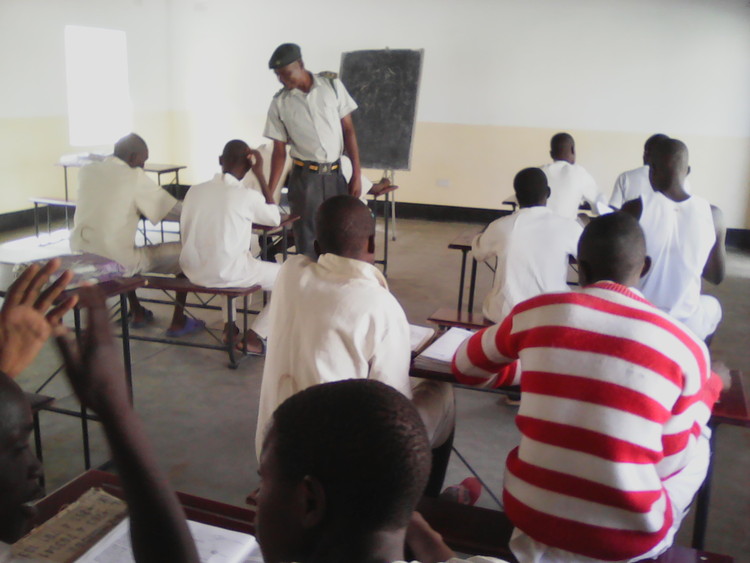
Harmony Agere
It is near noon time at Whawha Prison in Gweru and a weak sun struggles to warm the air. A heavy blanket of grey clouds ensures a cold gale combs through the yard, picking dry leaves here and dropping them there.
There is barely any movement within the compound save for young boys pacing up and down in a heavily fenced confinement under the watchful eye of men and women clad in green.
“Hello and welcome to Whawha Young Offenders,” says a man behind a giant steel gate. “My name is Wilbert Mugandi and I am the principal prisons officer. I will be guiding you through our facility, please follow me.”
Leading the way and stopping briefly to respond to energetic salutes from his subordinates, PPO Mugandi shows us around. As we move, our attention is caught by a young boy watering flowers in prison garb. He looks about eight-years-old but is actually 14.
Prison wardens say it was not the first time the boy, whose name won’t be disclosed due to his age, has been brought here. After leaving the institution a short while ago, he returned after a series of house breakings and theft.
The wardens say his family has given up on him.
He is not the only one in his situation as a lot more children are also serving time for various offences.
However, it has often been questioned if these facilities are fit for children this young. Those who question the efficacy of these institutions say if things like bulling, sexual harassment and bad influences are rampant in adult prisons, they can only be worse in juvenile detention where children are easier to manipulate.
In addition, the fact that those who come as juveniles and grow into adults remain in the facility until they complete their sentences complicates the issue even further.
PPO Mugandi discussed juvenile justice with The Sunday Mail Extra to shed some light on the matter.
“Let me start with the routine. The day-to-day activities here at young offenders,” he says. “Mainly we receive convicted young offenders, we do not have remand prisoners and this is the institution which caters for all the minors in Zimbabwe.
“The main thrusts here is academic; we mainly deal with educating the young offenders. So when they are brought here they are told that they are going to school.
“We have classes which range from Grade 1 up to Advanced Level. We also have workshops; those who would have reached O Level we send them to the workshops to be taught various skills. Recreational activities are also provided; from chess to music, there is a wide variety of activities.”
Asked about the crimes which are frequently committed by minors, PPO Mugandi says rape and sodomy ranked highest.
“The majority of the cases here are rape, actually more than half of them. There are also cases of unlawful entry and stock theft but mainly the cases we receive are rape. This could be caused by their age, many of them are at the adolescence stage and their behaviour is experimental.”
On bullying and bad influence in the prison, PPO Charity Manyonganise says there are systems in place to guard against such.
“The difference between the adult prison and the young offenders facility is that they don’t just live haphazardly. We allocate them their cells according to their ages. For example we have six juveniles under the age of 16 who live in their own cell. The sick also have their cells and so on”
PPO Mugandi says while the institution is operating well, there are challenges of shortages of learning materials and examination fees.
Because of this, he says, some inmates end up taking longer than normal to complete their studies.
In addition, PPO Mugandi says, some inmates do not have national identification documents, which makes it difficult for them to register for public exams. He also cites difficulties in involving parents and guardians in the rehabilitation process.
“We start communicating with the parents of the children the moment they come here, because in some cases they will be coming from other prisons, so we have to call the parents and tell them that we have their children.
“Then for anything that is needed we remain in touch with the parents. However, some of them come from disintegrated backgrounds so there is really no one who takes time to keep in touch with them.
“As part of rehabilitation we should also be doing home visits with the children but resources are not allowing.”
Treasury doesn’t seem to prioritise rehabilitation of young offenders, and for this reason the hardworking staff at Whawha find their jobs that much harder.


 Online Reporter