daniel chigunwe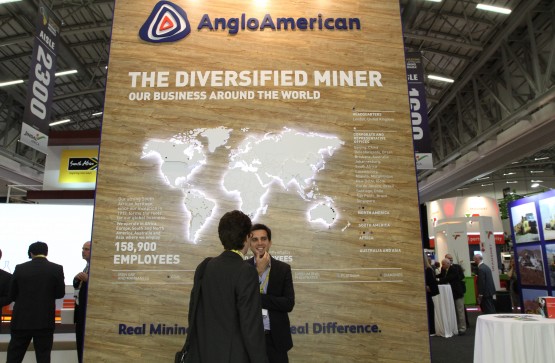
One of the levers of diversifying a portfolio of stocks is ensuring that the portfolio has exposure to multiple countries too. The logic is simple: even if a portfolio of stocks is in different sectors, there is a concentration of risk if all of these stocks are exposed to the same country.
What if that country experiences a war, a coup d’état, or a recession (or the ANC)? Thus, baking in an aspect of geographic diversification when constructing your portfolio makes sense.
At this moment, let us pause and consider ‘where’ the current topical Anglo American plc (AGL) is; if you hold Anglo American plc in your portfolio, what ‘geography’ is it exposed to?
Let’s say you acquired it in the US (via its listed ADR or ‘American depositary receipt’). Does that make Anglo American plc a US stock? No, it is clearly not a US stock.
Thus, where the stock is listed is much less important than the underlying business (other than for tax purposes, as listings in different countries are subject to different tax and related laws).
In this same way, Anglo American plc is a ‘plc’ (public limited company) incorporated in the United Kingdom. This means the actual company is governed at a group level by UK laws, but does that make it a UK exposure in a portfolio?
Well, maybe if you are a corporate lawyer in London, it does, but otherwise, I don’t think anyone would argue that Anglo American is a UK business because its actual businesses (its mines) lie elsewhere and are unrelated to whatever arbitrary legal structure they are housed in.
Where are the mines?
So where are all of Anglo American’s mines?
Well, Anglo American has mines all around the world (see here for a great illustration), from Canada to South America and from the UK/EU to Australia. And, of course, in South Africa, Namibia and Zimbabwe.
Looking at this, we do start to see where Anglo American’s cash-generating assets physically reside.
This means that if things go wrong in the countries in which Anglo American operates, its mines could be affected, and it could be negatively impacted.
Except that Anglo American’s mines do not (necessarily) sell their commodities to customers inside the countries in which the mines operate … What if these end customers go through hard times? Thus, where are the customers who pay for these commodities located?
Well, these customers are all over the world, but they tend to pay for these commodities in US dollars.
This means that Anglo American’s mines are largely monetised in US dollars.
So, is Anglo a US company?
And so we circle back to the question: is Anglo American a US company? Or is it just the optics of earnings in US dollars?
The short answer is that Anglo American (like the other global miners) is globally exposed and should be treated as such in portfolio construction. This example was mostly just selected to show the complexity of thinking through a company’s geographic exposure (without being intellectually lazy).
Now, applying the same thought process, what geographic exposure is Mondi plc (MNP)? It is listed on the JSE, incorporated in the UK, with its assets mostly in Europe and South Africa.
What is Reinet Investments SCA (RNI)? Incorporated in Luxembourg, listed on the JSE, with its biggest asset lying in the UK, but also owning a global tobacco asset and private equity in Asia …
And so forth.
In summary, being conscious of geographic diversification in portfolio construction is logical but it needs to be carefully thought out.
What at first glance may appear to be geographically diversified or geographically concentrated selections could well be the opposite of what was intended unless each business and its exposures are understood.
Keith McLachlan is chief investment officer at Integral Asset Management− Moneyweb..



 Online Reporter