admin
admin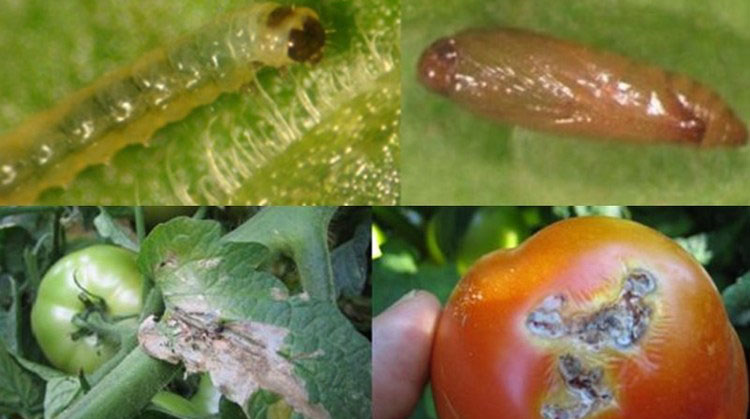
Andrew Mangwarara
TOMATO farming is one of the most lucrative businesses of modern times.
However, it is always threatened by the emergence of new pests and diseases. One of the many pests that have become synonymous with tomato farming is tuta obsoluta or leaf miner.
This pest belongs to the lepidoptera family (butterfly or moth group).
The most damaging stage is the larvae stage, where it will continue feeding for as long as a food source is available, before finally going into pupation.
It is quite a destructive pest that attacks other pests, especially those in the solanaceae family.
However, the pest will not hesitate to move over to the bean family when its usual food source is unavailable.
This makes the tuta obsoluta one of the most notorious pests to deal with.
Tuta obsoluta originated from South America, but has now spread to many regions of the world.
It is quite difficult to deal with the pest because it can live for a long time on the leaves and flowers of the tomato plant.
The pest can be spread through the soil, through use of the same containers when packing tomatoes or in production warehouses that repack and distribute the crop.
The use of infected seedlings is another way of spreading the pest. Purchase new tomato plants from reputable suppliers.
Even the common outdoor markets can also spread the pest.
The problem is further compounded by the fact that the moth can fly for distances of up to 100 kilometres. However, its activity is usually restricted during the night.
The presence of the pest can be noticed by puncture marks on the fruit, an abnormal shape of the fruits, rots and the presence of excreta at exit holes. Also visible on the leaves can be the mining on the upper and lower surface of the plant, thereby forming clear unpleasant patches.
Although larvae and eggs are difficult to spot, any suspicion of their presence can be verified at the nearest crop protection department.
Just take some samples there.
Dealing with a pest of this magnitude requires one to employ integrated pest management practices which include crop rotation, proper destruction of crop remains, practice of good hygiene and the control of human traffic to the fields.
Maintaining a healthy well fed crop will also help the crop to survive attacks.
Proper spacing and weed management are also important.
Regular scouting of your tomato crop is paramount as discovering a pest infection late can mean its demise. Early detection helps you to quickly move in with an appropriate chemical.
Consult your local dealer.
New pesticides continue to come on board to deal with this menace. Some of the available chemicals include ampligo, trigard, cyramazine, cartap, acephate, abamectin, belt, biobit, avaunt and coragen.
Other methods to employ include the use of nets, yellow sticky traps and pheromone traps to attract all the male adults (two to four traps per hectare). Neem oil, yarrow and calendula can be sprayed to the tomato crop.
Read chemical labels carefully to observe the correct harvest intervals after spraying.
Try not to use the same chemicals so as to avoid pest resistance.
When dealing with tuta obsoluta, avoid relying on one method of control. Continue researching for new methods to deal with the pest whilst utilising a wide range of approaches.
Feedback: [email protected]



 Online Reporter