Online Reporter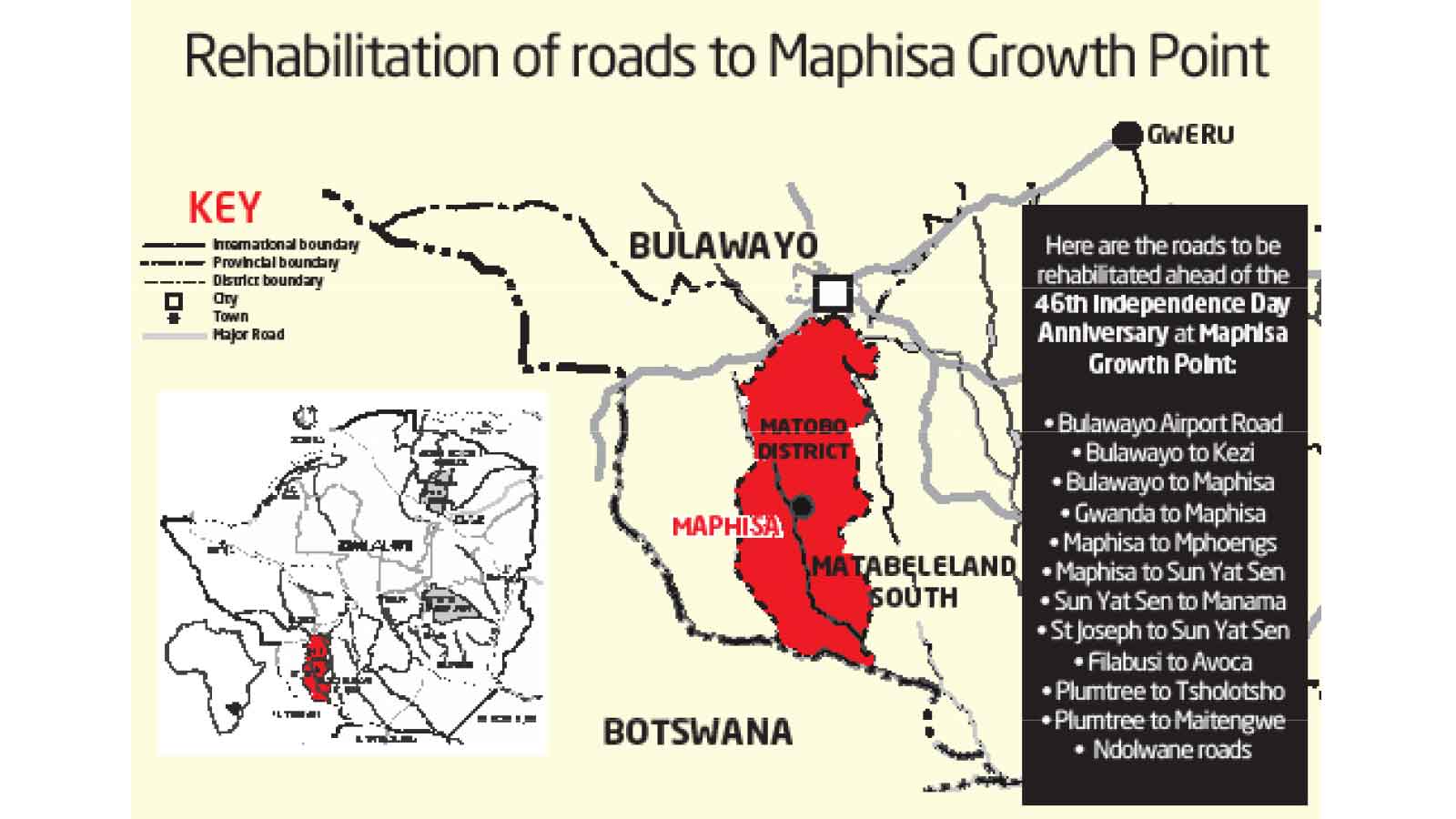
Zimpapers Politics Hub
AS has become the norm under the Second Republic, Maphisa Growth Point in Matabeleland South province, which will host the main Independence Day celebrations, is currently witnessing significant infrastructure development.
The move is meant to accelerate rural development, attract private investment and unlock the place’s inherent potential.
The national event is being used not only as a commemorative milestone but as a strategic development catalyst under the Government’s devolution agenda and President Mnangagwa’s mantra of “leaving no one and no place behind”.
There are targeted investments in accommodation, road infrastructure, service training and utilities aimed at positioning Maphisa as an emerging rural tourism hub.
Permanent Secretary in the Ministry of Tourism and Hospitality Industry Dr Takaruza Munyanyiwa said the celebrations present a unique opportunity to leave a lasting tourism legacy while strengthening local economic participation.
“The ministry is spearheading accommodation development projects that will strengthen rural tourism in the host province,” said Dr Munyanyiwa.
“As part of this effort, the ministry has undertaken the construction of 10 traditional rondavels in Maphisa. These facilities will provide quality accommodation for delegates while adding to the area’s long-term tourism infrastructure.”
Rondavels are circular, thatched-roof structures rooted in traditional African architectural design.
Built using locally inspired aesthetics and materials, the units are designed to showcase the Zimbabwean heritage while providing modern hospitality standards.
After the celebrations, they will remain permanent assets to support tourism growth and community-based accommodation.
The ministry is prioritising local suppliers for furniture and interior fittings, creating business opportunities for artisans, carpenters and small enterprises within Maphisa and surrounding areas. This is aimed at maximising local economic benefits.
A recent assessment by the Zimbabwe Tourism Authority highlighted the urgent need to expand accommodation capacity.
While Bulawayo currently has 2 196 rooms, Maphisa has only 138, underscoring both the existing gap and growth opportunity as the area prepares to host the major national event.
Efforts are underway to ensure additional homestays to increase capacity while promoting community participation in tourism.
To make sure visitors receive world-class service, the ministry has also rolled out service excellence training programmes targeting local operators, homestay hosts and tourism stakeholders.
The training focuses on hospitality standards, customer care, safety protocols and tourism management skills to improve visitor experiences and ensure long-term competitiveness.
“The initiative aims to equip local operators, homestay hosts and tourism stakeholders with the skills needed to deliver world-class service and create memorable tourist experiences,” said Dr Munyanyiwa.
Sessions are scheduled for Gwanda and Bulawayo this week, with Matobo and Maphisa to follow in March.
The broader objective, Dr Munyanyiwa said, is to unlock Matabeleland South’s tourism potential by using national events to drive infrastructure investment, increase visibility and attract long-term investment.
“These developments reflect growing investor confidence in rural tourism and demonstrate how national events can catalyse infrastructure growth and community participation in previously underserved areas,” he said.
Private sector
The private sector has already responded to the Government’s lead.
Mr Denny Ncube of Antelope Lodge, located about two kilometres from Maphisa, is constructing 50 villas that are now 90 percent complete.
He said Independence Day celebrations had accelerated investment decisions and opened new opportunities for collaboration with local suppliers.
“The Government’s decision showed a clear commitment to the area’s development, and we saw a significant opportunity to grow our business. Consequently, we have accelerated our villa construction to meet the expected influx of visitors,” he said.
Mr Ncube added that partnerships with local farmers, artisans and tour guides are helping to build an integrated tourism ecosystem while creating employment and business opportunities for residents. “To attract tourists, we will offer specialised packages and promotions while working closely with local operators to create memorable experiences,” he added.
Similarly, another investor, Zimbabwe National Chamber of Commerce Matabeleland region chairperson Mr Thomas Gwatida, is finalising eight villas, which will provide 25 rooms.
He described the upcoming Uhuru celebrations as a turning point for the local hospitality industry.
“It is a sign of good faith to invest when you know there is already a guaranteed market. Matabeleland South is renowned for its rich tourism culture and attractions, driven by established zones like the Matobo Hills,” he said.
He noted that the region’s proximity to heritage sites; the provincial capital, Gwanda; and international borders with Botswana and South Africa positions it strategically for tourism expansion.
New developments
Dr Munyanyiwa said the Government has also received applications from Flowel BnB, Hlanani Properties and Umthombo Wemvelo BnB for the development of new lodges, signalling growing investor interest.
Beyond tourism infrastructure, the district is undergoing a broader facelift under the Government’s “Independence Legacy” framework.
Key projects include rehabilitation of the Bulawayo-Maphisa and Gwanda-Maphisa roads, critical transport corridors that enhance regional connectivity,
facilitate tourism flows and support trade routes expected to extend to the Mphoengs border post linking Zimbabwe with Botswana.
Electrification programmes under the Rural Electrification Fund are targeting clinics, schools and business centres to improve service delivery and sustain economic activity long after the festivities.
Water security interventions, including rehabilitation of piped water systems and boreholes, are also being implemented to support nutrition gardens, sanitation and local livelihoods.
Officials say the integrated approach demonstrates how national celebrations can serve as a springboard for long-term rural industrialisation, transforming Maphisa into a sustainable tourism and economic growth centre.