admin
admin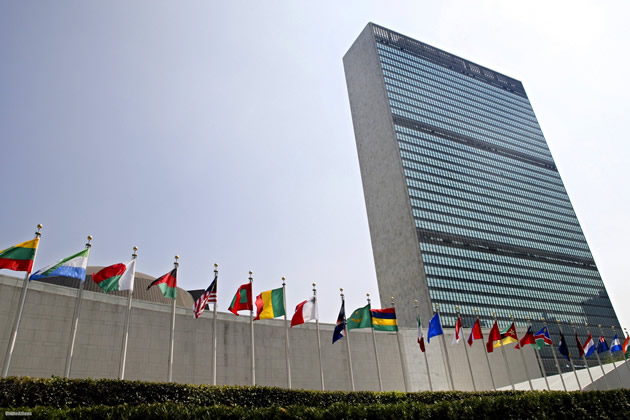
Christopher Farai Charamba Correspondent
This year marks the 70th anniversary of the founding of the United Nations. The term was first coined by Franklin D. Roosevelt in 1942 where the text of the “Declaration by United Nations” was drafted by Roosevelt and British Prime Minister Winston Churchill.
In the aftermath of the Second World War, 50 countries signed the Charter of the United Nations and on the October 24, 1945 when the USSR had ratified the treaty, the requirements for the founding of the UN had been met, the United Nations was officially formed.
At the time the UN was founded, only three African countries signed and ratified the treaty, Egypt which had issued a Unilateral Declaration of Egyptian Independence to Britain in 1922, Ethiopia which had never been colonised and South Africa which became a union in 1910, the rest of Africa being under colonial rule.
However, following the creation of the UN a process of decolonisation began in Africa attributed to a provision in the Atlantic Charter which preceded the UN Charter to allow all people a “right to self-determination”. The provision, introduced by Roosevelt, allowed the US and African colonies to put pressure on Britain to abide by the terms of the Atlantic Charter.
The process was, however, not rapid as it took Ghana 12 years after 1945 to gain majority black rule and 45 years for Namibia, the last African country under colonial rule, to gain independence from South Africa in 1990.
Despite the delays, UN work spurred decolonisation particularly in the 1960s and 1970s.
On November 12, 1965 for example the UN Security Council adopted Resolution 216 which placed sanctions on Rhodesia which had the day before declared UDI, thus rendering the Rhodesian government illegitimate.
The African voice was strong and resolute and many African countries supported the cause for the attainment of majority rule in their sister countries. In fact the Ivory Coast was of the 15 countries in the UNSC and the only African country which adopted the resolution for sanctions on Rhodesia.
Although the imposition of sanctions did not immediately bring about political change in Rhodesia, it signalled to the revolutionary parties and forces that there was hope of an independent future as well as the solidarity they shared with the greater international community.
But the role of the UN in the post-colonial era in Africa has not been as rewarding as it was in a time when decolonisation was the agenda. In fact, decolonisation was partly an inadvertent success of the Cold War where the USA and the USSR sought allies in the colonies by providing support to different revolutionary forces in the form of arms, expertise and other instruments.
The same support, however, influenced civil wars in Africa and led to dictatorial regimes of the Mobutu Sese Seko in the DRC then Zaire and Idi Amin in Uganda. Due to the tensions between the USA and the USSR at the time, the UNSC was rendered ineffective in a number of cases as the two powers vetoed resolutions to decide on issues.
One such resolution was one put forward by the USSR in a bid to restore Patrice Lumumba to power after he had been ousted and arrested during a coup by Mobutu in December 1960. This, however, was defeated at the Security Council and subsequently the USSR vetoed an alternative resolution and no solution to the situation was found.
The veto power held by the five permanent members of the UNSC – the USA, Britain, Russia, China and France – has been a bone of contention for years as one country can unilaterally go against the wishes of the majority and prevent the UN from taking any action.
One such example is the first USA veto in history which came in 1970 as a gesture of support for Britain, which was under Security Council pressure to end the white minority government in southern Rhodesia.
This veto defeated an African-sponsored resolution that would have committed members to use force against Rhodesia and condemned Britain for not using force to overthrow the white minority regime in that former British colony.
Full article on www. herald.co.zw
Between 1946 and 2015 vetoes were issued on 236 occasions with Russia and the USA responsible for the majority of those. In fact, since 1972 the United States has used its veto power more than any other permanent member.
What is more concerning is the imbalance that exists when looking at the composition of the UN and that of the five permanent members of the Security Council. The UN has five regional groups – the African Group, the Asia-Pacific Group, the Eastern European Group, the Latin American and Caribbean Group (GRULAC), and the Western European and Others Group (WEOG) – yet only three groups have permanent Security Council seats and veto power.
The Africa Group is actually the largest group with 54 member states, 28 percent of the 193 countries that make up the United Nations and yet it is not represented as a permanent member of the UNSC. Should any attempts at reform be brought forward they are likely to be vetoed as those with the power seek to consolidate what they hold.
And yet reform is necessary as Africa and Africans have been left exposed by the UN. The April 1994 Rwandan genocide illustrated how inaction and a lack of concern from the UNSC can have dire effects. Close to a million people lost their lives despite protestations from UNAMIR commander Roméo Dallaire not to pull out of Rwanda.
The UNSC has more recently been accused of being slow to act in the Central African Republic where UN peacekeepers have been accused of sexually abusing street children in the capital city Bangui.
Allegations of sexual abuse by peacekeepers have been made since December 2013 and although the UN only officially took over the operation in September 2014 their response to the matter since has been criticised.
The opening part of the preamble of the UN Charter reads: “We the peoples of the United Nations determined to save succeeding generations from the scourge of war, which twice in our lifetime has brought untold sorrow to mankind, and to reaffirm faith in fundamental human rights, in the dignity and worth of the human person, in the equal rights of men and women and of nations large and small.”
Since 1945 when World War Two ended and the UN there have been 250 wars and conflicts worldwide and over 130 conflicts on the African continent. A majority of which have been influenced in some way by the world’s superpowers particularly during the Cold War era.
The fundamental human rights, the dignity and worth of the human person and the equal rights of men and women of nations large and small have continued to be diminished despite the presence of the United Nations.
As global leaders prepare to gather for the 70th United Nations General Assembly in New York this week, an opportune moment exists to assess the organisation and judge whether it is living up to its mandate and make relevant changes for succeeding generations.


 Online Reporter