


 Online Reporter
Theseus Shambare
THIS week, on Friday, February 14, Zimbabwe joins the rest of the world in “officially” celebrating love on Valentine’s Day — for those who believe in it, of course.
Love will be in the air!
This is a day traditionally reserved for the exchange of gifts, flowers (particularly red roses), heart-shaped chocolates, teddy bears and other extravagant displays of affection.
However, due to humanity’s tendency to corrupt even the purest things, the day has been tainted by less wholesome activities and artificiality.
Consider the frantic photo shoots, carefully crafted captions and the pressure to project an image of perfect romance onto the unforgiving landscape of social media.
This pressure often manifests in women going to extremes, buying their own gifts and arranging workplace deliveries to maintain the illusion of being loved and adored.
Some even pose for photos at car dealerships, pretending to have received a vehicle as a gift from their loved one.
Others have reportedly suffered from depression when their Valentine’s Day dreams, fuelled by social media fantasies, are not realised.
The pressure to publicly project love can lead to awkward and sometimes heartbreaking moments.
Recently, a man could be seen on social media publicly snubbing his supposed partner’s surprise saxophone serenade, courtesy of Denilson Musekiwa.
The incident sparked online debate about the assumed couple’s relationship and the authenticity of such grand gestures.
Competition
While the spirit of love remains, the way it is expressed and, more importantly, performed has been dramatically altered by the pervasive influence of online platforms.
“It is like love has become a competition,” reckons Tafadzwa Mauru, a 32-year-old Harare resident, as he scrolled through a barrage of engagement announcements and lavish date pictures on his Instagram feed.
“Everyone is trying to outdo each other these days. The pressure to have the ‘perfect’ Valentine’s Day, the one that will get the most likes, is insane.”
This sentiment is echoed by many.
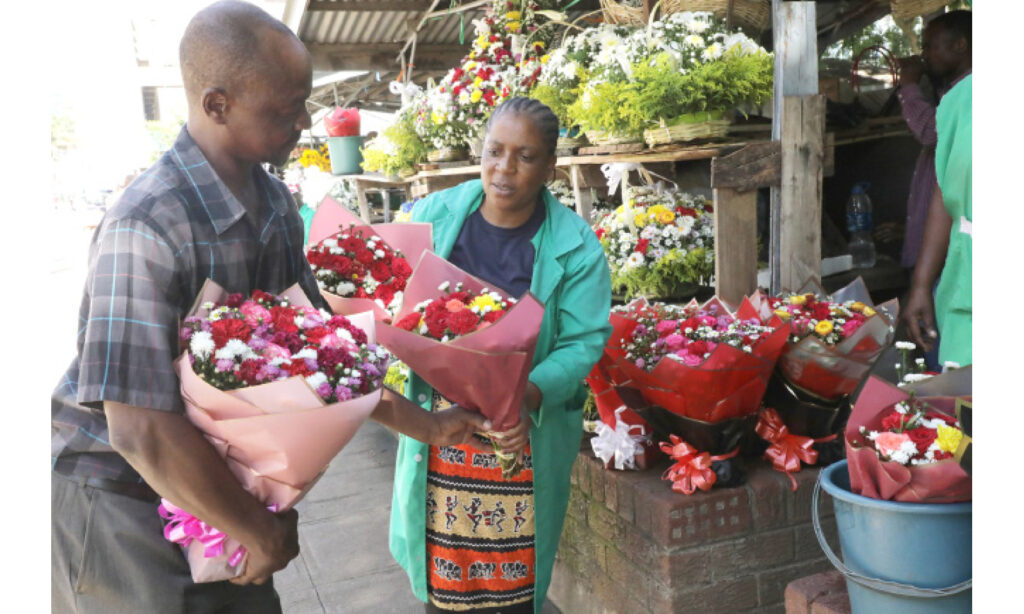
Some couples celebrate love occasionally through buying flowers and other presents
Valentine’s Day, once a relatively private affair, has become a public spectacle, played out on the canvas of the internet.
The pressure to showcase a flawless relationship, complete with extravagant gifts, scenic locations and witty captions, can be overwhelming.
“I remember when Valentine’s Day was just about spending time with my partner,” recalls Sibo Nkala, a lecturer at a local university.
“Now, it feels like you have to document every single moment and share it online. If you do not, people start to wonder if something is wrong.”
This pressure is particularly acute among young women.
“There is this expectation that your boyfriend has to ‘spoil’ you on the day. And it is not just about the gift itself; it is about how it looks online,” said Nyasha, a 32-year-old aspiring Harare fashion designer.
“If he does not post a picture of it, or if it is not deemed ‘Instagram-worthy’, you feel embarrassed, like you have failed some kind of test.”
Shamiso Chabata (36) believes a woman’s heart is tied to the tangible things a man offers his loved one.
“No, no. It is not social media pressure, but no one is an island. A man should not be ashamed of expressing his love publicly.
“If he is confident enough to do it on a public platform like social media, it is a sign that he might be committed to you,” she says.
Rough ride
However, the streets of social media are not always friendly.
Singer Nox Guni’s recent marriage to Gladys Mapfumo (37) follows a highly publicised breakup with Tallyn Ndudzo, a separation played out, at least in part, on social media.
While the specific reasons for their split remain private, Tallyn has used her online platforms to express her feelings, often cryptically, about the situation.
The star’s ex-wife was among those who criticised Nox’s new love, claiming she was too old for him.
In a recent interview, the 41-year-old artiste said he was unmoved by the social media posts against his union with Mapfumo, as he felt he had married the right woman.
“We do not live for the social media streets, but God has a purpose in life for everything that happens,” said the “Ndinonyara” singer.
Peer pressure
The rise of social media has also fuelled a culture of comparison.
Young people are constantly bombarded with images of seemingly perfect relationships, leading to feelings of inadequacy and self-doubt.
“You see these couples going on exotic vacations, receiving expensive gifts and you start to question your own relationship,” admits Tafadzwa Ngarande.
“Even if you are happy, you cannot help but feel like you are missing out.”
This constant comparison can be particularly damaging.
“Not everyone can afford fancy dinners and expensive gifts. But social media makes it seem like everyone is living this lavish lifestyle, which puts a lot of pressure on young people, especially those who are struggling financially,” said Jubilant Masanzu, a Seventh-Day Adventist elder.
The commercialisation of Valentine’s Day has also been amplified by social media.
Businesses are quick to capitalise on the desire for “Instagrammable” experiences, offering special packages and promotions designed to generate social media buzz.
Flower vendors are anticipating a Valentine’s Day windfall and they are ready for the romantic rush.
Similarly, gift shops and clothing stores that are already showcasing a sea of red are poised to profit from the heightened demand for tokens of affection.
“It is all about creating content and packaging it well. People do not just come here for the food; they come here for the photo opportunities,” notes Thomas Ndlovu, a restaurant owner in Kadoma.
The pressure to project perfection is not limited to young couples.
Even those in established relationships feel the strain.
“My husband and I have been married for 20 years,” says Elen Chikwanda, a mother of three.
“We used to celebrate Valentine’s Day quietly, just the two of us. Now, my children are constantly reminding us to take pictures and post them on Facebook. It is like they expect us to perform our love for them and for our online network.”
Resistance
Amid the pressure to conform, however, there are signs of resistance.
Some young people are choosing to disconnect from social media on Valentine’s Day, opting for more authentic and meaningful celebrations.
“I am taking a social media detox on Valentine’s Day. I want to focus on enjoying the day with my boyfriend without worrying about taking the perfect picture or crafting the perfect caption,” said Nyasha Karehwa.
Others are using social media to challenge the dominant narrative of perfect romance.
They are sharing stories of diverse relationships, celebrating different forms of love and highlighting the realities of everyday life.
“Love is not always about grand gestures and picture-perfect moments,” notes Tafadzwa Mwenje.
“Sometimes, it is the small things that matter most, like a shared laugh or a quiet evening together.”
And some, like Chikwanda, are finding a balance between online and offline life.
“I understand that my children want to share our Valentine’s Day with their friends and family. But I also want to make sure that we are not just performing for the cameras. We need to remember that the most important thing is the connection between us,” she said.
As Zimbabweans prepare for another Valentine’s Day, the conversation about social media, love and the pressure to project perfection continues.
Perhaps, this year, amid the carefully curated posts and filtered photos, there will be a quiet recognition that true love is not about chasing likes and validation, but about cherishing the real, imperfect and beautifully human connections that enrich our lives.
Maybe, as the confetti settles and the filters fade, the focus will shift back to the simple, authentic moments that truly make love worth celebrating.
X: @TheseusShambare



