Online Reporter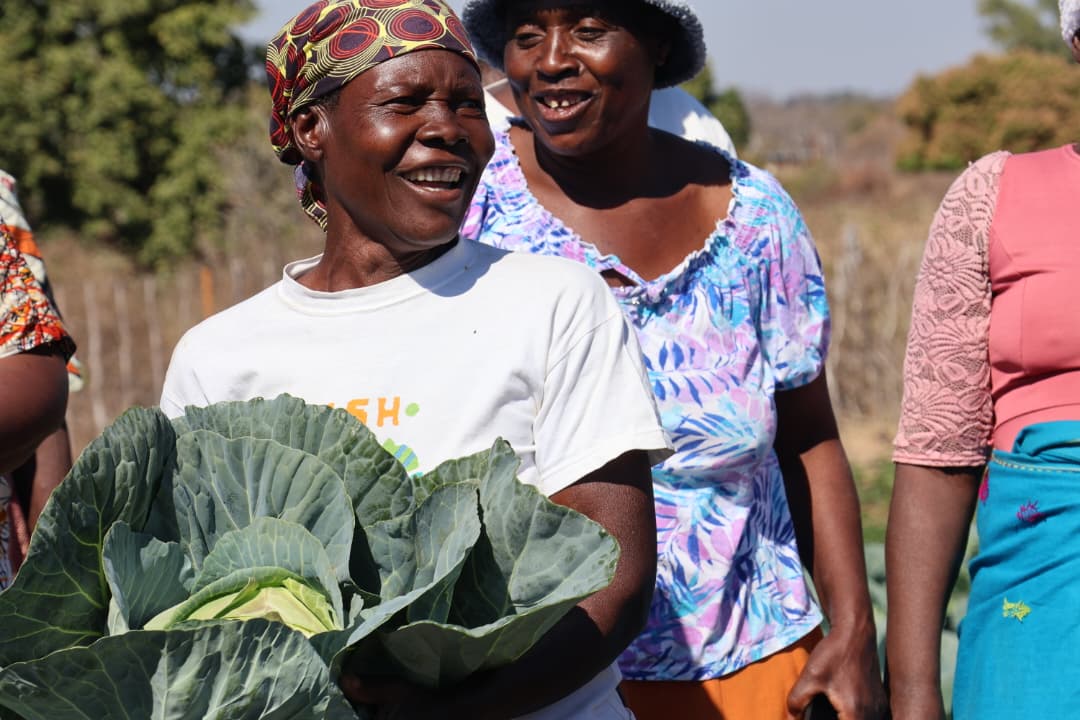
Theseus Mauruki Shambare recently in CHIVI
THE last time Mr Newsbert Gamanya (67) joined a queue, it was not to sell his harvest.
It was to receive food.
For decades, that queue represented the reality of rural survival in Chigume Village, Ward 3 of Chivi District, Masvingo Province — communities waiting for rainfall, relief grain and opportunities that often arrived too late.
In this part of Zimbabwe, farming seasons were often determined not by planning, but by uncertainty. A farmer could prepare the land, plant the seed and still watch an entire season disappear when the rains failed.
“We were known as a poverty-stricken community. For many years, we survived from one drought to another. When crops failed, we depended on donor handouts and assistance from well-wishers because there was no other option,” said Mr Gamanya.
“Sometimes we planted with hope, but the harvest would disappoint us because the rains were unreliable. It reached a point where some people lost confidence in farming.”
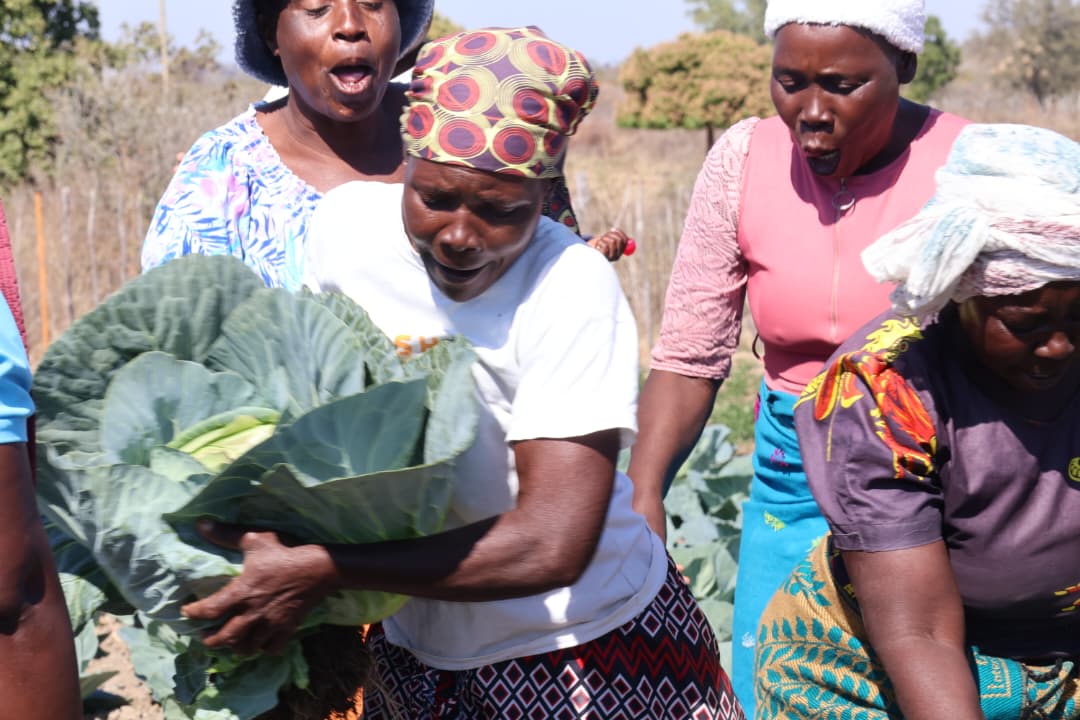
Today, however, Mr Gamanya stands in a green field surrounded by crops that represent more than food. They represent a change in mindset.
A change from waiting to producing.
A change from dependence to enterprise.
The elderly farmer is now part of a community that is attempting to rewrite the meaning of a village.
A village that once symbolised vulnerability is slowly becoming a production centre, a workplace and a source of income.
The transformation is being driven by Chigume Village Business Unit (VBU), one of more than 2 000 such community-based production centres being established across Zimbabwe as Government seeks to turn rural settlements into productive economic hubs.
The one-hectare project has brought together 50 villagers, 48 of which are women. Of the 50 villagers, 21 are youths.
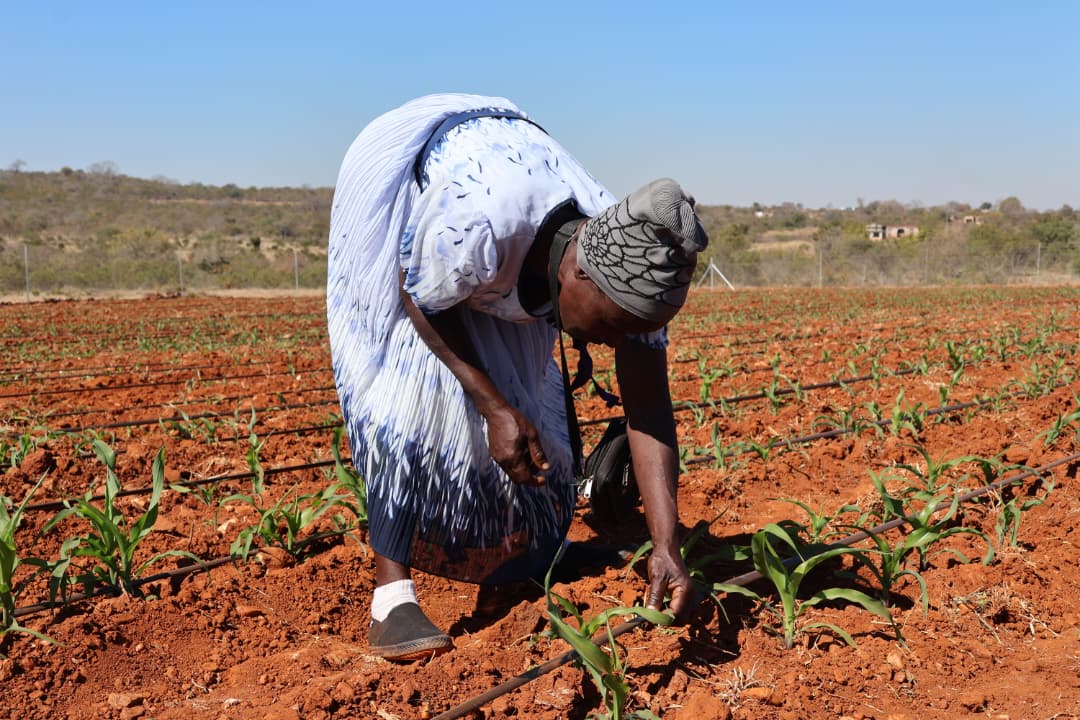
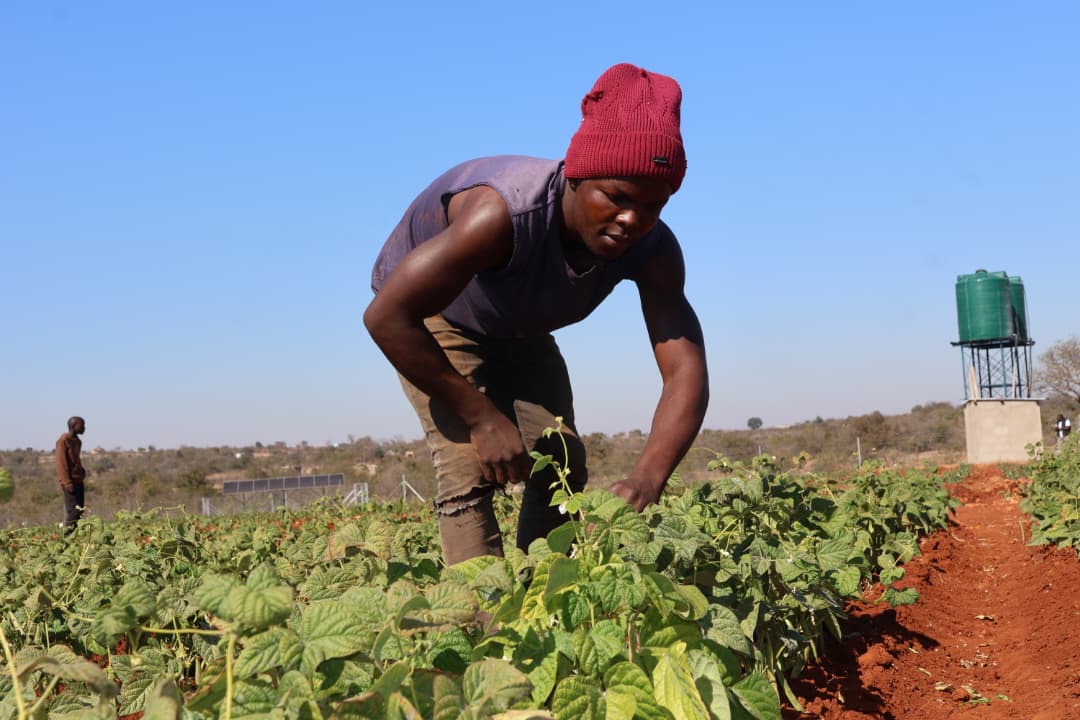
The villagers are producing sugar beans and green mealies under irrigation.
Established in April this year ahead of another potentially challenging rainfall season, the VBU represents a different approach to rural development — one where communities are not only beneficiaries of support but owners of economic activity.
For Chivi, the transformation carries particular significance.
The district largely falls under agro-ecological Regions IV and V, areas characterised by low and erratic rainfall, prolonged dry spells and frequent droughts.
Here, farming has historically been a battle against nature.
Agricultural assessments, including work by the Food and Agriculture Organisation (FAO), have highlighted how climate variability continues to place pressure on dryland farming communities, particularly smallholder farmers who rely heavily on rainfall.
The challenge has been worsened by changing weather patterns, where droughts and prolonged dry spells threaten food production and household incomes.
In such environments, irrigation is not merely a farming tool. It is a resilience strategy.
The Village Business Unit model is changing the equation by combining water access, organised production and collective ownership.
It is moving rural agriculture away from subsistence survival towards enterprise.
A VBU is not simply a community garden.
According to Agriculture and Water Resources Development Permanent Secretary Professor Obert Jiri, it is a rural production centre designed to operate as a business.
“A Village Business Unit is essentially a one-hectare, drip-irrigated, solar-powered production centre,” he said. “It produces crops all year round because it is enabled by water availability. The name speaks for itself. These are businesses run by the people who live there.”
Professor Jiri said the model could contribute significantly towards household food security while creating income opportunities within communities. That shift is already visible in Chivi.
For generations, farming in the district was largely about producing enough to survive until the next season.
Now, communities are beginning to think about markets, income and employment.
Agricultural Planning and Development Director Mr Leonard Munamati said Government had established more than 2 000 Village Business Units countrywide and is working with development partners to rapidly increase the number.
“So, as Government, we have now established over 2 000 Village Business Units across the country. But we have realised that in the past year and few months, we have the private sector and development partners who are also coming in,” he said.
“We have UNDP, WFP, Smallholder Agriculture Cluster Project and Care International. They are also coming in and they want to partner Government to increase the establishment of Village Business Units.
The programme, he said, was also upgrading traditional nutrition gardens into commercially oriented production centres.
“We have some gardens which we used to call nutrition gardens. We are upgrading these. We have over 2 000 of these and if we quickly upgrade these, it means very soon we will have over 4 000 of these business units,” he said.
But behind the statistics are people whose lives are being reshaped.
For 26-year-old Mr Forward Hlongwani, agriculture was never considered a career.
Before joining the VBU, he survived through maricho (casual labour) and looking after other people’s livestock.
With only Grade Seven education, formal employment opportunities were limited.
“Finding formal employment has always been difficult. I survived through piece jobs and looking after other people’s livestock,” he said.
“Sometimes you work the whole day but there is no guarantee that you will find work tomorrow.”
The VBU has changed how he sees himself.
“Today, I feel like an employer because I am part of something that belongs to us. I wake up knowing that the work I am doing is building my own future.”
For Mr Hlongwani, the significance of the project goes beyond farming. It is about changing how young people view rural areas.
“Many young people think there is nothing for them in villages and they leave in search of opportunities elsewhere.
But this project is showing us that if we have water and support, agriculture can create employment.”
The transformation is also changing the economics of rural households, particularly for women.
At Chigume, women dominate the production unit, with 48 of the 50 members being female.
Mr Munamati said placing women at the centre of rural transformation was deliberate.
“Village Business Units also empower women. Already, we know that in this country, women are the majority of the population. So, when we empower women, we have actually empowered the whole community, be it at village level, at ward level, or as a country,” he said. “If we empower women, we have empowered the whole nation.”
He said women participating in VBUs were gaining financial independence through organised agricultural production.
“In this Village Business Unit, we have seen that the committee is mostly made up of women. These women now can get their own money without waiting for money coming from the father or their husbands. They can also get their money and be able to support their own families,” he said.
For Ms Tendai Mativenga (36), that independence is already changing household dynamics.
“As a young married woman, there are many things I want to buy for myself without always asking my husband. A woman also wants to feel that she is contributing something meaningful to her family,” she said.
“When you have your own income, you can support your family, help with children’s needs and contribute when challenges come.”
A few kilometres away at Virira Village Business Unit in Ward 11, another chapter of the transformation is unfolding.
The project has 37 members, including 30 women and seven men, who are using a newly drilled borehole to produce crops despite the district’s harsh climatic conditions.
For 49-year-old widow Ms Rosewitta Mateveke, farming has always been about survival.
She lost her husband in 2006 and had to raise four children alone.
“After losing my husband, I became both mother and father to my children. Farming was the only option I had, but it was difficult because everything depended on rainfall,” she said.
Despite those challenges, she managed to educate all her children who are now in different professions.
“I have eight grandchildren now, and I still have responsibilities. I need to continue supporting my family.”
The borehole has changed her relationship with farming.
“Before, you planted and prayed because everything depended on the rains. Now we have water. We can plan. We can produce knowing that our efforts will not be wasted.”
For Ward 11 Councillor Danmore Jaka, the VBUs have brought new life to communities that struggled with water shortages and unemployment.
“We would like to thank the Government for coming up with this community-led initiative as we see our people leading the projects in line with their needs,” he said.
“For years, people have been struggling to access water to drink and irrigate but, with VBUs, our lives have been transformed,” he said.
Clr Jaka said the benefits were already reaching households.
“We are now seeing parents being able to pay school fees for their children through the proceeds of these VBUs,” he said.
Across Chivi, the quiet revolution is unfolding.
The crops growing in these fields are not just beans, mealies and vegetables.
They are symbols of a changing rural economy.
For Mr Gamanya’s generation, farming was often about surviving the next drought.
For Mr Hlongwani’s generation, it is becoming a pathway to employment.
For women like Ms Mativenga and Ms Mateveke, it is becoming a source of income and dignity.
The biggest harvest from Chivi’s Village Business Units may therefore not only be measured in tonnes.
It may be measured in something far more valuable — confidence.
A generation that once saw the village as a place to escape is beginning to see it as a place to build.
The quiet revolution is not happening in factories or city centres.
It is happening in villages where people have decided to stop waiting.