We can’t embrace the Diaspora Young Warriors, and salute them, on the occasion that they win, as was the case against Mauritius, and then treat them as if they are outcasts, and they are not part of us, on the occasions that they lose, as was the case against Mali.
POOR Young Warriors – from the darlings of a nation to a group of misfits, from emerging stars to hopeless teenagers and from exciting youngsters to pathetic footballers.
All of this in just one month.
Four weeks, to be precise.
From the beautiful headlines which greeted their demolition of Mauritius on the Indian Ocean island, to the ugly ones which greeted their chaotic show at the National Sports Stadium this week.
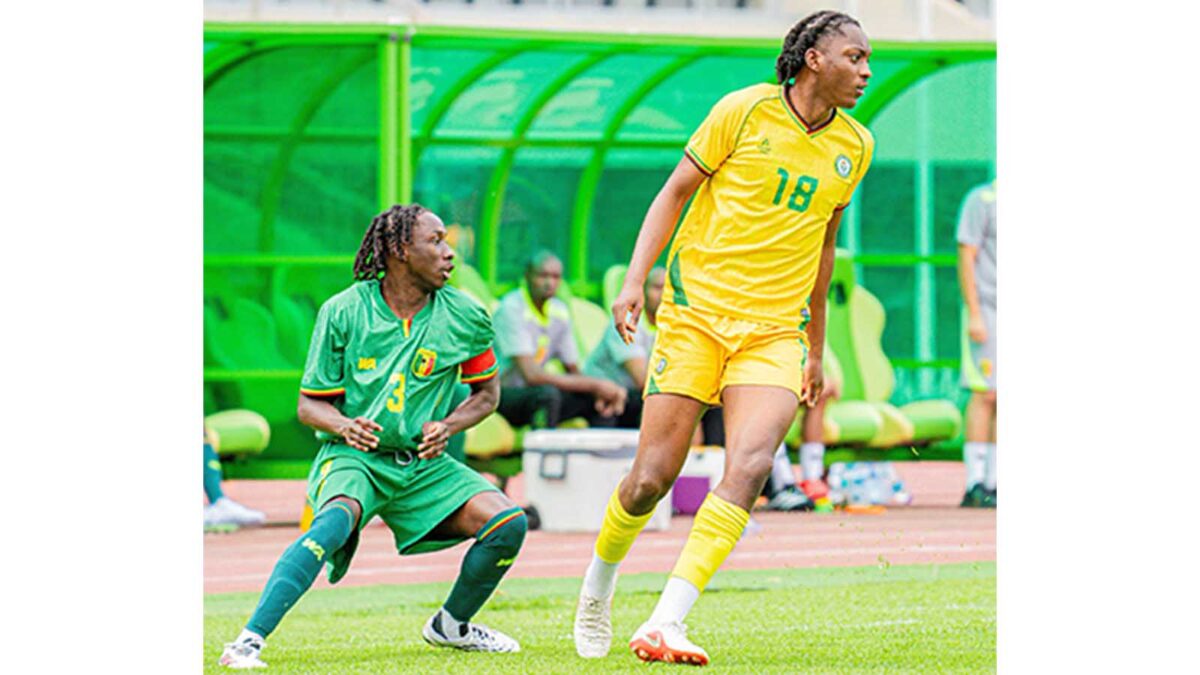
They were horrible against Mali, no doubt about that, they were terrible, in what was an awful first half, no question about that, and they were as lifeless as they were hopeless.
Some of the mistakes, which they made, were the stuff one expects during Sunday league matches and one of those errors led to the penalty from which the Malians doubled their lead.
At times, it was difficult to believe that these were the same footballers, who had impressed many of us with their energy and technical ability, in their demolition of Mauritius.
Of course, the quality, or lack of quality, of the opposition has to be taken into account.
Mauritius aren’t the kind of opposition who can give us a true reflection of the quality of our boys and, even when we thrash them, we need to be realistic about their shortcomings.
Mali were different class.
Their pressing, against a team which strangely kept trying to build from the back, despite all the errors they were making, was superb, their confidence in possession was beautiful to watch and, even out of possession, they kept the right shape.
They dictated the pace of the game, having picked out early that they were the better team, and there were moments when they appeared to be toying with our Young Warriors.
It didn’t help our cause that the guidance from the bench appeared limited and with all due respect to Wilson Mutekede, one of and the finest guys in domestic football, he did not have the same authority which Marc Sanchez exuded.
If I was part of the ZIFA bosses, I would have tasked George Mbwando to take charge of the team, in the absence of Sanchez.
My argument would have been that George, because he has been moulded by the very European academy system from which many of our players were plucked from, would understand the boys better.
Well, those are arguments and debates for another day.
The reality right now is that we are OUT of contention for a place at the 2028 Olympics in Los Angeles next year.
The mission in Mali should be more of an adventure to try and limit the damage, rather than try and rescue our qualification hopes, because if we are not careful, this could turn into a real hammering for us.
When you are building a team, which ZIFA claim they are doing right now, you don’t need that process to be hampered by results like a ten-goal aggregate humiliation, along the way.
Defeats are part of the game but you don’t need that process to be tainted by double score aggregate defeats, at this stage of their introduction into the African game, because this can destroy their confidence for the rest of their careers.
WAS THE BACKLASH REALLY NECESSARY?
I had a chat with ZIFA president Nqobile Magwizi at the National Sports Stadium on the very day that our Young Warriors received a reality check at the hands of the Malians.
I told him that this huge setback should not compromise the project to try and use these platforms to build a competitive senior national team which, in four years’ time, should be able to compete against any of the leading sides on the continent.
I told him that it was a very poor result and he should expect some backlash from analysts and commentators but such backlash should not push him away from the grand vision.
I expected some backlash but I didn’t think it would come with the intensity, and toxicity, which it carried, in the aftermath of our humiliating defeat at the hands of the Malians.
I don’t think it’s fair to single out the British Brigade for blame for our comprehensive defeat at the hands of the Malians.
We can’t embrace them, and salute them, on the occasion that they win, as was the case against Mauritius, and then treat them as if they are outcasts, and they are not part of us, on the occasions that they lose, as was the case against Mali.
These boys are our boys and that they were born in England, or somewhere in the Diaspora, doesn’t take away the fact that they are our boys.
They are not the first group of Young Warriors to all short on the continent and they are not the last.
They were not there, in the decades we have been playing in these Olympic qualifiers, and we still did not qualify for any of the football tournaments held at the Olympics.
It was our repeated failure, in such tournaments, which finally convinced some people that the time had come for us to look beyond the local pastures and try and find talented Zimbabwean players elsewhere.
The reaction, in some circles, appeared as if this is the first time that the Young Warriors have been beaten, in such comprehensive fashion, in the Olympic qualifiers.
During the qualifiers for the 2016 Olympics, without these Diaspora Young Warriors, we struggled and needed the away goals rule to eliminate Eswatini, after a 2-2 aggregate, and then conceded four against South Africa.
In other years, we didn’t even take part in these qualifiers.
In recent years, we have seen our home-based Young Warriors being humiliated even at such tournaments like the COSAFA Cup.
Our challenge, when it comes to youth football, wasn’t created by the Diaspora footballers.
It was created by our decision to neglect our junior football structures, by our decision to start treating people like Ali “Baba” Dube and Moses Chunga, who are so passionate about junior football development, as if they are outcasts in the game.
CAPE VERDE WALKED THIS PATH BEFORE
When we were a community who were serious about junior football development, we were supplying the South African Premiership with its finest generation of imports.
That was the time when we were supplying them with the likes of Khama Billiat and Knowledge Musona, a man who first made his name while playing for our Young Warriors.
Now, we are struggling to send players to Super Diski and from repeatedly winning the regional football tournaments, we have disappeared from the winners podiums at such tournaments.
This has nothing to do with the Diaspora Young Warriors.
This has everything to do with our own local football system which, over the years, has neglected junior development football structures.
The Mali team which we played this week only four home-based players and 21 players who are based in Europe, including ten who are based in France, where they are on the payroll of such teams like Angers, Marseille, Stade Rennes, FC Nantes, RC Lens, Nantes, Lens, Amiens and Sochaux.
They have players who are attached to clubs like Barcelona, whose youth systems only take the best of the best players, and they have players attached to La Liga side Villarreal.
They have players attached to clubs in Belgium, Israel and Austria.
They qualified for the last Olympics and the coach who took them there, Badara Alou Diallo, was still in charge of the team until a few months ago.
Our players had only played two games, against Mauritius, together and we still expected them to compete well against a Malian side whose players have been together for such a long time.
And who have also benefited immensely from the coaching they are receiving from top coaches across Europe.
There is nothing wrong with ZIFA trying to get players from the Diaspora.
We are not the first country to try and tap into its Diaspora talent to try and strengthen our national teams.
We won’t be the last country to embark on such a route.
Cape Verde tried that route before us, and the results are there for everyone to see.
Until 2013, they had not played at the AFCON finals.
At this year’s World Cup, they wrote the Cinderella tale of the tournament and, with Argentina, they were the only side to prevent eventual champions Spain from winning their duel.
Only one player, in their World Cup squad, played for a club in one of Europe’s Big Five Leagues – Logan Costa of Villarreal.
The others played in the lower divisions in Europe and in the United States while ‘keeper Vozinha was 40 when he arrived at the World Cup.
Some of the players had never been to Cape Verde and their first contact with the country came when they arrived to play for the Blue Sharks.
The man who scored Africa’s Goal Of The Tournament at the last World Cup, Pico, against Argentina, was born in Ireland.
He didn’t even speak Portuguese when the Cape Verde football federation first contacted him, via Linkedin, asking him to come and play for the island nation.
It’s a process that takes years and it doesn’t need emotions and only positive results.
Peace to the GEPA Chief, the Big Fish, George Norton, Daily Service, Sitting Bull, Crazy Horse and all the Chakariboys still in the struggle.
Come on Warriors!!!!!!!!!!!!
Antoniooooooooooooo!