admin
admin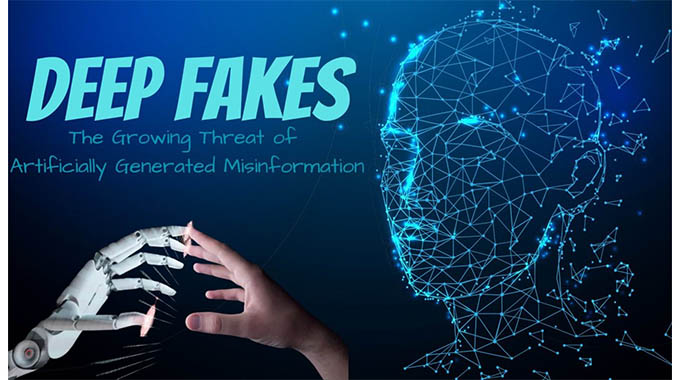
Nick Mangwana-Government Up Close
Countries are experiencing violent protests and attempts to upend the constitutional order across continents.
It is happening in the United Kingdom, Kenya, Nigeria and Bangladesh.
That content has been proliferated across the globe and seems to have inspired some naïve miscreants closer to home. It does not work. It will not work.
It can be argued that at the centre of the violent protests in all these countries is social media disinformation, manipulation or agitation.
In the case of the UK, violent protests erupted after three young girls were killed in a knife attack at a party. Someone then started spreading a lie on social media that the perpetrator was Muslim and an asylum seeker.
Then someone generated and spread online, AI images of a man in traditional Muslim attire waving a knife outside the UK House of Parliament.
A number of influencers then jumped onto the false narrative and urged their followers to protest. That is how the UK found itself battling violent protests and anarchy in several cities.
In the hands of rabble-rousers and perverts, social media can be a very destructive weapon.
The advent of online media platforms that we now call “social media” like any major development in history, brought with it positives and negatives.
Social media came with numerous positives on modern societies which include offering a vast array of benefits to individual personal and professional lives.
It provides a digital platform for global connectivity, allowing old classmates to reconnect, family and friends to stay connected and people to join communities of the like-minded. Social media also serves as a vital tool for information sharing, enabling access to news, educational resources and different kinds of expertise from across the globe.
It also empowers people to express themselves, share their stories and ventilate their feelings hiding behind a keyboard. Creatives can showcase their talents and self-expression in an environment capable of providing them with social support.
It facilitates social networking opportunities, career advancement and access to necessary tools for individual and professional growth.
This space has not only provided an opportunity for e-commerce, but has provided immense possibilities for entrepreneurs. Social media influencers and entrepreneurs are showcasing their products and benefiting from algorithm targeted traffic where they are vending their products. There is a lot of virtual shopping that is done through the same spaces, presenting vast e-commerce opportunities.
But not everything is positive, social media is also bittersweet and has an immense downside.
On this downside, social media came with the scourge of fake news and in recent times, fake AI generated content and deep fakes. While there has always been those prone to spinning a yarn among us, the impact on the populace has increased tenfold.
As the world grapples with the corrosive effects of fake news, Zimbabwe is saddled with the same challenge and more. The country is faced with a destabilising anti-Zimbabwe brigade whose tool of choice is fake news. Members of this group daily fabricate news to injure the image of the country and degrade its status among the family of nations.
Knowingly or unwittingly, some citizens are engaged in social media warfare against their own country.
Social media warfare is described online as “the use of social media as a kind of weapon with the aim of causing lasting damage to certain actors such as governments or companies. Various strategies and tactics as well as technological means are used in order to push through a political, economic, social or cultural agenda. Social media warfare is usually aimed at manipulating the perception and thus also the opinions, emotions and behaviour of a specific target group.”
Examples of social media warfare include the dissemination of fake news and generation of fake images and audios, all aimed at influencing defined target groups.
It is therefore a battle for attention. To win, one must generate viral content and narratives that are intended to emotionally trigger and polarise online users.
Our earlier examples of Kenya, UK and Nigeria clearly illustrate a tactic that is referred to as “swarming” in social media warfare.
In this situation, the attacker uses technological means such as bots to create the impression that there is an angry digital mass.
The attacker then infects real users with this generated “anger” and “indignation”.
The result is often that real human social media users become part of the online mob and in turn mobilise more and more real users.
Ultimately, if this online attack is not countered in time, protests erupt which would likely not have happened without the psychological manipulation of the attackers. Remember recent graphic pictures of unidentified purplish/black fundament that was circulated in Zimbabwe with hysterical captions? Such are attempts at manufacturing outrage, anger and indignation in the populace.
Over the years, we have seen attempted use of this “swarming” tactic in Zimbabwe, suffice to say, “hazvina kupera mushe” meaning it did not end well. But for the peace and sovereignty of our nation to continue to be guarded, we must take it upon ourselves to be conscious of attempts to manipulate our psych online. We must always be vigilant and not be unwitting tools in social media warfare. Let social media be a ploughshare and not a sword.
There are so many ways we can use social media responsibly and positively which can turn it into an indispensable tool for socio economic development. For that to happen we need cyber ethics.
Cyber ethics and responsible use of social media are essential in the digital age we are existing in.
We have indicated that social media is a double edged sword which cannot be ignored or done away with.
As we increasingly rely on it for communication, information sharing and connection, it is critical to recognise the impact of our online actions as individuals, as a community, a society or nation as a whole.
We cannot use social media to destroy our country for kicks. We have to be reminded to be mindful of privacy issues, we have to respect the boundaries of others and avoid harmful behaviour such as cyberbullying, harassment, misinformation and disinformation.
It goes without saying that we have to deploy critical thinking in our use of social media because of issues raised earlier such as deep fakes.
Not everyone is expected to be an expert in digital forensics who can detect a fake post, picture or content with ease, but with a bit of critical thinking one can look for the tell tales because their sixth sense would have raised a red flag saying something about that content is off. This is what leads many discerning users to fact-check.
While there is really no need for training for elementary use of social media, there is a space called digital citizenship now. To be a responsible digital citizen who does not fall foul of the written and unwritten codes of cyber ethics, media literacy is now a basic necessity for anyone with a smart phone who consumes media products through social media.
Now that we have discussed the moral principles and values that should guide our behaviour in the use of social media, the Zimbabwean people through their Parliament enacted laws that regulate and enforce the behaviour of “mhesvamikono” or stubborn miscreants whose criminal conduct cannot be appealed to through moral suasion, empathy and sympathy.
Zimbabwe has enacted laws to curb the abuse of social media. It is actually against the law to spread falsehoods through social media.
For the avoidance of doubt, the WhatsApp platform is part of social media. So one may find themselves arraigned before the courts and on their way to prison for spreading falsehoods, cyberbullying or inciting violence through social media including WhatsApp.
Zimbabwean laws are not meant to curtail the use of social media but to prevent the abuse of social platforms in ways that compromise National Security, infringe individual rights or undermine public order.
As a Government, we continue to urge citizens including netizens to use social media responsibly through refraining from both generating and sharing harmful content.
This can either be content harmful to others or harmful to the State. We are going to focus on policing the cyber space whose laws are largely being ignored so far.
Our objective is to maintain a safe and secure online environment to protect all citizens including the vulnerable and our children.
In this process, we will carry on promoting digital literacy and ethical online behaviour.
The cyber space cannot be allowed to be a free-for-all lawless jungle. The laws are in place, they must be enforced and they will be enforced.
The responsible use of social media in Zimbabwe is crucial for maintaining a safe, secure and respectful online environment. As social media and its associated tools such as AI continue to play an increasingly important role in our modern life, it is essential for users to be aware of the potential consequences of their online actions and activities.
Through being mindful of the perils of cyberbullying, incitement to violence and subversion of the constitutional order as well as creation of or sharing of fake news, Zimbabweans can easily create a safe cyber environment with digitally literate citizens fit for the Fourth Industrial Revolution.
Zimbabweans can harness the power of social media to build a more informed, connected and compassionate society. Ultimately, responsible use of social media is not only a personal responsibility, but also a collective obligation to ensure an online space that reflects the Zimbabwean values, national agenda and our aspirations as a people. Let us do away with everything that adds no value to Zimbabwe’s Social and Economic Agenda.
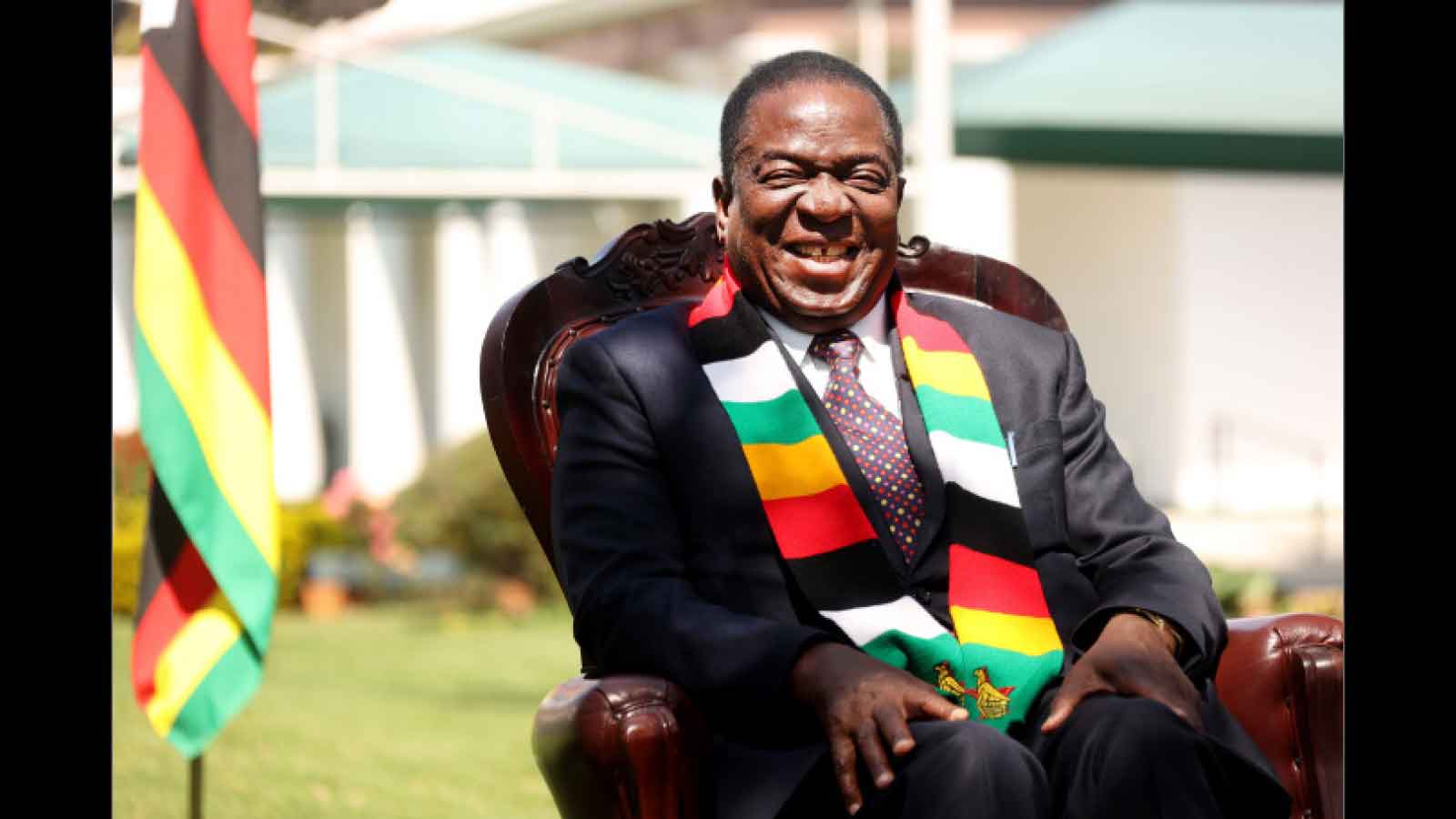
On the occasion of the country’s 44th Independence Day celebrations, His Excellency President Mnangagwa reminded the nation that “social media platforms must be used responsibly to defend our Independence and national pride, as well as to educate, maintain unity, harmony and drive production and productivity in all our communities.”
Nick Mangwana is the Permanent Secretary for Information, Publicity and Broadcasting Services


 Online Reporter