Debra Matabvu, Senior Reporter
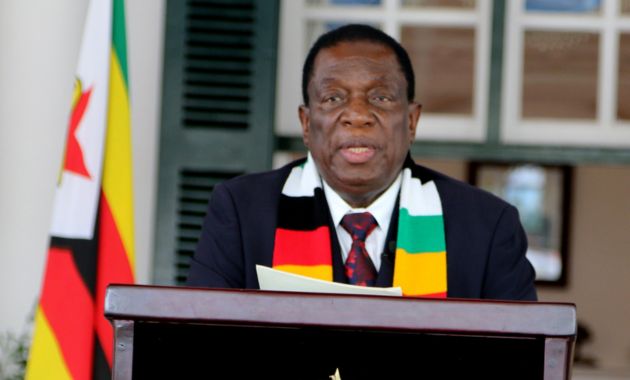
ZIMBABWEANS must take collective responsibility for ending gender-based violence (GBV), with the recent surge in reported cases requiring urgent action that starts at the family and community level, President Mnangagwa has said.
He made the call in his address to the nation marking the commencement of the 16 Days of Activism Against Gender-Based Violence, which runs from today to December 10 under the theme:
“UNiTE to End Violence Against Women and Girls: Ensure Justice, Protect Survivors, End Impunity.”
In a pre-recorded speech, President Mnangagwa said combating the scourge required concerted efforts from all citizens — including traditional and religious leaders, men and boys, the private sector and the media — to create safe communities where women, girls and men could live free from violence.
“Gender Based Violence remains of grave concern, with a surge in reported cases across the nation in the 2026 period. Many survivors do not speak out or access support due to fear of further abuse, victimisation and social stigma, thereby allowing the cycle of violence to persist,” he said.
“Recently reported cases indicate that Gender Based Violence now affects both women and men. This is not who we are as a people. Ending GBV is a collective responsibility.”
President Mnangagwa called for urgent and concerted action by all Zimbabweans, including at family and community level, to arrest these undesirable occurrences of Gender Based Violence.
He called on traditional and religious leaders to strengthen community-based interventions against abuse and applauded traditional leaders for implementing the “Not in My Village” campaign, which seeks to end child marriage, challenge harmful cultural practices and promote accountability at grassroots level. The President also urged citizens to reject illicit drug use and substance abuse, which he identified as major drivers of gender-based violence, while challenging individuals to uphold accountability and respect for the law.
“To every individual: Be accountable. Violence is a crime and a betrayal of our cultural norms and the constitutional right to life. Reject illicit drug use as well as substance abuse, which are significant drivers of GBV,” he said.
President Mnangagwa also called on men and boys to actively participate in preventing violence. He urged families and communities to protect children, support survivors and strengthen mechanisms for reporting abuse.
He also challenged the media and social media users to desist from promoting, normalising or trivialising violence, saying public communication should contribute towards building a culture that rejects abuse. The President also urged the private sector to invest in GBV prevention and survivor-support services, including safe shelters, mobile legal clinics, one-stop centres, mobile clinics and dedicated call centres.
He further called for the adoption and enforcement of workplace policies to prevent gender-based violence and sexual harassment, with employers strengthening mechanisms for responding to reported cases.
“I invite the private sector to invest in Gender Based Violence prevention and response, with regard to supporting one-stop centres, safe shelters, mobile legal clinics and GBV call centres among other interventions,” said President Mnangagwa.
“The adoption and enforcement of workplace policies to prevent GBV and mechanisms in response to sexual harassment should be scaled up.” President Mnangagwa reaffirmed Government’s commitment to promoting gender equality, empowering women and ensuring survivors receive the support they need, while perpetrators are held accountable.
“’Nyika inovakwa nevene vayo, Ilizwe lakhiwa ngabanikazi balo’. Let us unite to ensure justice, to protect survivors, end impunity and continue to build a nation where our people live in peaceful and secure environments,” he said.
“All women, girls, men and boys in our beloved motherland, Zimbabwe, must be free from the fear of violence. This is the Zimbabwe we all want.”
President Mnangagwa said GBV remained a violation of fundamental human rights and an obstacle to social justice, economic development and the attainment of Vision 2030.
He said Government’s response was anchored in the Constitution, the National Development Strategy 2 and the revised National Gender Policy of 2025, which provide frameworks for strengthening equality, access to justice and protection against discrimination and harmful practices.
The President said the revised National Gender Policy identifies legal justice and constitutional rights as a key thematic area, prioritising access to justice for women and girls, while the National Disability Policy provides safeguards to ensure that persons with disabilities are not excluded from justice and support services.
“My Government remains committed to promoting gender equality and empowerment of women as well as ensuring that survivors have access to the services they need, while perpetrators answer for their actions,” he said.
President Mnangagwa said the Constitution prohibits discrimination and harmful cultural and religious practices.
“Equality before the law, access to legal aid and the right to a fair hearing, are prioritised. Additionally, our National Development Strategy 2, outlines strategic interventions, measurable targets and performance indicators towards strengthening access to justice,” he said. “In the same spirit, the revised National Gender Policy of 2025 identifies ‘Legal Justice and Constitutional Rights’ as a key thematic area, prioritising access to justice for women and girls, while the national disability policy provides safeguards to ensure inclusive access to justice for persons with disabilities.
The President said he was pleased to sign, together with other stakeholders, the high-level political compact on ending gender – based violence and harmful practices in Zimbabwe.
“Complementing these policy commitments, is a wide range of multi-sectoral mechanisms available to citizens at a decentralised level. These include the legal aid directorate, toll-free lines, specialised courts, along with the requisite interprets, enhanced traditional leaders’ courts, and police victim- friendly units.
Mobile one-stop centres, deployed in various parts of the country, are helping to deliver survivor – centred gender based violence services.”
Zimbabwe has observed the 16 Days of Activism Against Gender-Based Violence since 1991.