Chronicle Editor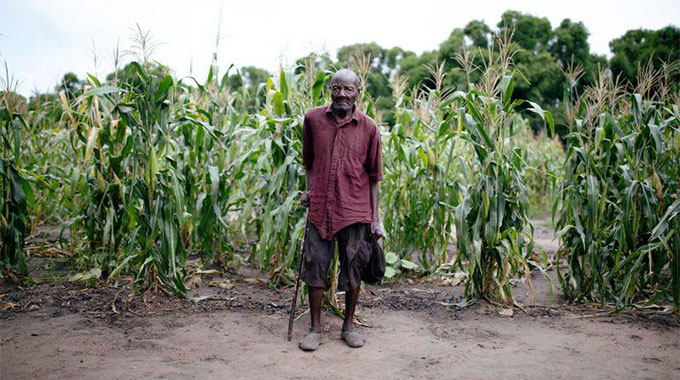
NHAMATANDA (Mozambique) — Hundred-year-old Vasco Gaspar leans on his walking stick in a field in central Mozambique, gathering maize near the tent where he has lived since floods and winds destroyed his house in March 2019.
Like thousands of others, he is still in a temporary shelter almost a year to the day after Cyclone Idai tore through southern Africa.
He walks with a limp from the injuries he suffered when a wall in his house fell on him during the deluge. He is supposed to get food aid every month, he says, but sometimes the supplies come late.
“I don’t have the strength to work but I don’t have a choice . . . I need to feed myself,” he said.
Then he goes back to gathering his food, pulling at the maize stalks that tower above his head.
Gaspar lives on his own in a UN-backed government camp in Nhamatanda district, about 70km (40 miles) inland from the port city of Beira where the cyclone hit land on March 14, 2019.
The government plan is to build up the camp into a permanent settlement. But for now the residents are making do with huts and tents and the small plots of land they have to grow their own crops.
Cyclone Idai — and then Cyclone Kenneth, which hit just six weeks later — destroyed 700 000 hectares of maize, beans, rice and other produce. In February more floods hit Sofala, the central province worst affected by Idai, swamping more fields.
The International Organisation for Migration said in December nearly 100 000 people were still displaced in Mozambique.
The UN World Food Programme says two million people in the country need food assistance, and it is struggling to reach them all.
“WFP have been forced to reduce the food ration for those not living in resettlement centres by 50% in order to assist those most vulnerable up to the end of March,” a spokesman said.
The repeated deluges have tested the huts and tents and other temporary housing.
The government has promised to upgrade the settlements with stronger buildings, but says it has been held up by delayed funding and a host of reporting regulations imposed by different donors.
“It is one of our priorities to rebuild housing in a more resilient way,” Stela da Graça Novo Pinto Zeca, State Secretary for Sofala, told Reuters.
“We are coming up with a plan to do things faster.”— Reuters



 Online Reporter