admin
admin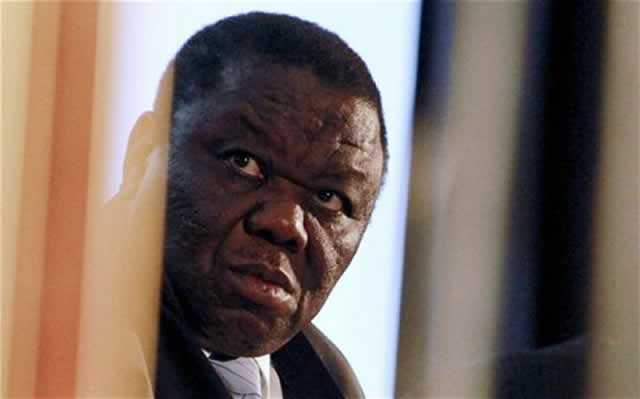
Tichaona Zindoga
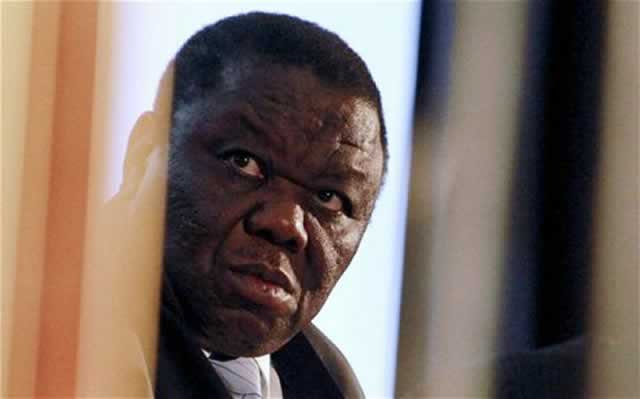
Not so many moons ago, when Morgan Tsvangirai, his MDC-T party and their handlers in the West were savouring the prospect of wrestling power from President Mugabe and Zanu-PF, talk of the “de-Zanufication” of Zimbabwe was rife. Was it not Tendai Biti, forever resourceful, that coined that phrase?Now, as Tsvangirai and company have been made political eunuchs after the crushing defeat on July 31, the prospect of the “de-Morganisation” of Zimbabwe’s politics is not only a consummate irony.
It is also but necessary — a very necessary.
Granted, the proposition is by no means a victor’s material purge of an opponent — what use is Tsvangirai, anyway, after July 31, what with vultures circling over his head and may be hapless carrion even before 2016?
Yet there are certain aspects of the brand of poisoned, sell-out politics that Tsvangirai held that must be purged out of the body politic, for all time sake.
First, and thankfully so, the country’s populace has largely realised that politicians and politics that are created, funded and hand-held by foreigners should not be given room, let alone currency.
Since 1999, the world has seen Zimbabwe engage in fratricidal politics in which the one section led by Tsvangirai sought not only to remove from the scene the erstwhile heroic brothers and sisters.
Along with this, the brand of liberation politics, which liberation has not been complete anyway without full economic Independence, had to be purged.
The modus operandi was appalling.
With the help, say initiation, of foreigners, the MDC sought to stifle the economy by way of sanctions and it was from the very villainous mouth of Morgan Tsvangirai that the world heard calls for the discontinuation of electricity and fuel supplies from neighbouring countries.
It was for the benefit of this brand of politics that the European Union, the US and their allies visited sanctions on the land.
They called this, in moments of decency, “putting pressure on Mugabe” or on more matter-of-fact, blunt occasions, “making the economy scream”.
The economy did scream — screamed unnecessarily — as Zimbabwe suffered on a scale unprecedented since Independence in 1980.
In financial terms, it is estimated the country lost nearly US$50 billion, through many years of de-industrialisation and negative growth.
A person initiates or causes the initiation of such catastrophe is an enemy of Zimbabwe.
They have a name for it, too.
The practice is something between, or a combination of sabotage and treason.
It is to be hoped that in the process of de-Morganisation of Zimbabwe, authorities will have measures to arrest such destructive and dangerous traits and practices.
Then in a de-Morganised Zimbabwe, we will not have the subsistence of such persons or institutions as that receive destructive funding and support from hostile countries or institutions.
Connected to this, authorities must be trusted to not apologise to anyone, least of all the enemy, for cleaning the house.
Did the USA, for example, feel ashamed when its authorities deemed Zimbabwe to be presenting what they called an extraordinary and counting threat to its foreign policy?
To all intents and purposes, the US and its allies present the same extraordinary and continuous threat to Zimbabwe. In light of this, and this has to be the second point in the de-Morganisation debate here, how does Zimbabwe now have to deal with the issue of international engagement, with Zanu-PF in the driving seat?
Background this with the fact that the West has refused to acknowledge the legitimate outcome of July 31.
The countries are in a continuing mood for war with this tiny but resource-rich country, or they appear to be so, too embarrassed to be seen as throwing in the towel. A Zimbabwe with the strengthened hand of political legitimacy must be bold.
No need to go to the West on bended knee, as done when the treacherous presence of MDC shorn the country of legitimacy and confidence, but show the West a big backside, a not-so-polite finger and continue even more gallantly with the Look East Policy.
(The same bullish gestures, already, it has to be guessed, have been shown to all those little thieves in giant robes, not so far from home, that had taken to thinking they could piss on the mighty sovereignty of Zimbabwe.)
Time will tell which starved side will seek out the other; certainly not the richly endowed Zimbabwe with suitors like China ready for a dance!
Another important aspect of the de-Morganisation process should be that Zanu-PF simply implements its manifesto and continues with the quest for economic independence.
To the extent that the victory on July 31 has been compared to that of 1980, the next five to 10 years should be the best years of our lives, a second bite of the cherry for the older generation and the first for some of us, the young generation, whose existence for almost a third of our lives has been lost to Morgan Tsvangirai’s destructive and treacherous politics of the notoriously screaming economy.
It has been a time when young Zimbabweans have been condemned to joblessness and poverty and want and they have had to travel far and wide in the world in search for the proverbial greener pastures.
The older generation became despondent and thought of the good old days; which old days could very much not have come back.
They typically don’t.
But Zanu-PF has a chance to rewind the clock.
It does not, this time around, have to build schools, roads, clinics and bridges: the infrastructure is there.
All that is needed is to monetise its second coming to build on the infrastructure and human and natural resources.
That task should be an easy one, especially with the diamond boon and the resurgent agriculture, buoyed by the miracle of land reform.
Should Government create opportunity, the abundant talent will latch onto it, materialise and develop it.
Zanu-PF must make sure that the economic independence is carried to its logical end with the full implementation of indigenisation and economic empowerment.
Zimbabweans await this promise.
Where there had low disbursement and uptake of youth funds, for example, efficient and transparent mechanisms should be put in place to facilitate access to these potentially life-changing opportunities.
Opportunity and investment are likely to have quick turnover.
And if this happens, who will remember one Morgan Tsvangirai, the near man of Zimbabwe politics and his illusive and elusive donor money?
Suffice be it said, Zanu-PF needs to only expedite the material wealth of the country, as it is disposed to, rather than look for alms Tsvangirai-style.
A cultural revolution may yet be another aspect of de-Morganisation of Zimbabwe.
To borrow from Maoist China, it basically could be said to be an attempt to return to the revolutionary ideal, with the youths in focus.
Today, the youths need to repudiate the Morganistic-sellout politics of the last attempted neoliberal decade. The nationalistic revolution, one phase of which was won on July 31, must be borne with pride by the youths. Zimbabwe has had some stirrings of this nationalist politics among the youths.
It is now time for it to be a fully fledged movement.



 Online Reporter