admin
admin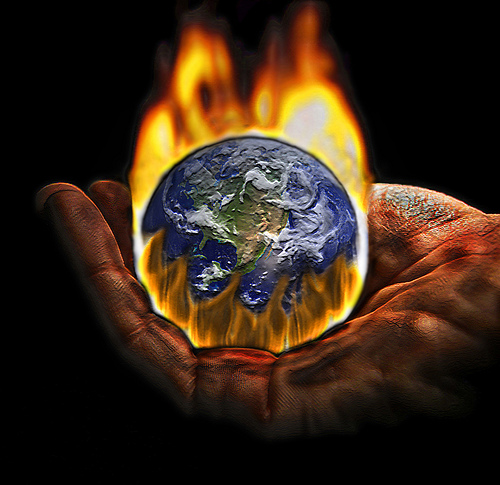
Alex Awiti Correspondent
Global terrorism remains one of the foremost challenges of our time. In an evil, barbaric attack last Friday, Islamic State militants struck a concert hall, a stadium, restaurants and bars in Paris. One hundred and twenty-nine people died, and about 350 were wounded, some critically. The world is united in grief. Ironically, in two weeks, Paris will be the focus of another urgent global challenge. The world will descend upon Paris to talk about climate change. The conference of parties of the United Nations Convention on Climate Change is the largest ritual of global waffle. This 21st conference is unlikely to be different. This is despite the fact that dangerous warming is on the march and time is running out.
Dangerous global warming, owing to the rapid accumulation of greenhouse gases, is linked to our dependence on and addiction to fossil fuels. Moreover, carbon emissions are strongly correlated with economic growth. The world’s most advanced economies are also the worst polluters. China and the United States of America lead the pack of the countries that foul our atmosphere the most.
The positive association between economic output and greenhouse gas emissions has caused governments in the developing world to argue that aggressive measures to curb emissions would undermine growth and prosperity targets. In a sense, every nation feels entitled to pollute its way to prosperity. Here in Africa, we imagine that our share of carbon emissions is negligible. Hence, the burden of responsibility for action to curb emissions and slow down global warming lies with the industrial West and the advanced economies of Asia. At every successive conference of parties, Africans have argued that they are the victims of the adverse impacts of global warming caused mostly by developed and middle-income economies. Africans have argued that they are inordinately exposed, and, hence significantly vulnerable to the impacts of climate change.
For nearly 25 years, we have known that urgent action was needed to forestall greenhouse gas emissions and prevent damaging and irreversible impacts on ecosystems, economies and societies. But we have failed to take any urgent measures to enable a global shift to a low-carbon economy. Governments and dominant policymakers are not convinced that there is such a thing as a low carbon, green growth pathway.
Policy wonks and politicians in developed and developing countries often argue that aggressive action to curb greenhouse gases will have devastating consequences on economic growth, jobs, and poverty alleviation. This in my view is bunk, grade “A” idiocy. On the contrary, if we don’t act now the full and complex impact of climate change could wipe out up to 20 percent of global GDP annually.
Experts have warned that we are firmly on the path to a 40°C warmer planet characterised by extreme weather, unprecedented sea level rise, disease, declining global food stocks, unprecedented extinctions and loss of biodiversity and associated ecosystem services. As we go to Paris, we must remind ourselves that even though the possibility of a globally binding agreement is remote, the stakes are high and time is running out.
It is hard to imagine an orderly, peaceful world that is 40 Degrees Celsius warmer. In Africa, hungry and infirm citizens pouring out on the streets, starving refugees waiting to cross borders and raging conflicts over resources, especially water and pasture, will push the world into irredeemable turmoil. Major cities like New York, Vancouver, Hong Kong, and Dar es Salaam could be washed off the face of the earth. Brutal summer heat waves will kill hundreds of millions, especially in Europe, North America and Asia. Moreover, the complex feedback effects of a warmer planet are unthinkable. We are on the precipice of Armageddon. We must give up our addiction to carbon. This 21st Conference of Parties must be different. We all must act, individually and collectively, to restore our planet to the path of sustainable growth. Our addiction to carbon has pushed the planet to a calamitous tipping point.
What is wrong with us? Perhaps the threat of catastrophic climate change is not immediate or concrete. I think The Day After Tomorrow is here! What is stopping individuals, nations and the global community from acting with fierce urgency to redeem the world from a path of imminent peril? A green growth path, with low to zero carbon emission, is no longer an option.
Dr Awiti is the director of the East African Institute at Aga Khan University. — The Star.


 Online Reporter