

 admin
admin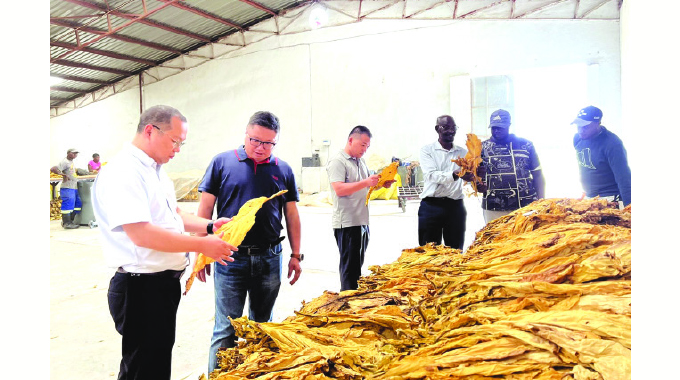
Obert Chifamba Agri-Insight
THE Tobacco Industry and Marketing Board (TIMB) last week proclaimed March 8 as the date on which the 2023 tobacco marketing season will kick off.
Auction floors will be the first to open their gates to farmers on the day, while their contract counterparts do so a day later.
The news has generated both excitement and foreboding among stakeholders in the tobacco industry.
Essentially, the tobacco marketing season marks that time of the year when liquidity improves significantly in the economy and everybody — tobacco farmers and the generality of Zimbabwe always look forward to it.
This year’s marketing season comes on the backdrop of the announcement of an upward review of the foreign currency retention percentage from 75 to 85, which means most growers will have that extra dollar they have been missing in recent seasons.
The upward variation will essentially help cushion the growers from the effects of the unstable exchange rate on the parallel market, which suppliers of most of the consumables they need are using when quoting prices.
It is also worth noting that farmers are expecting better prices than last season given that the majority of them now boast of years of experience and know how to do their business properly.
Sadly, these expectations have always been ruined every season with merchants creating price ceilings that have seen the highest price failing to breach the US$4, 99 per kilogramme mark especially at the auction floors.
Contract floors have in most cases fared better than the auction floors in terms of firmer prices. The surprising reality is that the highest price offered on the opening day when most farmers will be selling their lowest quality leaf that usually includes primings, only changes marginally during the course of the season when the best quality will be delivered.
This surely reeks of a conspiracy among buyers to rip off growers because there is no logical explanation for their failure to distinguish between good and poor quality and reward the two differently.
Farmers have often voiced their concerns over the possibility of buyers colluding to rip them off and working with unscrupulous buyers that are known to fuel side-marketing of the golden leaf every year.
These unscrupulous buyers are known to prey on farmers’ desperation to offer peanuts for produce before later re-selling and getting good earnings.
Various theories on schemes to scam farmers have always been thrown around with the goings-on the ground seemingly corroborating the authenticity of the claims.
It is, however, TIMB’s duty to make sure the season is free from these unlicensed buyers while keeping a hawk’s eye on contractor-cum-scammers that rip off growers by inflating debts by smuggling in unsigned for services into contracts before deducting money from farmers’ earnings.
On one hand, farmers and all stakeholders alike must not forget that Covid-19 is still around and will grab the slightest opportunity to strike especially when there are many people gathering.
This means they should all observe prescribed safety regulations and not read much into the recent lull in cases.
The country is not yet out of the woods so they should make sure they are fully vaccinated and wear masks each time they are in crowded places or transport.
The other important observation farmers should make is that they need to have functional foreign currency accounts by the time they go to the floors so that their earnings are deposited into their accounts for safe keeping.
After selling their produce and getting the money, farmers should avoid making it very obvious that they have been paid because there will be criminals monitoring the goings-on closely and just waiting for openings.
Cases of farmers getting robbed or falling victims to pick-pocketing seem to be increasing with each tobacco marketing season with some of them even getting physically attacked. In most cases the farmers give themselves away, which leaves them with no one to blame.
This will, however, not be fair to their families with whom they would have toiled throughout the season.
In seasons just gone by, there have also been numerous cases of farmers getting robbed of their tobacco en route to the floors and this is happening at night mostly.
It is disappointing to note that farmers do not seem to learn from others’ mistakes and would be comfortable experiencing it personally hence they repeat the same reckless actions.
The police have always warned them against ferrying their produce to the floors at night but all these warnings seem to be falling on deaf ears.
The reality on the ground is that such farmers usually hire vehicles that are not roadworthy so they trust moving during nocturnal hours when there would be reduced police presence on the roads.
Besides being robbed, there are also risks of breakdowns, which exposes produce to elements given that most of the transporters do not even have tents to cover their cargo.
Away from the hassle of trying to get the crop to the market, growers should also devote time to ensuring the preparation of the crop for the market is done diligently.
Some of them usually lose valuable earnings through poor presentation of the crop at the floors. For the crop to fetch high grades, it all starts from the field.
Farmers should make sure they harvest their crop at the right time. Mature leaves should be picked as soon as they show signs of being ready for harvesting.
They should not overstay their welcome on the field especially during a time characterised by persistent rains like what is happening now.
These rains can easily ruin the good quality of the leaf.
Ripe leaves need to be harvested as soon as they are ready and farmers can ascertain this readiness by checking the leaves’ angles of attachment to the stem that will naturally drop or loosen if they are ready to be picked.
The leaves are attached to the stem at an angle of 45 degrees if they are not yet ripe, a position that will change to 90 degrees or so upon maturity.
They will also develop spots that are white in colour at the edges while they turn from green to yellowish.
Ripening leaves can easily be affected by too much irrigation water or rains hence the need for them to be harvested once they are ready. Sometimes farmers conclude that they would have been robbed of potential earnings by merchants using poor quality as an alibi yet they have themselves to blame for failing to do their harvesting and the subsequent preparations of the crop for the market properly.
When they eventually go the market, they must not forget that TIMB has been on record stating that farmers should make bookings before pitching up at the floors so that they do not spend a lot of time before they are served.
Bookings make it easier for TIMB to prepare to serve them since they will be aware of the numbers coming and the quantities to be delivered, which makes life easy for everyone.



 Online Reporter