

 Online Reporter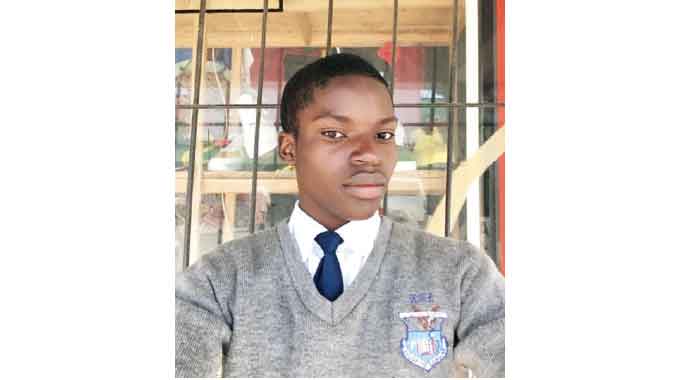
Samson Mhizha
News that a particular Advanced Level candidate in the November 2025 ZIMSEC Examinations had scored 56 points from 12 subjects received very strong, negative and harsh reactions.
Some commentators said the examinations are now too easy. Others blamed the learner for lacking focus and guidance. It was as if this learner had committed some crime. Subsequently, it was reported that the Ministry of Primary and Secondary Education was developing a policy directive to cap the number of subjects a candidate should sit for.
I thought the country needs a policy on gifted education more.
That whole issue sparks interests on the gifted education policy in Zimbabwe. I plead for indulgence as I make a series of submissions addressing the what, where, when, how, who and why of gifted education.
Zimbabwe boasts one of the most successful and resilient education systems globally. We have one of the best literacy rates in Africa. Graduates from Zimbabwean schools are working literally in all countries of the world.
A recent survey showed that Zimbabwe is among the best English-speaking nations in Africa, either tying for first place with, or ranking second behind, South Africa and also ranking 13th globally. Certainly, our education system is globally competitive.
But! Yes, you have heard me correctly. But! Gifted learners, such as this 56-points learner, and his other high-scoring peers over the years, are crying for attention through gifted education, at least as research makes us to believe.
Scholars report that in Sub-Saharan Africa, only South Africa has gifted education policies and programmes. Furthermore, Africa in general, and Zimbabwe in particular, do not have sufficient research on the subject. Apparently, literature says that only 10 percent of research concerning children is conducted in countries where 90 percent of world children live.
The phenomenon of gifted education is often traceable to the age-old pre-colonial, but indelible, Bantu notions of giftedness. But that is a subject for another day.
Like most other African countries, Zimbabwe’s educational focus since independence is on providing primary school education for all. The country intends to offer uniform education to all learners. This policy thrust is in line with international instruments, such as the Salamanca Statement and Framework for Action on Special Needs Education (1994) and the Convention on the Rights of Persons with Disabilities (CRPD) (2006), which support implementation of inclusive education.
Gifted and/or talented?
Defining giftedness is complicated, and equally, controversial. One aspect that contributes to this intricacy is the fact that the term is often used together with ‘talented.’ Literature tend to conflate the two suggesting that they mean one and the same thing.
To help unravel this complexity is Gagné through his Differentiated Model of Giftedness and Talent that differentiates giftedness as greater “natural abilities” (aptitudes) and talent as “systematically developed skills.” Hence, talent represents the performance achieved through learning, training, and practice. Giftedness is a precondition for talent. Gifts do not necessarily become talents. A child must engage in systematic learning and practice in a conducive environment for that to occur. Gagné, therefore, defines giftedness as inborn ‘natural’ abilities shown through the ease and rate at which learners acquire new skills and knowledge. Learning is a lot easier and faster among gifted learners. Talents then represent the performance outcomes and are therefore systematically developed gifts.
Most learners struggle in completing and passing just 5 Ordinary levels subjects. For someone to sit for 12 subjects at Advanced Level and pass them all means that he is evidently gifted.
Does a gifted education policy matter? Importance of gifted education in Zimbabwe
Academic outcomes
Gifted education allows for specialised education to highly able learners that will be different from the majority of learners. This allows the gifted learners to reach their potential and flourish. Gifted learners fall through the cracks when neglected. Not offering them gifted education leads to significant ‘talent loss’ or ‘hidden gifted capital.’ Gifted education enables them to achieve their full potential and to realise their self-fulfillment and self-actualisation. Gifted learners withdraw from schools if their classes are less stimulating and not challenging enough. Thus, gifted education leads to retention and success amongst the gifted learners, which are key aims of education.
Well-being benefits
Apart from positive academic outcomes, gifted education promotes well-being of gifted learners. Gifted learners face socio-emotional challenges from young ages though some researchers believe that they are resilient. A human rights-based approach argues that all children have a right to adequate education, implying that gifted children should get education that suits their unique needs. Gifted education is not a privilege or a favour to these highly able learners. Rather, it is a need and a policy imperative. Gifted learners require challenging education to function optimally. Some, but not all, gifted learners may experience some neurodivergence simultaneously (hence twice exceptional). Generally gifted learners tend to promptly question, evaluate and judge their social and physical environments leading to social adjustment issues. Indeed, some gifted learners have disciplinary and attentional issues. They cannot sustain their attention on the same stimuli for a long time especially when such stimuli are boring and not challenging enough.
Gifted learners find it very strenuous to concentrate during inclusive lessons when the teachers will be trying to accommodate their less able peers. They may even negatively judge their peers or themselves even. These learners have advanced cognitive capacities but poor social and emotional skills. They usually can be rude, blunt, and socially inadequate and withdrawn. They can actually question the preparedness or competence of their teachers and can crudely tell them that they are out of their depth and definitely wasting their time with their poorly prepared lesson material. Such learners can proffer material or methods they deem better. And they can do all that in front of the whole class. Teaching gifted learners can be a hell of a task indeed! If the teacher retaliates harshly the learner can disengage. A future can end there and then. Thus, teachers need to be properly prepared to nurture these gifted learners.
Scientific and economic dividends
I have already said that these national treasures need to be properly nurtured. Gifted education can have scientific and economic dividends for our country Zimbabwe. Countries that reportedly believe that they face serious external or internal threats have developed gifted education programmes to nurture young children who can help in developing scientific innovations for their survival. Gifted education offers the possibility of nurturing these very promising young talents into a source of exceptional human capital and creative capacity. Gifted learners when properly supported contribute to countries’ innovation and economic growth. They often display superior potential to contribute to the country’s science innovation, creativity and the national economy. Countries develop from the cognitive skills of their gifted citizens. The argument herein is that these most high-scoring learners are national resources crying for attention through gifted education early on. Researchers who followed gifted learners for decades reported that those who received gifted education made significant contributions in science, technology, and the arts while those who were neglected lost interest and underachieved.
In summary, a gifted education policy is imperative. In my next contribution, I will discuss the how and when of gifted education using examples from different countries.
Dr Samson Mhizha is a lecturer in the Department of Applied Psychology with the University of Zimbabwe. He is also a member of the Zimbabwe Young Academy of Science (ZMYAS) heading its Science Policy and Communication portfolio. He writes as an independent social commentator. He can be contacted on [email protected]



I am scared that an institution so well known like the University of Zimbabwe can employ a man whose reasoning is so wayward as that of “Dr” Mhizha. I have put the title Dr in parentheses deliberately. There is no such thing as “gifted” education and if it was there, it wouldn’t benefit students. It is similar to having a sportsperson gifted in ten or so sporting disciplines and tries to pursue all of them. One cannot be expected to benefit from all ten. Attempting to pursue them will probably lead to failing all. Students should never be overdosed for the sake of it simply because they are gifted. Too much of anything is bad and we expect the “Dr” to know this simple fact of life.