admin
admin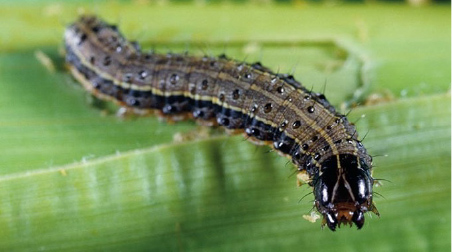
Ashton Mutyavaviri
WITH the bulk of dryland farmers currently doing late planting, it is prudent for them to intensify pest and disease control from the normal two times a week to three times, as a way of protecting crops from the African and Fall armyworm pests whose breeding season has just started.
In its recent farmer advisory statement, the Agricultural and Rural Development Advisory Services (ARDAS) urged farmers to strictly monitor and scout their crops for the presence of the pests and quickly institute control measures if they see them.
“Since are in December, incidences of pests such as African and Fall armyworm increase, as their breeding season has just started. Late planting means the breeding season coincides with the time when our crop is still young and easily attacked hence farmers must up their pest and disease control especially scouting, which may be increased to three times a week instead of the normal two,” said ARDAS.
The statement added that the African and Fall armyworm were different caterpillars with the Fall armyworm attacking maize fields and the latter attacking pastures making it necessary to scout more frequently to control both these caterpillars on time.
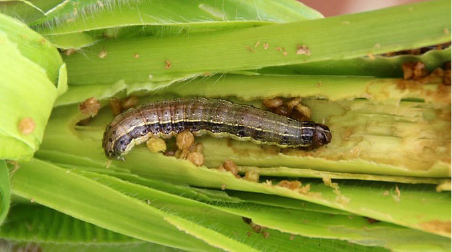
The African armyworm is usually hatched somewhere outside the farms and then steadily eats its way through everything in its path. By contrast, the Fall armyworm moth lays its eggs on the host plant. It does not eat everything but moves up the maize plant as it grows.
Fall armyworm is a migratory pest, which attacks maize and has the potential to cause yield losses in the range from 8, 3 million to 20, 6 million tonnes a year right across Africa if not controlled.
Fall armyworm is a new pest in Zimbabwe and causes extensive damage to maize if not controlled properly and on time. The pest can have up to 10 to 12 breeding cycles in a season and can continue recurring after the first spray, so farmers need to be ready to react promptly.
Armyworm can also cause indirect losses to livestock if an outbreak occurs in pastures, which can lead to starvation and severe poisoning when cattle graze on pastures recently infested by the pest. The armyworm marches along the ground and attacks crops, as it searches for food.
It is an invasive moth, which is difficult to detect and control, it was first noticed in Africa in January 2016, causing massive damage to crops in several West African countries, according to the International Institute of Tropical Agriculture (IITA.)
The fall armyworm can also attack crops like cowpeas, groundnuts, potatoes, soya beans and cotton.
The speed with which it spreads could be due to a few factors. Firstly, female armyworms produce a huge number of eggs of between 50 and 200 eggs per batch and can have up to 10 batches within her lifespan. Secondly, the moths are carried by the wind across vast distances. Some have been known to travel up to 1 000 kilometres.



 Online Reporter