admin
admin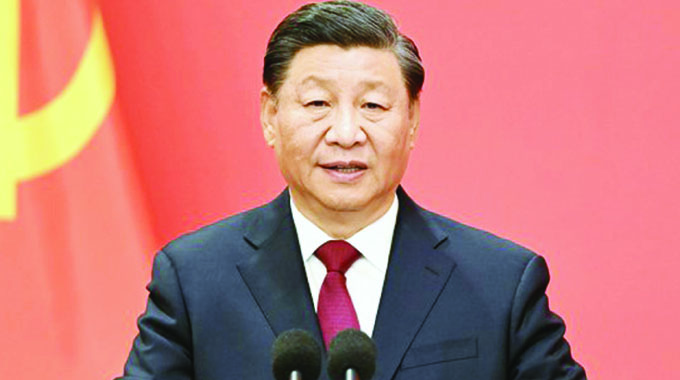
Su Yi Host CGTN
The Chinese president has told a gathering of major developing countries and emerging economies that the world has entered a new period of turbulence and transformation, leading to “more uncertain, unstable, and unpredictable developments.”
When addressing the BRICS Business Forum, Xi Jinping put forward the question “should we work together to maintain peace and stability, or just sleepwalk into the abyss of a new Cold War?”
His remarks at the BRICS events in South Africa remind me of a popular argument that compares today’s world with the era ahead of the First World War. Over a century ago, a robust globalisation process driven by the industrial revolution was suddenly losing steam.
After having experienced a comparatively long period of peace, the world was on the brink of war between two blocs, with major powers busy picking sides. Geopolitically speaking, the bloc led by a rising land power was challenging the status quo dominated by a sea power empire.
Very few people expected the world to be sleepwalking into major turbulence that would witness the demise of almost all major empires and the end of the “old world.”
The Chinese president constantly mentions that today’s world is facing an unprecedented situation not seen for a century. From this perspective, this estimation does not seem to be an exaggeration.
Luckily for humanity, based on the observations from this year’s BRICS summit hosted by the group’s youngest member, there are at least three differences compared with that time.
Firstly, the rising power has no intention to disrupt the existing international structure. Xi Jinping told BRICS leaders that “hegemonism is not in China’s DNA; nor does China have any motivation to engage in major-power competition.”
China is one of the most evident beneficiaries of this round of globalisation. That explains why China is a staunch supporter and promoter of the UN-led world order.
However, the system is built on the economic and military prowess of the US and its currency. What makes the established leading powers worried is the inevitable rise of the Global South and the unequivocal formation of genuine multilateralism. Just look at the diplomatic postures of developing countries following the Ukraine crisis.
An increasing number of them have refused to pick sides. They feel that it is high time to push forward multilateralism. The crux is not China. It is just an instinct for the anxious established powers to blame and stomp on the newcomer, catching up quickly.
Secondly, the developing world has a larger room to manoeuvre to address its challenges. A century ago, the less-developed parts of the earth were either colonised or tightly connected with the economic circles run by big powers.
The world today certainly looks very much different. BRICS countries and their partners prioritise better utilisation of the New Development Bank, the first multilateral financial institution established under the BRICS framework, to supplement existing lending vehicles to support their development projects.
They have discussed the possibility of a new currency or a local currency settlement arrangement under the BRICS framework. Chinese President Xi Jinping said at the summit that “development is an inalienable right of all countries, not a privilege reserved for a few.”
It is a strong message to rich countries that the priority of their developing counterparts is still to recover from the pandemic and address their long-term domestic challenges.
It is merely an illusion that the Global South would pick sides or gang up to challenge the status quo. In this sense, members of the Global South could be the stabilisers that can help prevent the world from sliding into a major global conflict.
Lastly, many global issues today require joint solutions from all countries. It is noteworthy and unexpected that BRICS countries are taking a proactive and coordinated stance over artificial intelligence. They have agreed to launch the AI Study Group of the BRICS Institute of Future Networks. The Chinese president called the members to “jointly fend off risks and develop AI governance frameworks and standards with a broad-based consensus.”
Issues like this, of course, also include climate change and pandemic control, which require wisdom from all countries, rich or less developed. Compared with a century ago, nation states have more reasons to need each other than destroying each other. It is time to drop the bloc-confrontation mindset and ideological competition, which are so out-of-date, and walk away from the edge of a new Cold War. The stabilising factors are increasing. What matters is whether we have the wisdom to avoid the mistakes we made before. – cgtn.com



 Online Reporter