admin
admin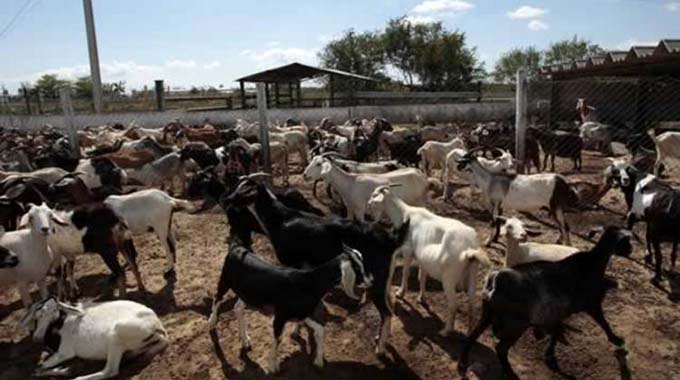
Elton Manguwo
STAKEHOLDERS in the goat industry have called on the relevant authorities to establish a regulatory board that will among other things protect farmers’ interests, establish and strengthen standards for the industry and ensure consistent compliance with them.
“The establishment of a body such as the Pig Industry Board in the goat sector has been a policy position that farmers are calling for from the policy dialogue meetings we hold with them,” Zimbabwe Agriculture Growth Plan communications and policy specialist Mr Kevin Maenzanise said yesterday.
Mr Maenzanise said the establishment of a governing body was critical in enhancing the domestic agri-business environment through stakeholder organisational development and capacity building for strategic planning and evidence-based policy dialogue with the Government to get the national policy and regulatory frameworks right for growth and development of the goat and meat industry.
A board will assist in improving production and organisational efficiencies and market competitiveness in the commercial supply of safe, quality-assured goat and other meat products from environmentally sustainable goat ventures thereby achieving sanitary and order.
Mr Maenzanise observed that although the need for a board was still very much a notion, they had relayed the idea to the Ministry of Lands, Agriculture, Fisheries, Water and Rural Development.
“From a goat value chain scoping study we undertook in 2019, we found out that it was the least represented in terms of policy at national level. This means that goat specific interventions are thus limited. What the farmers are calling for is an institution that will represent their interests and drive commercialisation taking a value chain approach,” explained Mr Maenzanise.
Goats play a crucial role in improving livelihoods and food security in Zimbabwe. Indigenous goats exhibit a wide range of phenotypic diversity, but are commonly well adapted to the harsh environment in which they survive. They have various functions in communities – from providing food security to being a liquid form of cash and playing a role in ceremonial occasions.
To add on, the Government is implementing the Presidential Goat Scheme in all the eight rural provinces of the country, which is set to benefit the most vulnerable households in the communal areas.
Therefore, the setting up of a body is befitting to a production subspace that is experiencing such tremendous growth.
Goat production has been identified as one of the key climate-proofed livestock production systems for building farmer resilience during climatic shocks as given in the Livestock Recovery and Growth Plan.
More so, ZAGP that has been working with small and medium-scale goat farmers has highlighted how the 326 top quality imported goat stock to will add towards the national breeding herd and gene pool that will contribute towards an increase in goat numbers.
The Presidential scheme is set to distribute 550 000 does and 35 000 bucks to selected beneficiaries in all provinces, therefore laying the ground work for tremendous growth of the sector necessitated by small-scale farmers that make up 60 percent of the country’s population.



 Online Reporter