admin
admin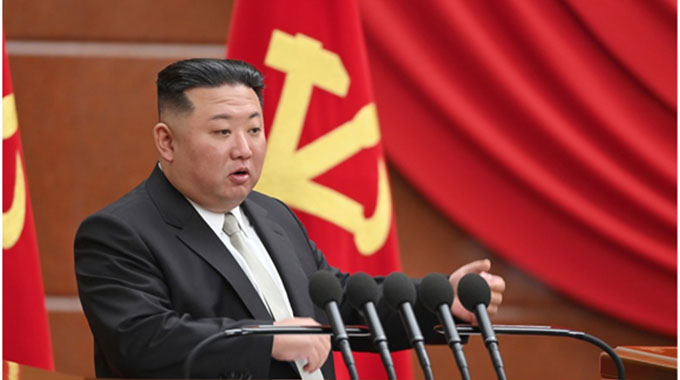
BEIJING. — The Democratic People’s Republic of Korea has expressed unusual willingness to resume DPRK-South Korea summits and hold direct dialogue with the United States since the beginning of the new year. The US, holding a stake in Korean Peninsula peace and stability, needs to seize the momentum to listen to the DPRK’s voice and join hands with other pertinent parties to unravel the decades-old predicament.
In a significant move taken since DPRK top leader Kim Jong Un came into office three years ago, the DPRK’s Six Party Talks representative Ri Yong Ho and former US Special Representative for DPRK Policy Stephen Bosworth are scheduled to have two-day talks on Sunday in Singapore.
Last year, the DPRK’s diplomatic activities focused on its relations with Russia and Japan.
This year, they have shifted toward South Korea and the US.
In his New Year’s speech on January 1, Kim said “there is no reason not to hold highest-level talks” with South Korean President Park Geun-hye if right atmosphere is formed.
As a response, Park said at her New Year’s press conference that she could meet with Kim if it promotes inter-Korean relations, but she noted that the DPRK should show sincerity toward resolving issues through dialogue.
Pyongyang also knows clearly that whether the inter-Korean talks can resume depends on the US which is the dominant player of the US-South Korea alliance.
Moreover, to fulfil Kim’s promise to boost economic development and improve the people’s well-being, the DPRK needs a peaceful external environment.
The DPRK has long regarded South Korea-US joint military drills as a serious threat to its security on a divided peninsula.
Starting talks with the US will be a shortcut for the DPRK to resume negotiations with South Korea.
However, the US response to Pyongyang has been negative and disappointing.
US President Barack Obama on January 2 signed an executive order to impose sanctions against the DPRK government disregarding its proposal to jointly investigate the hacking of Sony Pictures Entertainment over a comedy film “The Interview.”
Despite the rejection, DPRK made a “crucial” proposal on January 9 to the US side demanding a suspension of the US-Korean joint military drills in exchange for a temporary suspension of its nuke tests, and clarified that it is ready to sit with Washington anytime if the US needs to hold talks regarding the issue.
Unfortunately, the DPRK’s olive branch was rejected once again, as the US side sensed a subtle threat in the initiative. However, the DPRK has never given up its efforts to talk directly with the US. — — Xinhua.


 Online Reporter