Online Reporter
Judith Phiri,Zimpapers Business Hub
Transparency International Zimbabwe (TIZ) has committed to strengthening community awareness, closely monitoring the implementation of the Basic Education Assistance Module (BEAM), and pushing for greater transparency in local clinics and schools.
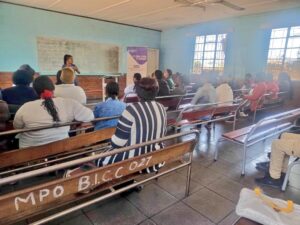
This pledge came during a community advocacy engagement meeting in Bulawayo’s Mpopoma suburb under the Inclusive Service Delivery in Africa (ISDA) project.
The meeting addressed key issues including corruption in the BEAM selection process, favouritism by teachers towards students who pay for extra lessons, and the illegal sale of medicines through backdoor channels in clinics.
Participants also raised concerns about corrupt activities involving some law enforcement officers, complicating efforts to seek justice.
In response, TIZ encouraged community members to report corruption cases through official channels such as the Ministry of Primary and Secondary Education hotline, the Zimbabwe Republic Police (ZRP), and the Zimbabwe Anti-Corruption Commission (ZACC).
TIZ’s Advocacy and Legal Advice Centre (ALAC) has also recorded several potential cases, which are being followed up for further action.

This engagement forms part of the ISDA project, a four-year initiative (April 2022–March 2026) led by Transparency International and funded by Global Affairs Canada, aimed at improving access to healthcare and education across five African countries by tackling corruption. The project focuses on marginalized groups, including women and girls, using community-driven solutions and research to identify corruption risks.
Earlier, TIZ conducted a Social Accountability Monitoring Tools training workshop in Bulawayo, bringing together community leaders, residents’ associations, youth groups, and local government officials.
“Participants explored key tools such as the Citizen Score Card, Citizen Budget, Public Expenditure Tracking Surveys (PETS), Public Procurement Monitoring, and Social Audits. These tools help citizens track budgets, assess service quality, and demand accountability from duty bearers in sectors such as health and education,” said the organisation.

“The training also highlighted the role of transparency and citizen participation in fighting corruption and improving essential services for women, youth and groups at risk of discrimination. Through initiatives like these, TIZ continues to promote open governance, informed citizen engagement and stronger community oversight across Zimbabwe.”
Through these initiatives, TIZ continues to promote open governance, informed citizen engagement, and stronger community oversight to ensure fair access to essential public services in Zimbabwe.
The ISDA project is implemented by Transparency International chapters in the Democratic Republic of Congo, Ghana, Madagascar, Rwanda, and Zimbabwe, in partnership with Transparency International Canada and the
Transparency International Global Thematic Network Initiative on Health (GTNI), with funding from Global Affairs Canada.