Chronicle Editor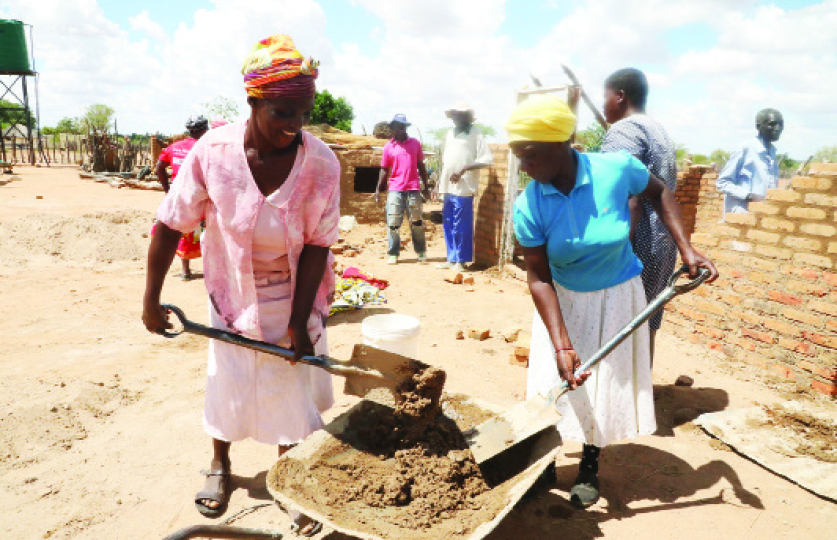
Nqobile Tshili, [email protected]
THE BuKalanga saying Tjilele Tjikulelebo, which means “Look after it and it looks after you”, is more than just a proverb. It is a developmental philosophy that promotes responsible citizenry and community participation.
It is also a model that has been adopted by communities in Uganda and other parts of Zimbabwe, after learning from the BuKalanga communities of Bulilima, Mangwe, Tsholotsho and Matobo.
These communities are known for their people-centred approach to development, which has resulted in some exquisitely constructed homesteads that blend modernity and tradition.
They have also made strides in the development of social amenities, such as schools, clinics and boreholes within their communities. The diaspora community within these districts has played a critical role in mobilising resources, while the locals have been instrumental in implementing the development projects.
Saturday Chronicle caught up with Lucky Moyo, a United Kingdom-based founding member of the Black Umfolosi Imbube Group, who comes from Ngwana Village in Bulilima. He revealed that the community’s development focus is attracting local and continental interest.
He said as a community, they formed the Bana BeNgwana Development Trust, whose aim is to oversee the development of their community through the participation of community members. He said the trust is symbolised by a palm, which represents a hand, and each finger speaks to how they seek development themselves. They have a dam for water, a school for education, a clinic for health, social welfare and youth and women projects.
“In Kalanga, there is a saying ‘Tjilele Tjikulelebo’ (You look after it and it looks after you). So we established the Bana BeNgwana Development Trust, symbolised by a palm which represents a hand and each finger speaks to how we seek development ourselves. We have a dam for water, a school for education, a clinic for health, social welfare and youth and women projects,” said Moyo.
He said they have friends in Uganda who have adopted the model. Moyo said even local communities in Nkayi (Matabeleland North) and Gutu (in Masvingo) have also adopted the model, as it puts communities at the centre of their development.
Moyo said the trust covers everyone who identifies with Ngwana Village as their home and they also need to contribute to its development. He said they have come up with creative ways of fundraising for some projects. For example, Moyo said, when they were in the process of constructing a clinic and ran out of funds, they asked individuals to adopt doors and have them named after them. Within a short space of time, they had raised the funds they wanted.
Moyo said it is the community’s responsibility to also look after its infrastructure. He said they have the senior village head, who is part of the village development committee, as part of the group. Moyo said they have others in the United Kingdom, Canada and the United States of America, who make financial contributions towards the development of the school, the clinic, the social welfare and the churches. He said he also sourced funding from his contacts in the USA to empower women.
When the news crew visited Ngwana, community members were busy building a fowl run, with Moyo saying it is part of their community development programmes.
“So while I was in Washington State, America, a friend of mine said she had savings, she wanted to contribute to a women’s project. So she sponsored women’s projects in Gutu, Rusape and Ngwana. So here she sponsored a poultry project targeting 10 women and another bakery project targeting 10 women. So, I’m not responsible for mobilising the resources but the Bana Bengwana Development Trust. The idea is that the women will have an income-generating project and pay school fees,” he said.
One of the villagers, Mrs Sifelani Moyo said the project is expected to contribute to livelihoods for the community. The project runs under the name Toboka-We’re grateful.
She said while the project covers 10 women, the development approach is inclusive as it caters to those who were not part of any project.
“We are hoping this project will enable us to pay fees for our children. We are also looking after orphans and we hope the poultry project will come in handy for the communities. Already some are involved in a bakery project so this will complement what is already being done,” said Mrs Moyo.


 Online Reporter