Online Reporter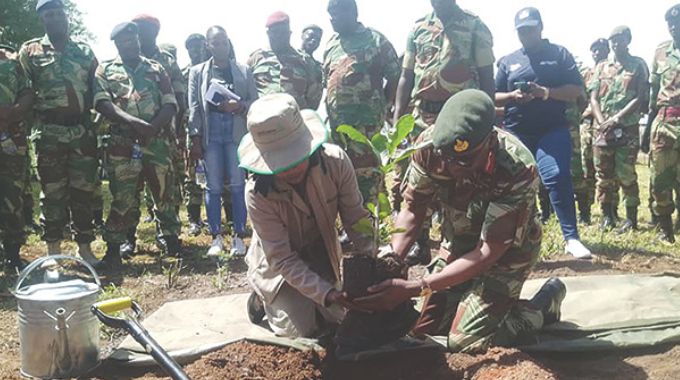
Tariro Mhlanga, [email protected]
WOULDN’T it be something if we had to pause before every breath and consider what we were about to breathe in? If each inhale required a decision based on what was in the air around us. Imagine waking up and thinking, “Right then, what’s on the menu today? A little oxygen, a generous helping of diesel fumes, a pinch of smoke from someone’s burning rubbish, and a hint of dust.”
Across Zimbabwe, air pollution has quietly become part of everyday life. It’s the thick black smoke from the kombi pulling away. It’s the dust cloud following every vehicle on an unpaved road. It’s the smell of burning rubbish settling on your freshly washed laundry because refuse collection has been delayed yet again. It’s the haze from veld fires that turns a beautiful sunset into something almost apocalyptic.
We’ve become used to it. Our lungs, however, have not.
Each of us takes around 20 000 breaths a day without giving it much thought. Yet poor air quality isn’t just an environmental issue – it is a public health, economic and quality-of-life issue.
The encouraging news is that much of our air pollution is caused by human activity. If people can create the problem,
we can also become part of the solution.
What is actually in the air?
Pollutants are substances that contaminate the air and can harm people, animals and the environment. Some, like smoke and dust, are obvious. Others are invisible, making them even more dangerous because we rarely realise we’re breathing them in.
Many of Zimbabwe’s biggest pollution sources are surprisingly ordinary. Older diesel vehicles, open burning of household waste, veld fires, dusty roads, firewood and charcoal used for cooking, industrial activities, mining, brick moulding, quarrying and generators all contribute to declining air quality.
Among the pollutants are carbon monoxide, which reduces the blood’s ability to carry oxygen; nitrogen and sulphur dioxide, which irritate the lungs and contribute to acid rain; and carbon dioxide, a major greenhouse gas driving climate change.
Perhaps the greatest concern is particulate matter – microscopic particles of dust, smoke and ash that travel deep into the lungs and even the bloodstream. Long-term exposure increases the risk of respiratory disease, heart disease, stroke and certain cancers.
The greatest danger isn’t always the smoke you can see. Often, it’s the pollution you can’t.
More than just human health
Air pollution doesn’t stop with people.
Livestock, wildlife and birds breathe the same polluted air we do. Pollutants settling on leaves reduce photosynthesis, while dust coating crops affects plant growth and agricultural productivity. Eventually, airborne pollutants settle into rivers and dams, continuing to damage ecosystems long after the smoke has disappeared.
So, what can we do?
It’s easy to think the problem is simply too big. After all, one household refusing to burn rubbish won’t clear the skies over the city overnight.
But cleaner air has never depended on one grand gesture. It depends on thousands of small decisions made every day.
Burning plastics, rubber and other synthetic materials releases toxic chemicals into the air. Where possible, separating recyclables, composting garden waste and using waste collection services instead of burning rubbish can make a meaningful difference.
Vehicle maintenance is another simple solution. Excessive black smoke often signals poor engine maintenance.
Regular servicing not only reduces pollution but can also improve fuel efficiency.
For households relying on firewood or charcoal, cleaner energy may not always be affordable. However, improving ventilation, cooking outdoors where practical and using improved cookstoves can significantly reduce harmful smoke exposure, especially for young children whose lungs are not yet fully formed.
Communities matter
The actions of one household often affect an entire neighbourhood. Communities can support cleaner air by organising clean-up campaigns, discouraging open burning, improving waste management and planting indigenous trees.
Trees deserve special mention. They trap dust, absorb pollutants and cool our surroundings. Every tree planted today is an investment in cleaner air tomorrow.
We need better information
Air pollution is often invisible. While we can see smoke, we cannot see carbon monoxide or the microscopic particles entering our lungs.
Imagine checking the weather forecast and seeing not only the temperature but also an Air Quality Index telling you whether conditions are safe for children, older people or people with asthma.
Many countries already provide real-time air quality information. Zimbabwe has an opportunity to expand affordable environmental monitoring through air quality monitoring in schools, industrial areas, transport corridors and growing towns.
Better data leads to better decisions, and environmental monitoring provides the evidence needed to make those decisions with confidence. It is far more than simply collecting numbers from monitoring equipment; it involves the systematic measurement, analysis and interpretation of environmental conditions over time to understand how human activities affect the environment.
By generating reliable data, environmental monitoring enables local authorities, industries, researchers and communities to make informed decisions and implement pollution control measures based on evidence rather than assumptions.
Holding institutions accountable
Local authorities play a critical role through effective waste management, road maintenance and better urban planning. A poorly maintained road is not merely inconvenient – it becomes a constant source of dust pollution.
Industries should go beyond minimum legal compliance by investing in cleaner technologies, effective emission control systems and transparent environmental monitoring.
Preventing pollution is almost always cheaper than addressing its consequences, and continuous environmental monitoring plays a critical role in making prevention possible.
By measuring emissions consistently and reporting them transparently, industries can identify opportunities to improve their environmental performance, regulators can better enforce environmental standards, and communities can have greater confidence that environmental commitments are being translated into measurable action.
A shared responsibility
Clean air cannot be delivered by government alone. Nor by industry or environmental organisations acting in isolation. It requires all of us.
Every household that chooses not to burn plastic. Every driver who services their vehicle. Every council that maintains its roads. Every company investing in cleaner technology. Every school planting trees. Every citizen speaking up for a healthier environment.
Together, these actions can ensure that the next generation inherits something we often take for granted until it is threatened: the simple privilege of taking a deep breath without wondering what came with it.
Perhaps the question was never, “To breathe or not to breathe?” We don’t have that choice.
The real question is whether we are willing to do what it takes to make the air cleaner for ourselves and for the next generation.