Online Reporter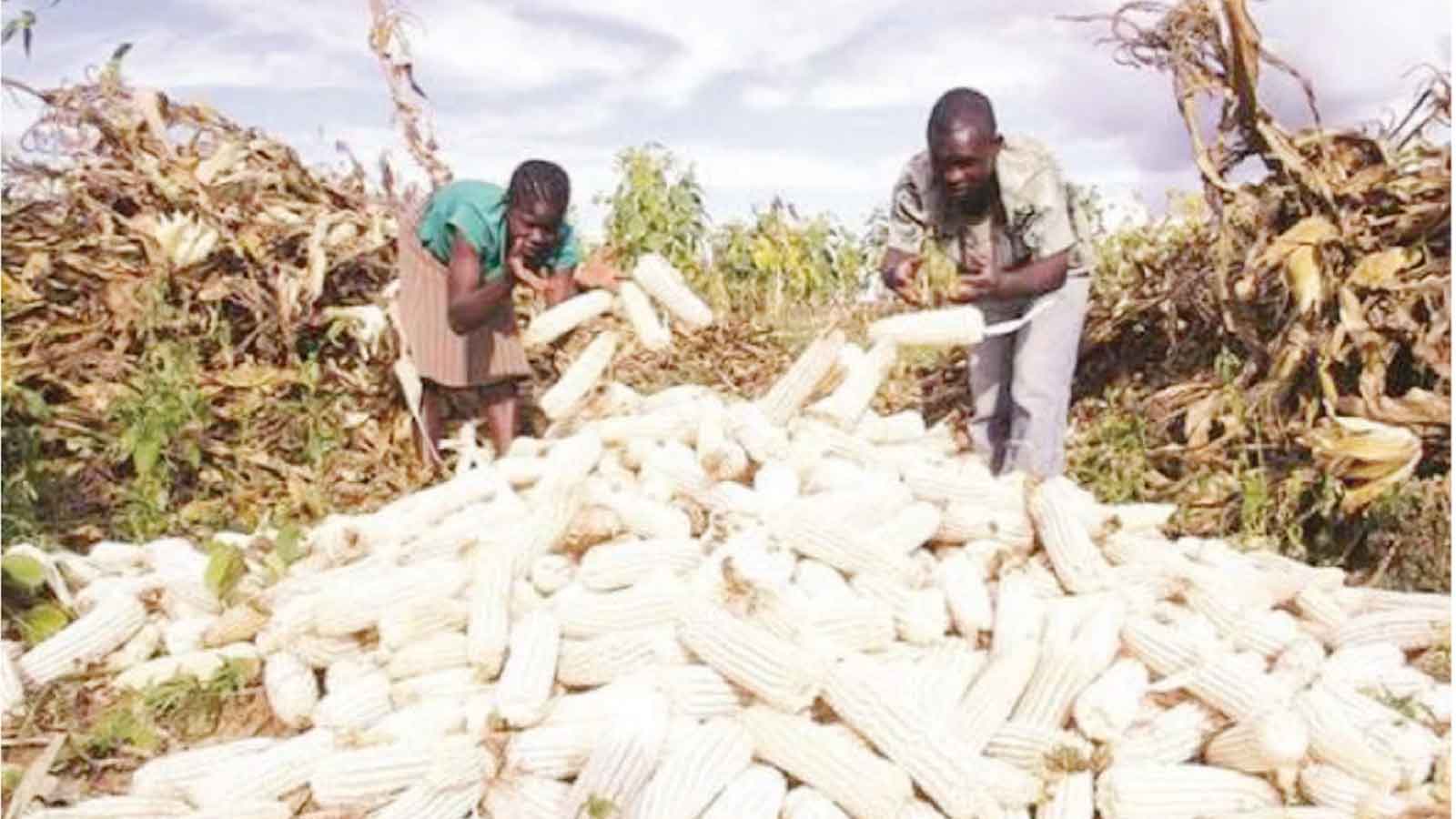
COMMUNION with Bishop Lazarus
In the village, behind every morsel of sadza lay a tale of backbreaking, spine-snapping labour.
Absolutely nothing came easy.
Before you could even think about planting the maize that sustained life in this corner of the world, you had to face the brutal, soul-crushing chore of clearing the fields.
If it was virgin land? May the gods have mercy on your hands.
Bishop Lazi will never forget the fateful day he was conscripted into the small family militia dispatched to clear virgin land to feed an ever-expanding household.
To make matters worse, nature itself seemed to side with the weeds: a rogue, merciless sun bore down on us with the wrath of an offended ancestor.
The land stretched out before us, a wilderness so vast it seemed to extend to the very edge of eternity.
The trees stood like stubborn old men, their roots clutching the soil as if they had signed a lease with the earth itself.
And there we stood, armed with nothing but axes and a foolish confidence that would soon be humbled.
Hacking those trees was not work; it was a war.
Each swing of the axe sent a jarring shock through our arms, and the trees responded with a deep, mocking groan.
The sun, meanwhile, seemed to root for the trees, baking our backs and ensuring every drop of sweat earned its place on our brows.
By the time the first giant fell — with a crash that shook the ground and sent birds scattering into the sky — the Bishop had already used up the energy he thought would last the whole week.
But the week had barely begun.
And the trees were just the opening act.
Once they lay defeated, their roots remained, a subterranean army stubbornly holding on.
They extended not just deep into the earth but also sideways, in a tangled network that seemed to mock the very concept of progress.
To uproot them, we employed an ancient, time-honoured trick: a small fire.
We would gather dry grass and twigs, heap them around the base and set them alight. The smoke would rise, thin and grey, as the fire worked its way into the roots, weakening their grip on the underworld.
It was a slow, patient process — the sort of patience that makes you question your life choices. Then came the uprooting. We would attach a rope, pull, grunt and strain, while the root obstinately clung to the earth.
Sometimes it would surrender with a reluctant groan, and other times it would break, leaving a stubborn fragment behind, a reminder that the land never really gives up its secrets.
You see, transforming a wilderness into a field of lush crops is no picnic.
It takes years of sweat, blisters and the occasional prayer to the ancestors for just a little rain. But when the first green shoots finally pushed through that soil, the harvest will be sweeter than you would have ever known.
Life in the village will teach you that you cannot reap what you did not sow, and you cannot sow without first breaking the ground.
There are no shortcuts in the field, just as there are none in life.
The harvest is a testimony to the struggle — a reminder that the only way to the top is through the thorns, the roots and the relentless sun.
The Scriptures, too, are not shy about soil, toil or the patience of the farmer.
In his letter to the Galatians, Paul writes: “Let us not grow weary of doing good, for in due season we will reap, if we do not give up” (Galatians 6:9).
And then there is the Psalmist, who captured our village experience with uncanny accuracy: “Those who sow in tears shall reap with shouts of joy.” (Psalm 126:5).
And of course, we cannot ignore the Proverbs: “In all toil there is profit, but mere talk tends only to poverty.” (Proverbs 14:23).
Redemption time
Our beloved Zimbabwe has also been engaged in a more or less similar battle against two decades of economic wilderness, international scepticism, deep-rooted hyperinflation and despair.
The harvest has now finally come and even the sceptics are taking notice.
Let us begin with the testimony of Citigroup Inc — that great American investment bank whose name alone once caused our financial planners to break out in cold sweats. David Cowan, their chief Africa economist, has now announced to the world that our teapot-shaped Republic is growing at a faster pace than everyone thinks.
Now, the Bishop chuckled when our economist said this growth has been noticeable “since 2025”.
Really?
Well, we all know that President ED’s Second Republic has been at it since 2018 — through the Transitional Stabilisation Programme (TSP), through the National Development Strategy 1 (NDS1) and now through NDS2.
We have been the fastest-growing economy in the region for five years running, growing by over 7 percent in 2025.
Our brothers and sisters in the region have been watching our maize grow tall while theirs struggled.
But we forgive Citi for their late arrival to the party — after all, the best guests are often fashionably late. Kikikiki.
What makes Citi’s testimony so deliciously significant is its source.
This is no friendly neighbour offering polite encouragement.
This is a United States-based investment bank from a market that has, let us be honest, treated us like a financial leper for the better part of two decades.
They have watched us through narrowed eyes, sceptical of every reform, doubtful of every policy.
And now they are telling their clients — the money movers, the dealmakers, the ones who decide where capital flows — that Zimbabwe is turning around faster than anyone thinks.
Similarly, the World Bank, that great arbiter of institutional health, has removed us from their list of fragile states — effective July 1, 2026.
For years, we languished alongside Burundi, Eritrea and Venezuela, bearing the scarlet letter of institutional fragility.
No more. So, effectively what this bank is simply saying is that Zimbabwe is no longer perceived as a problem child.
And what does this delisting mean for us, the ordinary villagers?
It means investors who were sitting on the fence — arms crossed, watching, waiting — will now be more amenable to climb down and plant their seeds in our soil.
It means our international image receives a much-needed polish.
It means when we sit at the debt negotiation table — and we are sitting there now, with France and the United Kingdom agreeing to co-chair our debt restructuring — we do so not as supplicants begging for mercy, but as a nation that has already demonstrated its seriousness.
A shifting narrative
The narrative is shifting.
Even Forbes magazine, that chronicler of global trends, last year voted Zimbabwe the best must-visit destination for 2025.
They saw what Citi now sees and what the World Bank has officially recognised: a nation on the march.
But all these are not fortuitous developments. We have not been brought here by luck. These are the fruits of military-style discipline in policy implementation.
President ED has led with a clear-eyed vision, refusing to be distracted by the naysayers and the doomsday prophets.
The TSP laid the foundation.
The NDS1 built the walls.
NDS2 is now roofing the house.
Each policy flows from the last, a continuum of disciplined execution that has turned our economic wilderness into a garden. And on the diplomatic front — oh, what a tale to tell!
The same Western powers that once delighted in our discomfort are now revising their postures.
The US, that most obstinate of adversaries, is taking steps to repeal the Zimbabwe Democracy and Economic Recovery Act (ZDERA).
The UK, whose relationship with us has been sour for the best part of two decades, has all but achieved rapprochement.
We have reintegrated ourselves into the global family of nations.
We are joining the New Development Bank under BRICS — opening new frontiers that our parents could only dream of.
The arrears clearance and debt resolution path is now clear before us, lit like a runway for our economic takeoff.
Yes, challenges remain.
The debt overhang is still there —US$21,3 billion worth of it.
The ZiG currency, while stable, operates in a highly dollarised environment.
There is still a gap between official and parallel exchange rates.
We are not yet in the Promised Land.
But we have crossed the Jordan, and the walls of Jericho are falling.
In the beginning, there was only wilderness — stubborn trees, deep roots and the scorching sun of international isolation.
But we kept swinging. We kept burning. We kept pulling. And now, the maize stands tall, golden and abundant.
The world has finally come to admire our harvest. But we know the truth: Every kernel was earned with sweat.
Every policy success was fought for with discipline.
Every diplomatic breakthrough was built on the foundation of economic credibility.
Zimbabwe has turned the corner.
The light at the end of the tunnel is no longer a distant flicker — it is a blazing sun, warming our fields and illuminating our path.
So let the sceptics keep their counsel.
Let the old narratives die their slow death.
We are too busy reaping to care.
Bishop out!