Online Reporter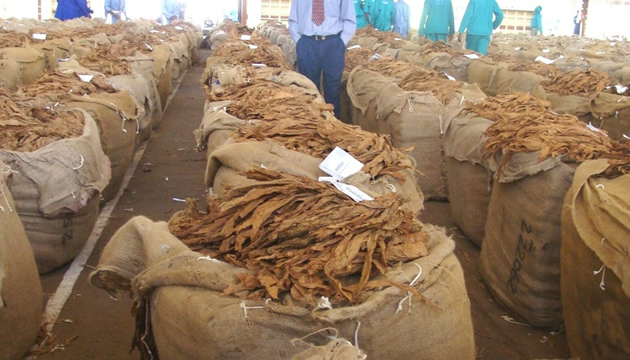
Edgar Vhera
Specialist Writer – Agribusiness
IN a development that hints at a possible shift in marketing dynamics, the average auction price has overshadowed its contract counterpart for 24 consecutive days, as the 2025 tobacco marketing reached day 61.
Statistics released by the Tobacco Industry and Marketing Board (TIMB) show that the average auction price has been higher than that of contract from day 38 to the present.
The price difference between the two has risen from US$0,01 to the current US$0,25 per every kilogramme sold. Zimbabwe Tobacco Growers Association (ZTGA) chairman, Mr George Seremwe said the long-term survival of the industry was in the auction and not contract system for sustainability. “We continually think contracting is the solution to the plight of smallholder farmers yet the mark up they put on cost of production is not advantageous. In the long-term as a country we should go back to the auction system as differences in average price show. Numbers do not lie,” he said.
Mr Seremwe said contract farming was short-changing farmers by paying high prices for a few bales and offering lower prices for the rest. “The auction system should be given prominence and authorities (Reserve Bank of Zimbabwe and Finance Ministry) must participate in financing tobacco production for the smallholder group of farmers,” he pointed.
Mr Seremwe said the now defunct Tobacco Industry and Marketing Board’s (TIMB) tobacco input credit scheme (TICS) was beneficial to smallholder farmers and should be reintroduced.
Tobacco Farmers Union Trust (TFUT) president, Mr Edward Dune had a different saying the current high auction prices were unlikely to influence the shift in financing model next season.
“Auction floor buyers happen to be the same merchants who are contracting farmers and their dominance in offering prices that eclipse contract ones is puzzling. It may also be a product of possible cartel activities meant to confuse the market and it’s not a signal to uplift the smallholder farmers, though it may be the desirable thing,” he observed.
Zimbabwe Commercial Farmers Union (ZCFU), president Dr Shadreck Makombe said the high auction prices were unlikely to cause an increase in farmers opting to self-finance in the upcoming season but the trend would continue into the foreseeable future.
Meanwhile, the Government crafted the Tobacco Value Chain Transformation Plan (TVCTP) in 2021 towards achieving a US$5 billion tobacco industry by 2025 with localisation of tobacco financing for production and marketing on the forefront.
The TVCTP highlighted strategic interventions such as review of the Tobacco Finance Order of 2004 to fully account for the country’s export earnings, promote alternative sources of financing tobacco production, support the recapitalisation of local input manufacturers and increase capacity of local financial institutions to finance agriculture and tobacco from local funding among others.
Government actualised this in the 2023/24 season by localising tobacco production financing through removing restrictions on the use of locally sourced funds to support the production of tobacco in the country.
The Reserve Bank of Zimbabwe allowed locally sourced funds to be used in funding tobacco production.
“In terms of Section 4 of the Exchange Control (Tobacco Finance) Order, Statutory Instrument 61 of 2004, tobacco merchants are required to source offshore financing to produce and buyback green leaf tobacco. Tobacco merchants who fail to secure offshore financing are required to apply to the RBZ for authority to raise funds on the local market. With immediate effect, there will be no restrictions on the use of locally sourced funds to support the production of tobacco in the country,” said former RBZ Governor Dr John Mangudya then.
The Exchange Control (Tobacco Finance) Order, Statutory Instrument 61 of 2004 was then amended to take account of the change but no significant change in the localisation funding has been noticed.