Online Reporter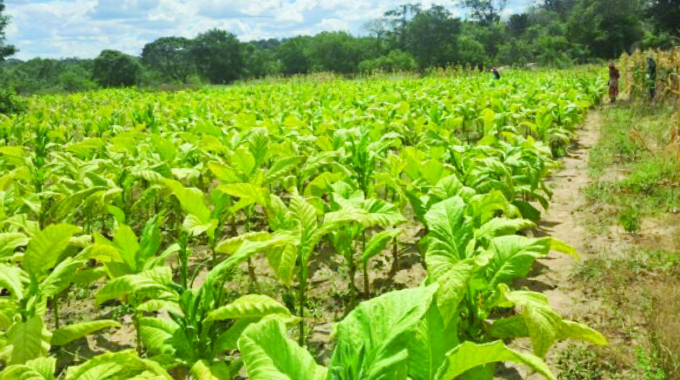
TOBACCO has become a major driver of rural development and farm incomes across the “tobacco belt” stretching largely through the three Mashonaland provinces and northern Manicaland. The smallholder farmers, who dominate the sector, have shown that the land reform programme did more than correct injustices, it boosted productivity.
The more than 350 million kg sold by tobacco farmers this year dwarfs the 237 million kg, the 2000 total and the largest crop sold before land reform, with output now having risen almost 50 percent. Even more importantly the US$1,17 billion earned by farmers this year is spread across tens of thousands of families, rather than just 2 000 plantation owners.
Travelling through the “tobacco belt” and the now thriving small towns dotted across it, we see the results of ever more decent housing, more prosperous farms, thriving businesses in the hub towns and more traffic on the roads.
This is the sort of rural development that we need. Tens of thousands of farmers getting on with growing an ever-larger quality crop that converts the abstract figures of the “upper middle income society target” of economists into real hard-working families living on farms.
A lot of things were done right after land reform a quarter century ago. The Tobacco Industry Marketing Board, the independent, efficient and hard-nosed regulator set up by Government with membership from across the sectors, runs a tight industry, with everyone from the smallest farmer to the largest merchant listed and licensed. The board ensures fairness of contracts and dealings and prevents the evils of side marketing and contract cheating by any party.
We need to remember that this revolution also took place first during the worst of the years of hyperinflation and then during the very tight liquidity following dollarisation. It was possible because Zimbabwe was able to show that its farmers could produce the right crop at a fair price and so outsiders were willing to back the merchants, who were contracting almost all the farmers knowing that they would get their money back along with the tobacco.
However, as skills continue to grow so that tobacco farmers of all business sizes become ever more risk-free if lent money or offered contracts, and as the TIMB maintains its exceptional but flexible regulatory regime so there is no cheating, it is now possible to move forward and rebuild the local capital resources that used to help finance the crop.
One major reason why merchant banking was once so important in the banking sector in this country was the need to finance the tobacco trade.
The farmers borrowed the money first to grow the crop but as it came up for sale the merchants took over the borrowing so they could pay the farmers, do the initial processing and then sell the crop in monthly batches to overseas customers.
We now need to restore, although almost certainly in a different form, this higher level of local financing so that a far larger percentage of the profit remains in Zimbabwe, and can be used to drive both the industry and the economy in general. It will not be an instant process obviously, but if every year more of the farmers are self-financed, or at least partly self-financed, we will be gaining.
We will always have contract farming, although more of the contracts need to be locally financed, but the auctions can move back into the limelight from the 5 percent of the crop they now handle to take on a far larger percentage.
An important part of the tobacco financing is to carefully examine the effects of the severe drought last year. Tobacco did decline, but not nearly as severely as most other crops and most tobacco farmers remained viable and produced a saleable crop that kept them on the land if not with as much cash as usual.
This means, with everything else the industry has including its regulator, that tobacco farmers are fairly low risk so lending them money for specific purposes is not going to give lenders heart palpitations. Rather, carefully inserting a range of finance models into what is already there but retaining the strict management of the sector seems a good way of progressing.
President Mnangagwa obviously saw this point when he stressed that tobacco farmers will be benefiting under a US$2 billion loan facility over five years in the productivity booster kit programme. There will be other farmers with other crops and livestock who have built up the sort of reputation that tobacco farmers have and who must benefit, but the tobacco industry almost uniquely has an almost 100 percent compliant membership.
The President noted that the banks, that will be the agents for the Government programme for tobacco farmers, are also willing to use their own money as well, and again we note that local banks have a reputation for being risk adverse and keeping bad loans to very low levels as they continue building up the national pool of capital.
Generally the larger farmers, mainly those on the A2 schemes, have most of the irrigation potential and the booster kits are partly designed to make sure that the smallholders on A1 and communal lands have the same opportunities to get their seedling established and planted early and cope with anything resembling a drought patch.
As we build up the range of varieties we will need to supplement our core of flue-cured Virginia tobacco when we start committing an ever higher percentage of the crop to local value addition and production, the irrigation and the rising range of farmer skills become ever more important.
Tobacco has very largely concentrated its benefits into the farmers who grow the crop and the merchants who sell it. The value addition of the giant cigarette factories, and this will probably mean also the factories that produce the paper and filters and boxes, will extend that benefit to many more thousands of workers and ensure that tobacco at least retains its share of our rapidly rising exports, even as we mine more metal and manufacture more goods.



 Online Reporter