malvernmugadzikwa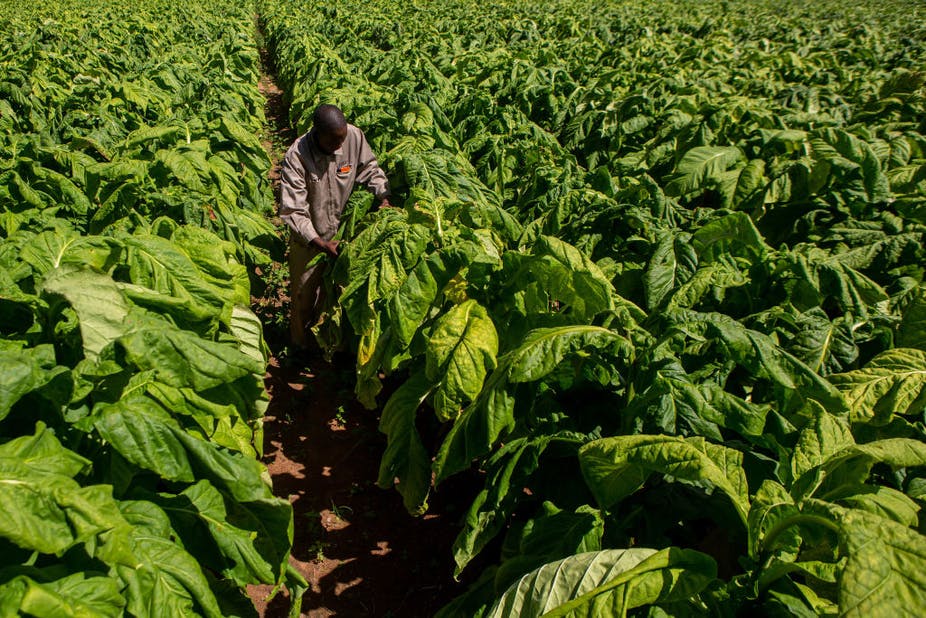
Business Writer
The 2023 tobacco marketing season will start on March 8, according to a note by the Tobacco Industry and Marketing Board (TIMB).
Auction sales will begin on March 8 while contract sales will begin a day later.
About 95 percent of Zimbabwe’s tobacco is produced under contract schemes.
Tobacco is country’s largest foreign currency earner after gold and according to initial forecasts, output is expected to grow to 230 million kgs, from 212 million kgs produced last season.
This year’s crop is also expected to be of better quality thanks to the good rains that the country has received so far, according Tobacco Producers Association of Zimbabwe.
The bulk of tobacco is produced by small scale indigenous farmers who were allocated land under the land reform programme which began at the turn of the millennium.
At peak, Zimbabwe produced 257 million kgs of tobacco three year ago and the Government intends to expand production to 300 million kgs.
The Government is also looking at localising the funding of tobacco and beneficiation to miximise earnings. Under the current financing model, tobacco is largely funded by offshore money.
Tobacco output is expected to be high in both volume and quality due to the good rains that the country received this cropping season, a farmers organisation said on Thursday.
George Seremwe, president of the Zimbabwe Tobacco Growers Association, an amalgamation of four unions, told journalists that the quality of the tobacco crop was good and would be able to fetch top prices when the marketing season opened soon.
“This year, we have got a very good crop. The rains were good, even the dry land crop which is rain fed could be looking like the irrigated crop because the rains were quite good.
“We are expecting a very good quality crop. We are only concerned that the inputs were quite expensive, so the prices we are going to fetch from the market should reflect that,” he said.
The Tobacco Industry and Marketing Board is, however, still conducting a crop assessment to determine the size and volume of tobacco expected this year.
Seremwe said some farmers were currently curing their crop, in readiness for the 2023 selling season.
“Curing is ongoing,” he said.
Tobacco is the country’s biggest agricultural export and second largest single commodity export after gold, raking in around US$800 million in 2021.
Its output has grown from 48 million kilogrammes in 2008 to over 200 million kilogrammes now, and the bulk of it is produced by small scale resettled farmers.
Currently, only 18 percent of the crop is grown under irrigation, and the intention is to expand this to at least 40 percent.
But the success in increasing tobacco output came at a huge environmental cost as it led to massive deforestation, especially in resettled farms.
The TIMB and other concerned stakeholders are keenly grappling with the problem through promoting the use of fuel efficient tobacco curing barns and renewable energy sources.



 Online Reporter