Chronicle Editor
Raymond Jaravaza, [email protected]
NOW in its second season, the pioneer commercial tobacco farming revolution that began last year with a handful Marula villagers in Mangwe District, has grown in leaps and bounds with over 170 farmers growing the golden leaf in the 2024/25 season to tap into the rich pickings of the cash crop.
When tobacco growing was introduced to Marula villagers in the 2023/24, only 17 communal farmers heeded the call to switch from traditional small grains and maize to commercial tobacco farming.
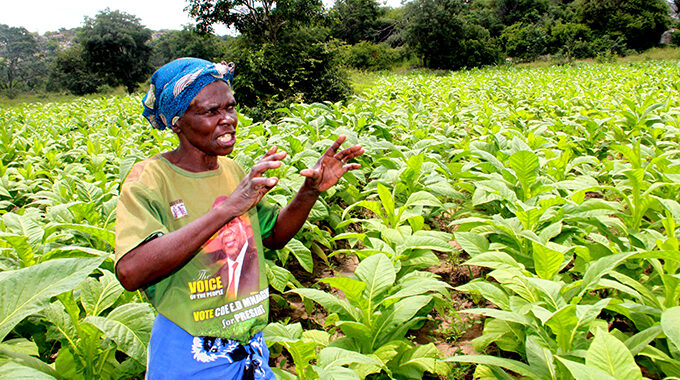
In the 2024/25 tobacco season, the project has spread to villages deep in the Mangwe District to areas such as Ingwizi and Tshitshi.
More farmers have also joined the project from neighbouring Bulilima District.
Tobacco is predominantly grown in Mashonaland provinces with a few farmers involved in the Midlands province and not so common in the entire Matabeleland region, which majors in cattle ranching.
The pioneer tobacco scheme was introduced last year at Syringavale Farm in Ward 11, Marula – breaking the decades cycle of reliance on grain and livestock farming.
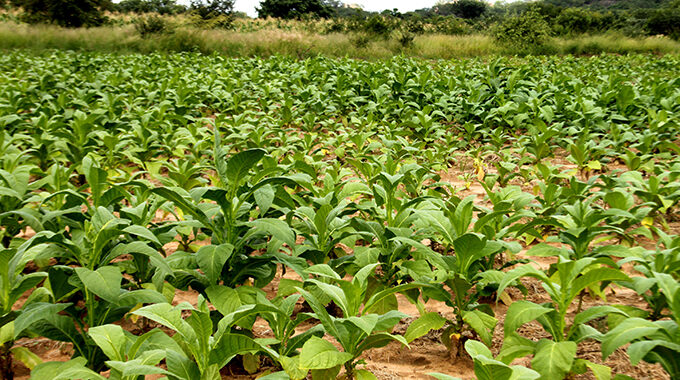
“The tobacco that was planted in both Mangwe and Bulilima Districts is at different stages of growth as the rainfall patterns were staggered so farmers could not plant at the same time.
“From the initial 17 farmers who joined the scheme when it was introduced in Matabeleland South we now have more that 170 tobacco farmers,” said tobacco farming specialist Mr Rodrick Musiiwa.
He is a former Tobacco Industry and Marketing Board (TIMB) employee with vast knowledge and experience in tobacco farming.
“Some of the farmers in the Greenfield Farm area in Mangwe District are close to harvesting while some in the Figtree area have started harvesting.
“The rains have been good, which is a bonus for tobacco farmers in Matabeleland South and we expect them to have a good harvest,” said Mr Musiiwa.
Mrs Ellen Sibanda, a first-time tobacco farmer at Greenfield Farm said she planted half a hectare for a start.
“I started planting on 17 December 2024 and in a week I had planted 8 300 plants although the figure fell short of my target of over 9 000 plants,” she said.
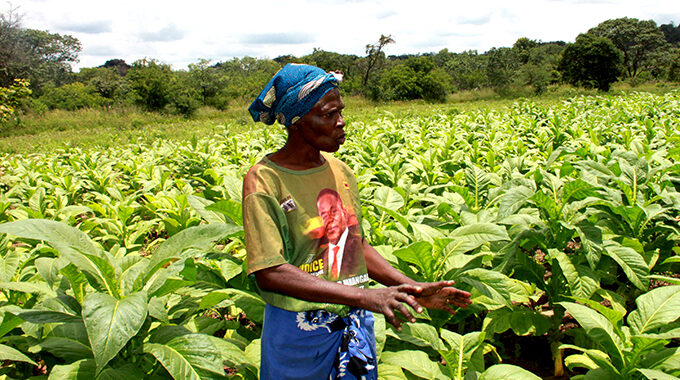
“Tobacco farming is hard but together with the one employee that I hired, we persevered and finished planting on time as advised by Mr Musiiwa,” said Mrs Sibanda.
She said she was inspired to venture into tobacco farming last year when she attended a field day hosted by one of the pioneer farmers of the cash crop.
“Instead of planting maize on two hectares of land, I decided to set aside half a hectare and try tobacco farming. I should start harvesting in about two weeks,” said Mrs Sibanda.
Yesterday she was finishing work on a barn where her tobacco crop will be cured.
Unlike in other parts of the country where tobacco is dried by burning wood in the barns thus contributing to deforestation, farmers in Matabeleland South use the sun to cure their crop – an eco-friendly method that does not damage the environment.
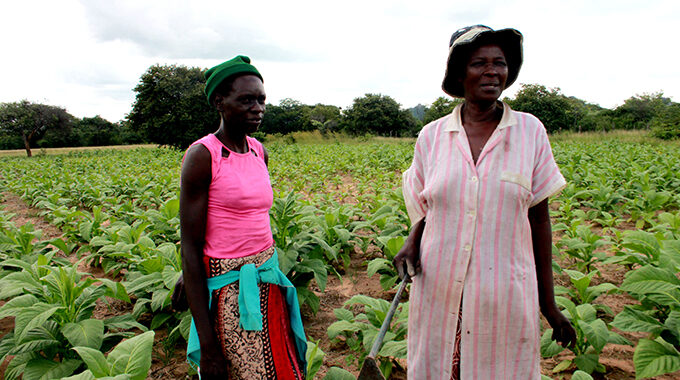
The dry spell that hit Marula village in late December forced Mrs Nonsikelelo Ndlovu to postpone planting as the conditions were not ideal to transplant her tobacco seedlings.
“I planted a bit late around 10 January 2025 and the plants did well for the first two weeks but we received too much rain and part of the field became water logged, damaging some of the crop,” she said.
“I re-planted on one side of the field, which is why the tobacco is at different stages of growth,” said Mrs Ndlovu.
She harvested close to 300 kilogrammes last season and is optimistic she will get a better yield this time around.
Mrs Sibonele Mathe planted 14 900 tobacco plants on one hectare and is confident she will reap the rich pickings of the cash crop.
“I’m a first time tobacco farmer and I was inspired to try the crop when I walked past a tobacco farm at Syringavale Farm in Marula last year.
“I told other villagers that I would try tobacco farming but they did not take me seriously,” she said.
“There was a time when we had a long dry spell and I almost lost hope. We are happy now because we have been receiving good rains during the past few weeks. I’m hopeful that we will get a good harvest,” said Mrs Mathe.
In her village in Ward 3, Mangwe District, only four farmers have taken up tobacco farming and she says other villagers are eager to see if they will be paid well for their efforts.
Mr Musiiwa said the idea of introducing tobacco farming in Marula was motivated by the need to capacitate farmers in the southern parts of Zimbabwe to try cash crops that can do well in drought conditions so that the country continues to meet the demand for tobacco.
The increasing incidences of drought in the region have greatly affected yields, plunging the majority of the communal farmers in the area into poverty hence the need to shift to tobacco farming.



 Online Reporter