Online Reporter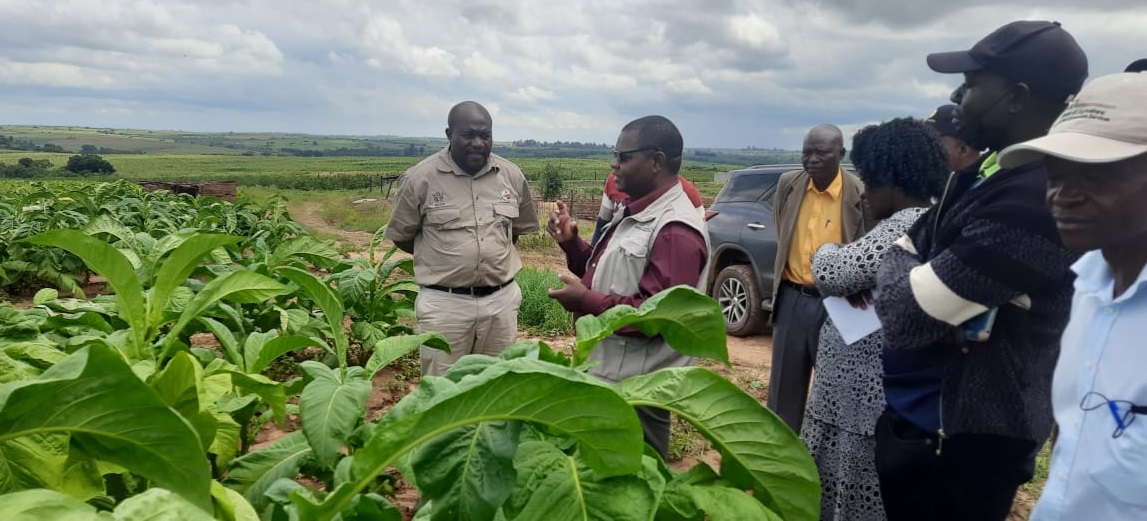
Sunday Mail Reporter
THE recently completed first-round crop assessment points to another record tobacco output this year, as the sector closes in on the target to produce 500 million kilogrammes of the golden leaf within the next four years.
Last year, local farmers produced a record haul of 355 million kg valued at over US$1 billion, surpassing the National Development Strategy 1 (NDS1) target by more than 55 million kg.
Output is projected to continue to increase, especially with the introduction of new varieties, some of which can yield 2 500 kg per hectare even under dry conditions.
Government efforts to localise financing, strengthen research and technology, and boost productivity are expected to grow the sector to US$7 billion by 2030.
Local funding now accounts for 67 percent of total tobacco financing, translating to US$663 million.
The remaining 33 percent — amounting to about US$330 million — came from offshore funding, bringing total sector financing to approximately US$993 million.
Most farmers with irrigated crops are currently reaping, while those relying on rain-fed production are preparing to begin harvesting.
The tobacco marketing season is traditionally opened in March.
Permanent Secretary in the Ministry of Lands, Agriculture, Fisheries, Water and Rural Development Professor Obert Jiri told The Sunday Mail that the sector’s performance is underpinned by strong policy coherence, financing reforms, research and innovation.
“During NDS1, Zimbabwe surpassed production targets and significantly increased the localisation of tobacco funding,” said Prof Jiri.
“With NDS2 and the forthcoming Tobacco Value Chain Transformation Plan 2, we are confident the sector will reach 500 million kilogrammes and a gross value of US$1,2 billion by 2030, while making a strong contribution to national development and employment.”
The Government, he said, is also pursuing diversification into new types of the crop, including dark fire, cigar and shisha tobacco, alongside efforts to expand value addition and beneficiation through local processing rather than exporting raw leaf.
Contract farming now accounts for more than 80 percent of production, providing farmers with guaranteed inputs, technical expertise and assured markets.
Local banks, concessional financing facilities and the Tian Ze model, established under Zimbabwe-China bilateral cooperation, are also supporting farmers through low-interest loans and guaranteed export markets, further strengthening production.
Prof Jiri said Kutsaga Research has since developed and released more than 70 high-yielding, drought-tolerant and disease-resistant tobacco varieties.
Modern technologies, including tissue culture, biotechnology and climate-smart agronomy, are helping farmers stabilise yields, mitigate climate risks and maintain Zimbabwe’s competitiveness on international markets.
Kutsaga Research chief executive officer Dr Frank Magama said some of the new varieties have the potential to produce up to 5 000 kg per hectare, depending on agronomic practices and growing conditions.
“Our drought-tolerant varieties such as T79, T80 and T81 can produce over 2 500 kilogrammes per hectare even under dry conditions,” said Dr Magama.
“With optimal agronomic practices, varieties such as T76, KRK70 and KRK73 can yield up to 5 000 kilogrammes per hectare, while farmers following good practices can generally expect up to 4 500 kilogrammes per hectare. These varieties help smallholder farmers mitigate climate challenges and improve productivity.”
Commercial Farmers union president Dr Shadreck Makombe said the emphasis on local financing and contract farming is strengthening farmer confidence and productivity.
“The focus on local financing and contract farming gives farmers security and improves productivity. We are confident the tobacco sector is headed for another strong season,” he said.
Zimbabwe National Farmers’ union president Mrs Monica Chinamasa said sustainability remains central to the sector’s growth.
“Smallholder farmers are now better positioned to produce high-quality leaf, manage climate risks and access markets. This approach ensures long-term sustainability and growth of the sector,” she said.
Tobacco Industry and Marketing Board spokesperson Mrs Chelesani Moyo-Tsarwe said marketing operations will follow the established tobacco marketing calendar.
“Marketing operations will commence in line with the established calendar, with dates to be announced in due course. We urge farmers to prioritise proper harvesting, curing, grading and handling practices,” she said.
“Preserving leaf quality is essential to securing better prices and maintaining strong market confidence both locally and internationally.”