Online Reporter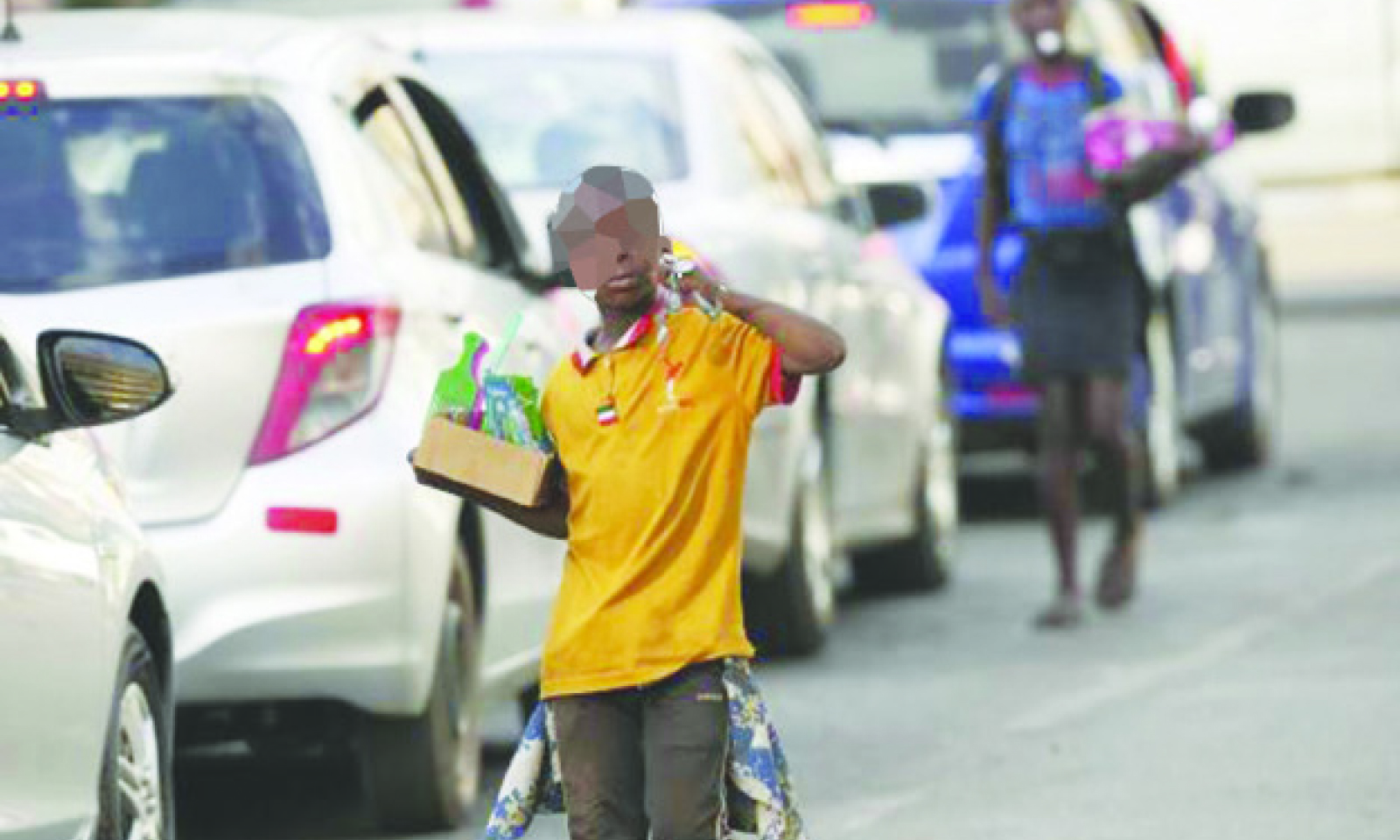
Ivan Zhakata
Check Point Desk
At the bustling Copacabana Bus Terminus, where the honks of kombis blend with the calls of street hawkers, 13-year-old Tinashe (not his real name) weaves between buses, selling airtime cards and sweets.
He should be in class, but instead, the city streets have become both his workplace and his classroom.
“I stopped going to school last year because my mother could not pay my school fees,” he said quietly, gripping a half-empty box of chewing gum. “Now I sell here every day. If I don’t, we don’t eat.”
Tinashe is one of hundreds of underage vendors scattered across Harare’s central business district (CBD), particularly around Copacabana, Market Square, and Simon Muzenda Street.
Many of these children, some as young as nine, sell fruits, vegetables, second-hand clothes, and trinkets in a desperate attempt to support their families.
According to a 2024 UNICEF Zimbabwe report, nearly 1,6 million children are at risk of dropping out of school due to financial constraints.
“These children are not just losing education — they are losing their childhoods,” said Ms Ruth Chikukwa, a child rights activist.
“The CBD is not a safe place for minors. They are exposed to violence, harassment, and in some cases, trafficking.”
The risks are stark. Young girls often face harassment from older men, while boys risk being recruited into criminal networks.
Street gangs, police raids, and unscrupulous middlemen also prey on vulnerable minors.
Some children revealed that they do not even keep the money they make; instead, adults use them as fronts for sales.
“They give me tomatoes in the morning, and I must return all the money,” said a 12-year-old girl vending near Market Square. “If I don’t sell enough, they shout at me or beat me.”
Authorities acknowledge the problem but say enforcement is difficult. Harare City Council spokesperson Mr Stanley Gama did not respond when solicited for comments.
The Minister of Public Service, Labour and Social Welfare, Edgar Moyo, expressed deep concern about the increasing number of children engaged in trading within the CBD, stating that efforts are underway to ensure that children grow up in safe and secure environments.
Minister Moyo highlighted Zimbabwe’s commitment to child protection, enshrined in its legal framework.
“The Children’s Act explicitly identifies a ‘child in need of care’ as one who begs or engages in street trading, making these children a direct concern for state intervention,” he said.
“The phenomenon of street-connected children is driven by complex push and pull factors. Addressing it requires a collaborative effort across Government ministries, departments and agencies (MDAs), development partners, faith-based organisations, the private sector, and communities.”
“The ministry coordinates the provision of care and support for all vulnerable children, including those living and working on the streets.
“This includes children from within Zimbabwe and those on the move from across the region, evidenced by the recent repatriation of eighteen children from Mozambique who were vending in the Harare CBD.”
Minister Moyo indicated that the Children’s Act provides procedures for protecting at-risk children. Section 14 authorises a police officer, health officer, education officer, or child protection officer to remove a child from an unsafe place — such as the streets — to a place of safety. The relevant officer must notify a child protection officer of the action within five days.
“Child protection officers lead the identification, documentation, tracing, and reunification of these children with their families, assisted by other MDAs, communities, and families,” he explained. “The Department of Social Development manages case coordination for these services, working with registered PVOs. A notable example is the collaboration with the Angel of Hope Foundation, which established Chambuta Children’s Home in Chiredzi to rehabilitate children and successfully reintegrate them into their communities, with positive outcomes in drug abuse rehabilitation and skills development.”
Educationists in Mbare and Highfield report rising absenteeism, with some children disappearing from school entirely.
“We have seen students drop out after Grade Six or Seven,” said Mr Edwin Mlambo.
“They tell us straight: ‘I must sell to help my family.’ It is heartbreaking.”
Civil society groups have urged the Government to strengthen social protection programmes and create safe shelters for vulnerable children.
They warn that without urgent action, Harare risks raising a generation of children deprived of both safety and opportunity.
“Every child on the street today represents a future that is being stolen,” said Ms Chikukwa. “This is not just about survival; it is a national crisis that demands political will.”
As the sun sets over Simon Muzenda Street, Tinashe counts the few notes he earned for the day.
Around him, buses roar and the city prepares for nightfall. For him, tomorrow will bring the same routine: the hustle of vending instead of the promise of school.