Fidelis Munyoro
Chief Court Reporter
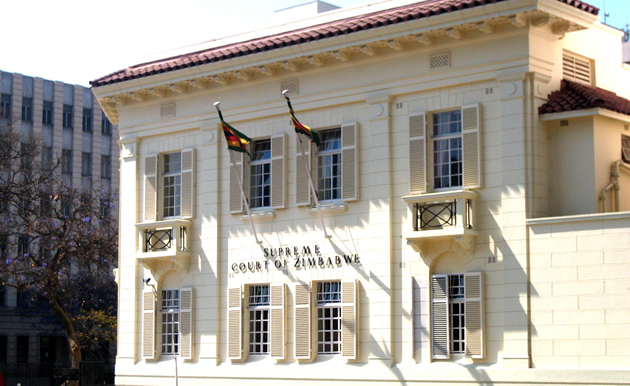
The Supreme Court has upheld the legitimacy of the Twelve Apostolic Church of Christ faction that secured court orders against rival leaders, setting aside the controversial abandonment of two judgments that had barred the rival group from holding itself out as church leadership.
In a judgment made available this week, the court dismissed an appeal by Headman Kikins, Bhekinkosi Mhaso and Augustine Robson Mafu, ruling that the faction could not reopen a dispute already determined by the High Court.
Writing the unanimous judgment, Justice Nicholas Mathonsi, sitting with Justices Susan Mavangira and Hlekani Mwayera, said existing court orders remained binding until lawfully overturned.
“It is trite that an extant court order remains binding unless it is lawfully set aside, varied or altered by a court of competent jurisdiction,” Justice Mathonsi said.
The court also upheld a cross-appeal by the church, setting aside notices filed by its former legal practitioner, Bruce Masamvu, purporting to abandon two earlier judgments in favour of the church.
The dispute dates back to 2015, when divisions within the church resulted in two factions continuing to operate under the same name, logo and constitution.
The church subsequently approached the High Court, obtaining an interdict in January 2017 barring Kikins, Mhaso and Mafu from holding themselves out as its leaders and using its name, colours, logo and assets.
The church later secured an eviction order in 2020, under which the rival faction was removed from at least four church premises in Bulawayo. That order remained in force and had not been overturned on appeal.
However, in July 2019, Masamvu filed notices purporting to abandon two judgments against the rival faction, triggering fresh litigation over whether he had acted with proper authority.
The church argued that Masamvu had acted on instructions from the late Bishop Aleck Dube, who had initially been associated with the faction that obtained the court orders before later aligning himself with the rival group.
The Supreme Court found that Masamvu’s conduct raised serious concerns about his professional obligations and loyalty to his client.
“He had been acting on behalf of the church when he obtained the judgments and not on behalf of Bishop Aleck Dube as an individual,” Justice Mathonsi said.
The court held that Masamvu should have withdrawn from the matter when the church leadership sought to terminate his agency and recover its case file.
It concluded that the notices of abandonment had been filed without the church’s knowledge, instruction or approval and could not stand.
The judges also rejected the rival faction’s challenge to By-Law 1/18, which was adopted in November 2018. The faction had argued that the by-law was unconstitutional because the Deaconal Council had allegedly usurped the powers of the Board of Trustees.
However, the court found that the church constitution empowered the Deaconal Council to formulate by-laws, subject to consultation with other church structures and consideration at the ensuing Annual General Meeting.
The court further held that the earlier judgments had already determined the rival faction’s legal position, making its attempt to reopen the dispute through fresh proceedings untenable.
Applying the doctrine of res judicata(already decided), which bars the relitigation of matters already decided by a competent court, the Supreme Court reaffirmed the importance of finality in litigation.
The court dismissed the main appeal with costs and allowed the cross-appeal, also with costs. It set aside both notices of abandonment, declared the first plaintiff the legitimate Twelve Apostolic Church of Christ and dismissed the rival faction’s claim.
The ruling stresses the binding force of court orders and the obligation of religious organisations and their members to operate within the provisions of their constitutions.