admin
admin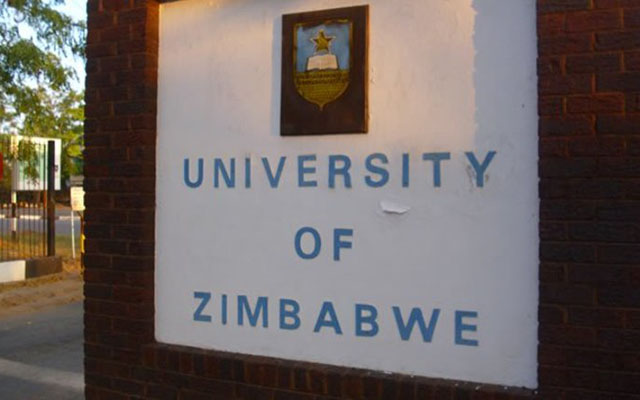
Leroy Dzenga Features Writer
When Calvin Makorokotera obtained his A-Level results, he was elated at his achievement.
He thought he would inch closer to his lifelong dream of studying to become a lawyer. Despite his joy, resources were constrained and he had to try applying for a scholarship. His quest for assisted financing has not been too fruitful as the bankrollers seem to be giving preference to science subjects.
As things stand, his hopes of setting foot on university premises in an official capacity are waning with each passing day. “I wrote Divinity, History, Literature and obtained 15 points. What I had been working for was taking shape,” he said.
His joy, aligned with reality would create an agonising tale of talent devoid of resources. “My parents separated when I was in Form 2. This made our aunt (mother’s elder sister) take me in and finance my studies,” Makorokotera said.
He says he has not heard from either his parents and suspects that his mother might have died. “My aunt has her own children and she could not finance me beyond A-Level. I am grateful of how she has helped, I understand that she has other commitments,” he said, expressing gratitude to his unemployed aunt.
As is the norm with most high flying pupils he has tried seeking assistance from conventional scholarship organisations to no avail. Makorokotera’s story is testament to the situation on the ground as families are struggling to get their children through university.
Even some students who had previously opted for international schools are facing hardships as they have been struggling. A group of India-based students approached The Herald, highlighting their plight. “Things are not well, sometimes the money is not sent through and we have to pool the little resources we have to ensure that we eat,” they said.
The students said, it would have been cheaper to stay off campus but the universities were changing the script every time arrangements were made.
“We were told by our university authorities that after first year we can look for our accommodation, which is cheaper and can help lessen the burden on our parents.
The university has since shifted goalposts on the issue saying we cannot stay off campus, further straining our limited resources,” the students said.
With the increased difficulty in sending money out of the country, their allowances from their Zimbabwean based parents are no longer trickling in with frequency.
Some students aged around 19 are forced to find ways to survive, some of them which are of a sinister nature. There have been reports that student based in other countries have resorted to illegal activities like prostitution and drug dealing seeking survival.
A circular by Parul University where some Zimbabwean students are based in India, dated June 20, 2017 was alluding to the scourge in questionable activities by foreign students.

“It has come to the notice of the University authorities that many female International students who are staying outside are involved in activities which are against the Indian Law,” read part of the circular.
The notice went on to forbid foreign students from leaving off campus exposing them to high college residence fees. “It has been decided by the university authorities that all of them mandatorily stay in the university hostel accommodation. “In the case that students cannot afford the fees of International hostel they can shift into the Indian hostel with Indian fees structure and continue to have food at International Mess,” the circular read.
Enquiries by The Herald show that in countries like Malaysia, China and India scholarship assisted students pay around $2 500 per year while self-funded students pay up to $10 000 per year, depending on nature of the institution.
Local students have not been spared either. Although the figures have been inconsistent depending on source, students have been dropping out of university due to financial challenges.
Even the recent disturbances at the University of Zimbabwe speak to the fact that life has not been easy for the future professionals of this country.
Students representatives say times are getting harder for students. Tafadzwa Pomela, the University of Zimbabwe Students Representative Council secretary general said there was need for intervention before things get out of hand. “The challenges are forcing students to engage in prostitution to sustain themselves during semesters,” he said.
Students were challenged to engage the authorities to ensure that their life improves. “Lack of student participation in policy making and participation in politics because students have little representations in administrative spaces,” Pomela added.
Dreams have crushed midway as some drop out or fail to sit for their examinations after their semester. “Regarding statistics, we cannot be sure as this is a purely an administrative issue but what we are sure of is that many students drop out during the semester. Some even failed to raise any money to allow them registration,” he said.
Students are now calling for more significant representation in places like parliament. “I suggest that the Government takes a clear position on the matter of introducing student loans,” Pomela said. In 2016, there was talk referring to the introduction of student grants and loans although no action has not been effected.
“Students must have their own representation in Government apart from us having the Ministry of Youth, Indigenisation and Empowerment and the Ministry of Higher and Tertiary Education because issues affecting students are being ignored.
“Student leaders must have privilege to sit in parliament,” he said, bemoaning the lack of befitting representation. With issues of reported diminishing morality in local universities, student welfare has to be addressed.
The going has not been easy for parents in the economy, a situation that should prompt fee review across the public institutions in the country.
Institutions sometimes seem detached from reality as they hike fees when most households’ incomes seem to be stagnant. At least, the students feel that way as evidenced by recent disturbances at the University of Zimbabwe when fees for third year medical students were hiked.
The grey area in student welfare is not unique to Zimbabwe. South Africa over the years has been rocked by #FeesMustFall protests where students from low income families have been complaining that the high cost attached to university education is marginalising them.
It has been a running contentious issue in the country and it seems Zimbabwean students are starting to ask the same question of the education system.
- Feedback: [email protected]


 Online Reporter