Online Reporter
Welcome to the live feed of the SADC Transfrontier Conservation Areas (TFCAs) international conference that is taking place in Harare, Zimbabwe!
Delegates from across the 16-member SADC bloc have gathered to celebrate the 25th anniversary of the TFCAs programme.

This event is not just a celebration; it’s a vital platform for discussing collaborative conservation efforts that transcend national borders.
With the theme “Transfrontier Conservation Areas – 25 years of cooperation for regional integration and sustainable development,” this conference aims to strengthen regional commitments to biodiversity conservation and sustainable development.
Join us as we explore key discussions, ground-breaking agreements, and the pivotal role of local communities in preserving Southern Africa’s rich natural heritage.
Our Reporter Wallace Ruzvidzo is at the Harare International Conference Centre and will provide live coverage of the event.
Stay tuned for insights from the SADC chairman, President Mnangagwa, conservation experts, and international partners dedicated to fostering a sustainable future for the region!
Who is attending the TFCA conference?
This conference has brought together delegates from across the SADC region, including Heads of State and Government from SADC member states, traditional leaders, conservation partners, international organisations representatives, and experts from various key sectors, including multilateral funding agencies.
What are TFCAs?
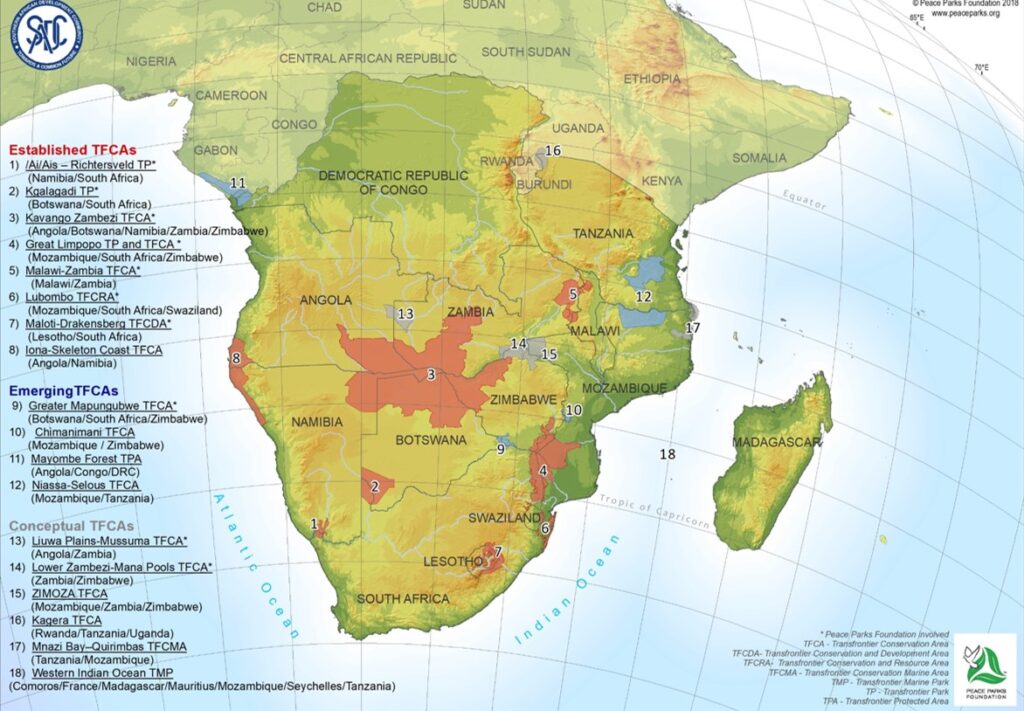
Conservation experts say TFCAs are collaborative conservation efforts that span across national borders, designed to promote biodiversity conservation, sustainable use of resources and eco-tourism. These initiatives are of significant importance for
Zimbabwe and most other SADC member states covered by TFCAs, as they not only safeguard vital ecosystems and wildlife, but also contribute to economic growth, enhance regional cooperation, and empower local communities.
What is the major aim of the conference?
The conference provides a platform for SADC countries to discuss solutions, including tackling conservation problems, recalibrating TFCA policies, financing schemes or funding needs.

The attendance of regional leaders gives an important signal that their countries are committed to the SADC TFCA goals. Organisers say the primary objectives of the conference and summit are to strengthen political commitment to the TFCA
Programme, promote investments in TFCAs, and enhance cross-sectoral integration for sustainable development.
Is the TFCAs process working?
The fact that the programme has been running for the past two-and-a-half decades shows its relevance.
The summit offers countries a chance to show their citizens how the region is tackling the problems related to transboundary conservation. Importantly, the exercise has seen countries count and report their programming activities and how they are moving to conserve the shared natural heritage.
By making decisions by consensus, the process of the SADC bloc ensures strong support from multilateral agencies for agreed actions. This improves the chances these actions will be implemented and supported.
What will we get out of the TFCA summit?
This year’s summit is hoping for several headline agreements: the development of an action plan to support the SADC TFCA Programme, new binding agreements for establishing additional TFCAs, the signing of Joint Management Frameworks, and sustainable financing agreements between SADC Heads of State and Government and International Cooperating Partners.
Additionally, there will be a review of ongoing efforts to implement the SADC TFCA model of cooperation and reinforcing partnerships among SADC Member States, organisers say.
This summit also aims to strengthen collective commitment to preserving Southern Africa’s rich biodiversity and to creating a sustainable future for generations to come, especially for the SADC citizens, who are essential to the success of these conservation efforts and their beneficiary.
What is Zimbabwe’s role at the TFCA summit?
Zimbabwe holds the chairmanship of the Southern African Development Community (SADC) which it assumed on August 17, 2024, during the 44th SADC Summit held in Harare.
President Mnangagwa became the Chairperson, succeeding President João Lourenço of Angola. Therefore Zimbabwe, under President Mnangagwa, is responsible for guiding SADC’s governance and policy direction.
As summit host, a country works to steer pre-summit negotiations, the deliberations and implementation strategies. This gives the chairmanship an important part in defining the summit’s priorities.
Regional heads arrive for summit
Among those in attendance are SADC Chair President Mnangagwa (Zimbabwe), President Chakwera (Malawi), Prime Minister Matekani (Eswatini), Prime Minister Dlamini (Lesotho), Prime Minister Ngurare (Namibia), President Mwinyi (Zanzibar) and Executive Secretary Magosi (SADC).
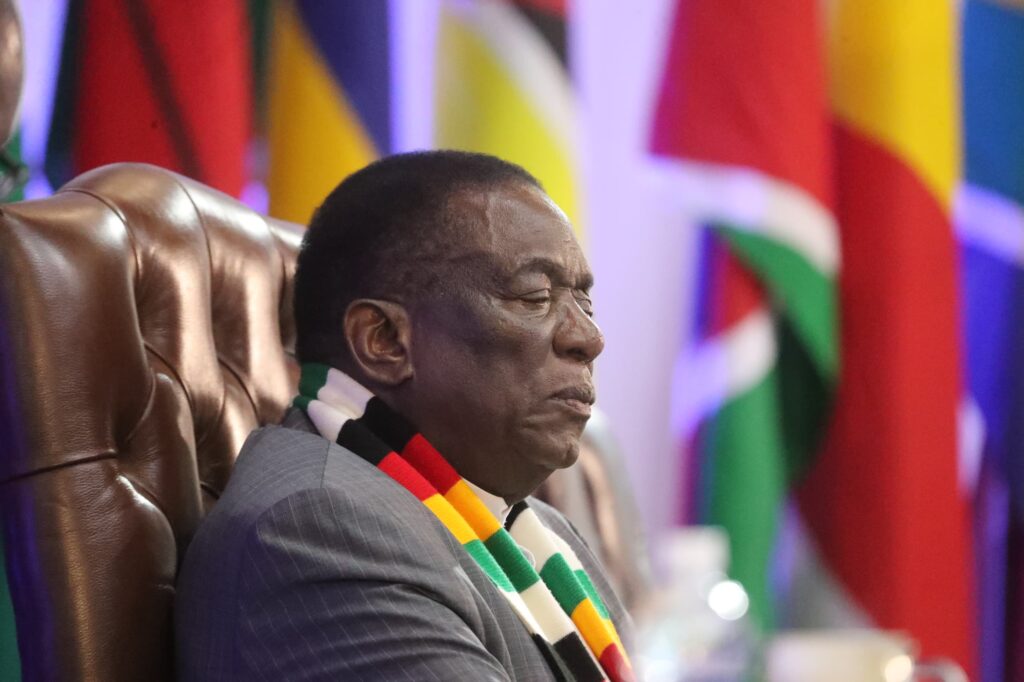
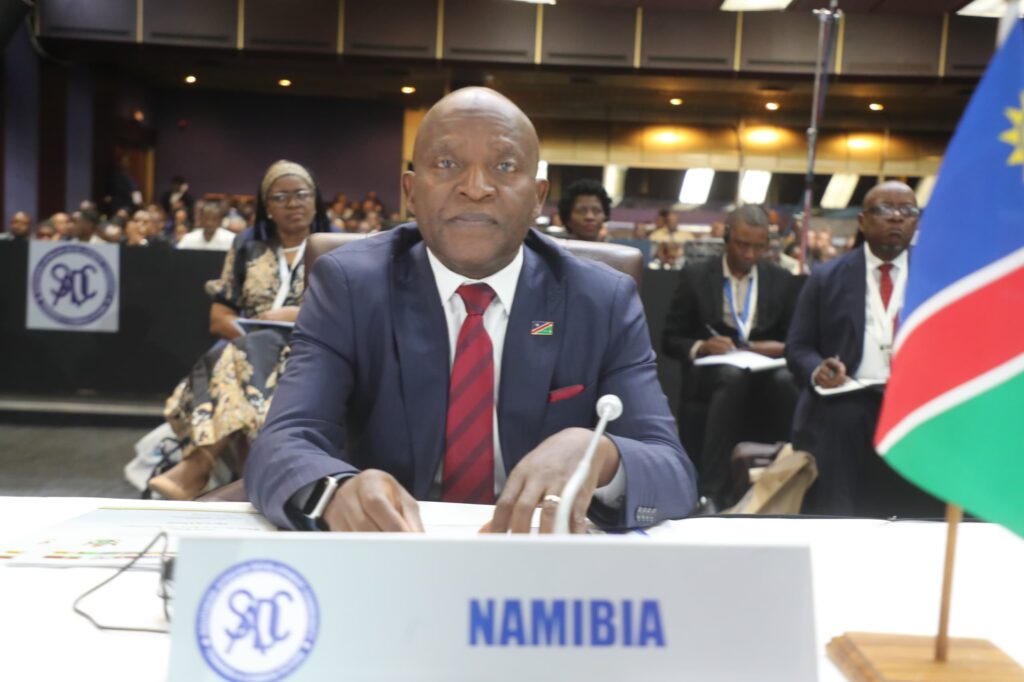
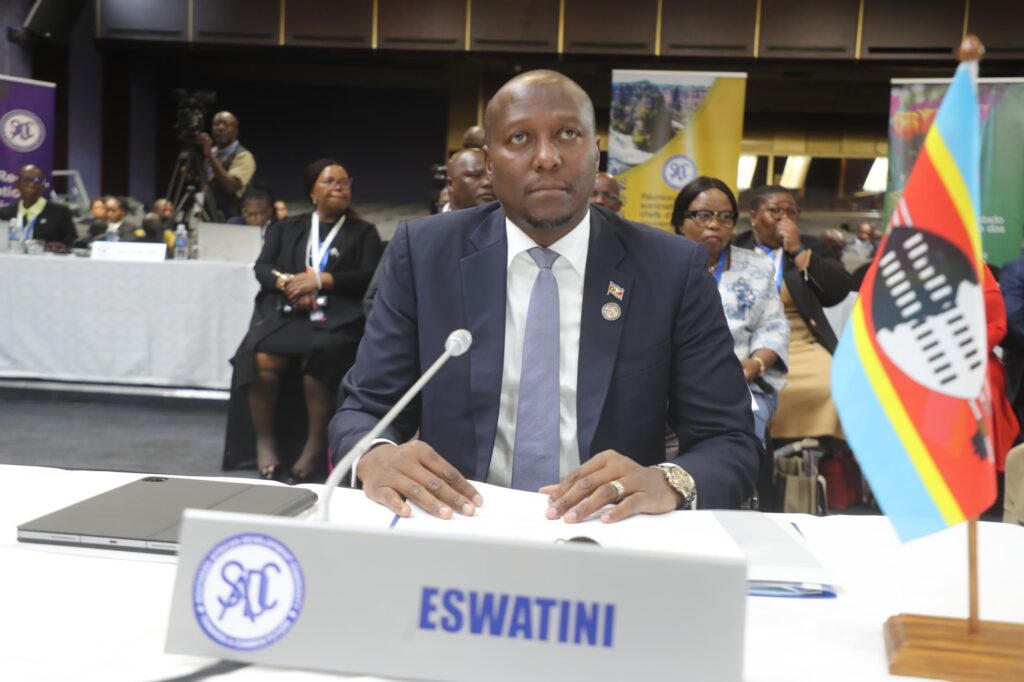
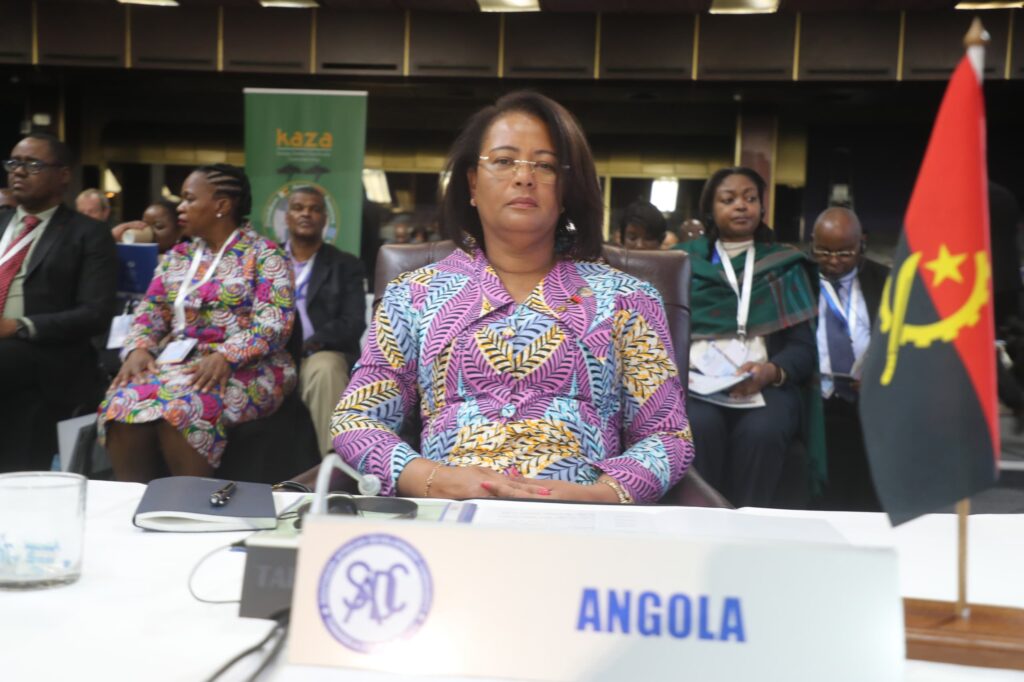
Their Excellencies have entered the main auditorium.
The national anthems are now being sung, marking the commencement of the summit’s proceedings.
Summit a moment of reflection: Executive Secretary
Secretary Elias Magosi is now giving welcome remarks.
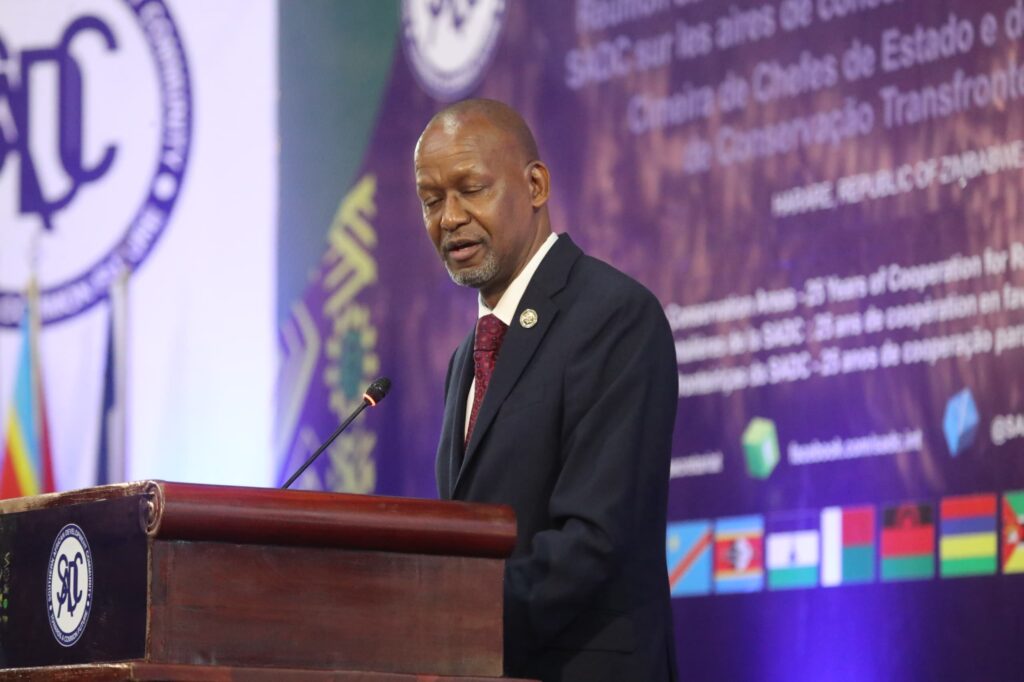
He said the convening of the summit is happening at an opportune time and paid tribute to President Mnangagwa for hosting the summit.
Mr Magosi said conservation initiatives must remain people-centred.
“It is only then that communities will embrace these initiatives,” said Mr Magosi.
The Executive Secretary said the 25-year commemoration is not only a moment of pride but a moment of reflection.
“TFCAs are not just about conservation but are about co-existence…they have brought communities together,” said Mr Magosi.
Southern Africa boasts 3 940 protected areas, covering 1,9 million km² of terrestrial landscape and 473 000 km² of seascape.
The region’s 18 TFCAs, spanning over 1 million km², serve as crucial ecological corridors, connecting wildlife and ecosystems across SADC’s 16 Member States.
SADC has come a long way in uplifting people: President Mnangagwa
President Mnangagwa began his address by welcoming delegates to Zimbabwe.
“Your presence underscores our shared commitment to regional cooperation,” he said. “Each one of us brings unique wisdom that will enrich our conference.
“Our region has come a long way. The uplifting of lives and livelihoods in communities remains a top priority,” said President Mnangagwa.
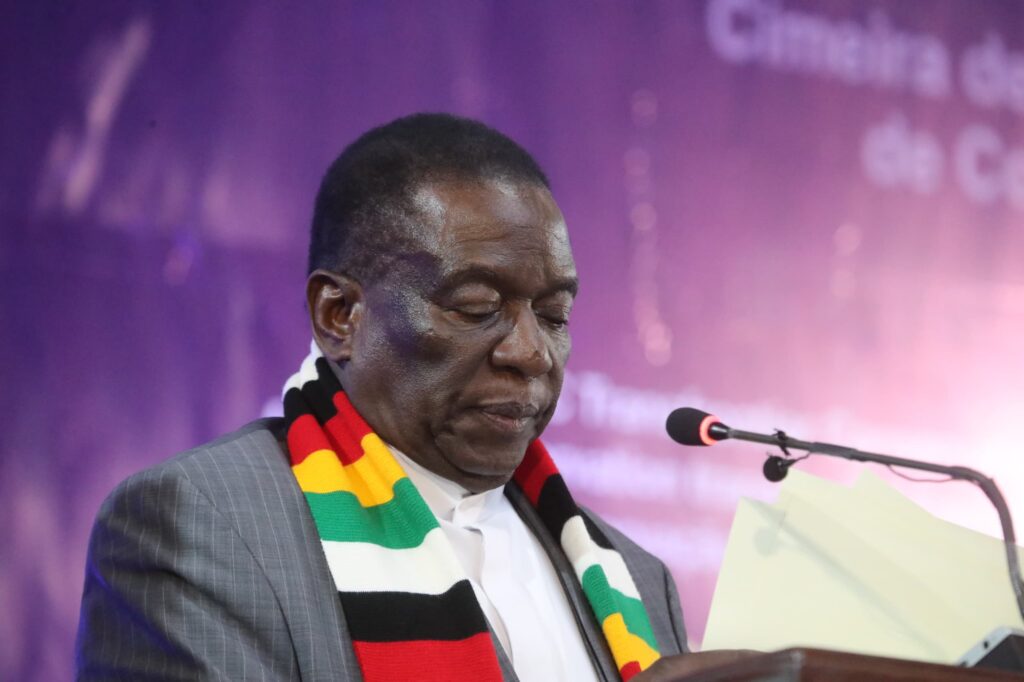
The SADC Chair said the region remains committed to the continued functionality of TFCAs, adding that the programme provides a guiding framework for the region’s stance on conservation.
“Together, we have demonstrated that conservation transcends borders,” he said.
President Mnangagwa urged the region to embrace innovation, science-based innovation and community-driven approaches.
“By the same token, robust and social economic models must be developed,” said the SADC Chair.
He then declared the Summit officially opened.
The summit is now in a closed session.
Mr Magosi is now reading the communique.
He said successes and challenges of TFCAs had been highlighted.
Mr Magosi said the Summit acknowledged the importance of TFCAs at regional and international levels
Zimbabwe was also congratulated for successfully hosting the conference.
“Summit urged member states to strengthen the participation of rural communities, including the youth,” he said.
Mr Magosi said the need of innovative financing mechanisms was highlighted.
Angola, Namibia, Mozambique, South Africa and Zimbabwe were commended for accepting to pilot the Univisa.
SADC’s shared vision alive and thriving: President
SADC Chair President Mnangagwa is now giving closing remarks.
He began by expressing gratitude for the delegates’ dedication to the TFCA cause.
“We have shared knowledge and reviewed progress, reflecting on our TFCA programme,” he said.
The SADC Chair said the summit had demonstrated that the region’s shared vision was not only alive but thriving.
“Our strategies must continue to place communities at the centre of every initiative,” said President Mnangagwa.
He ends his address.
President meets Malawi counterpart
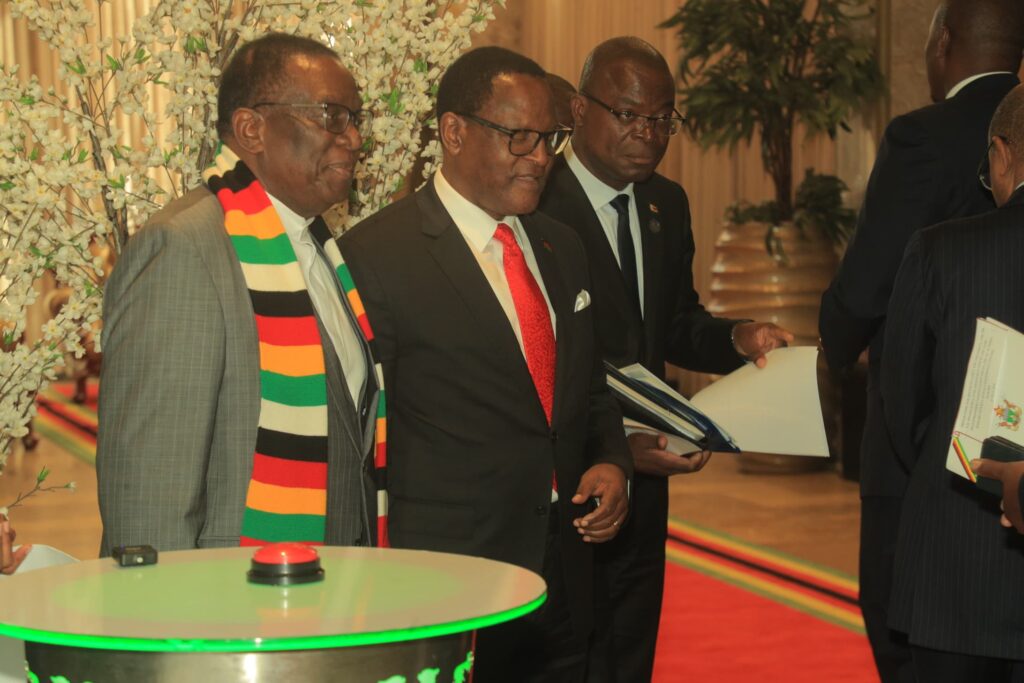
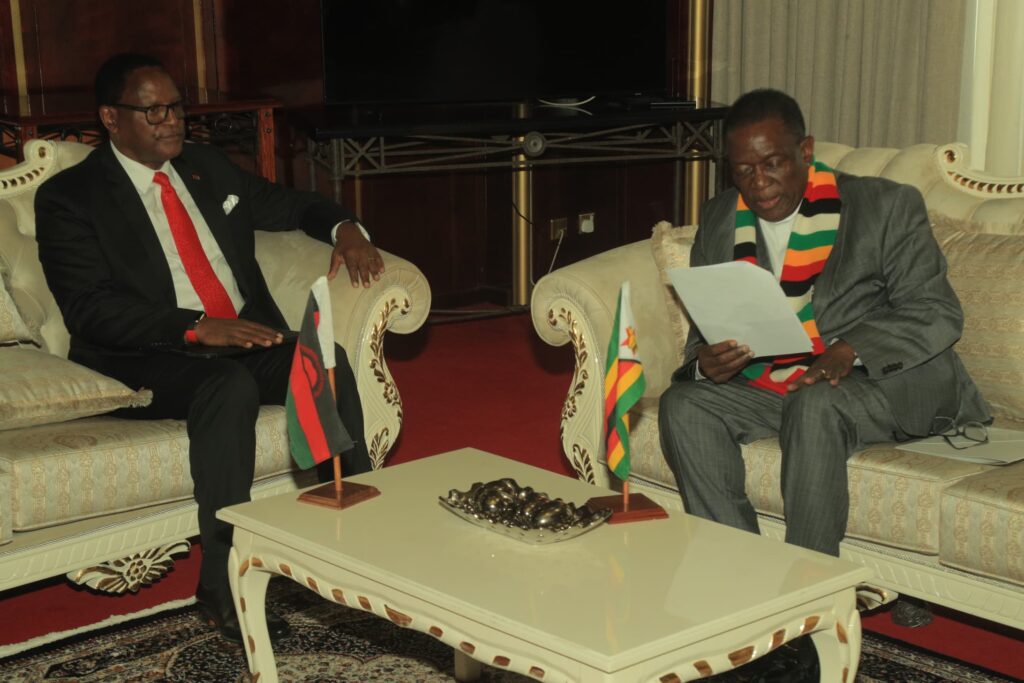
President Mnangagwa is now in a bilateral meeting with his Malawian counterpart, President Lazarus Chakwera.