Online Reporter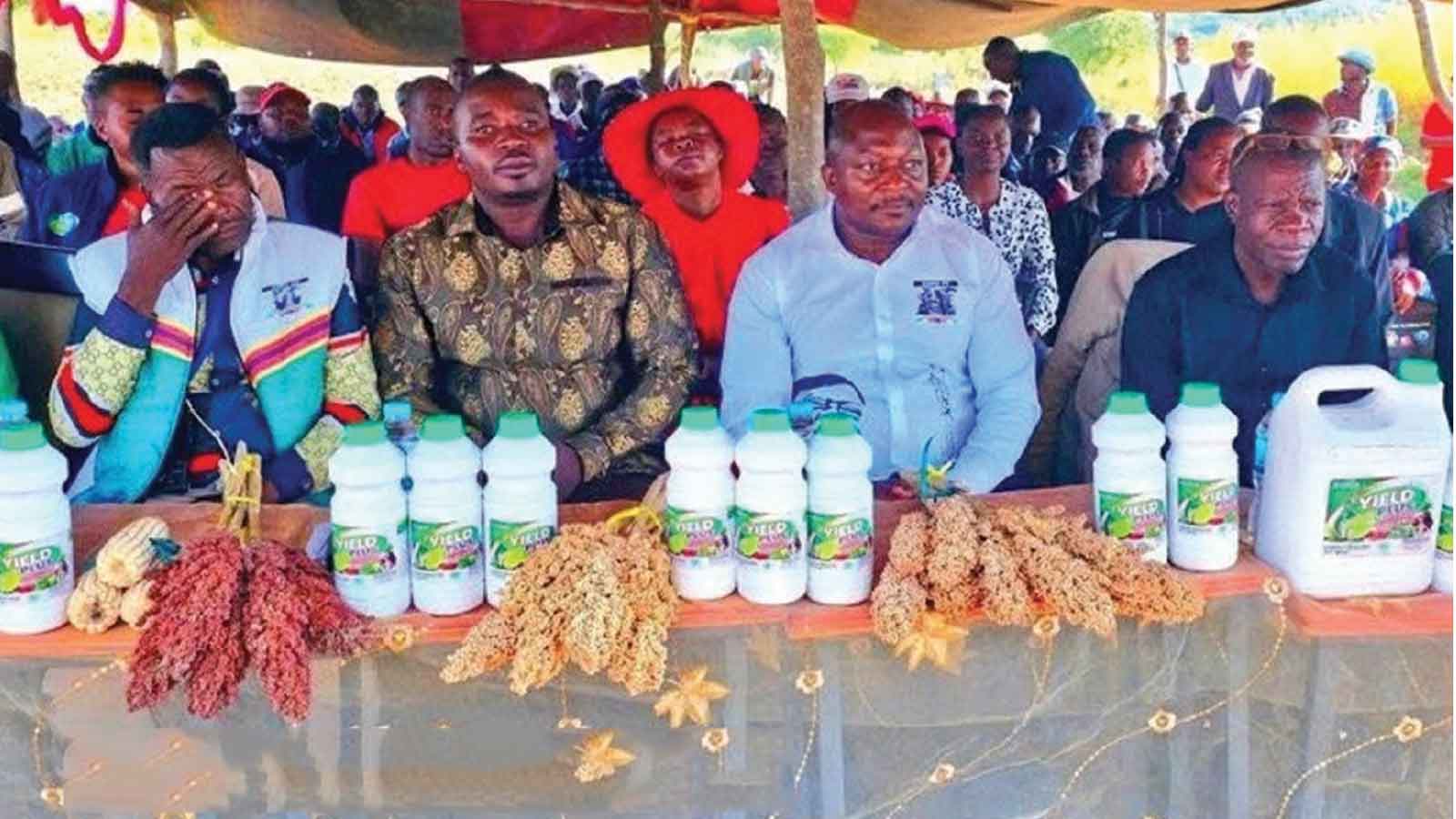
Sunday Mail Reporter
A QUIET agricultural revolution is taking place across Chivi, where farmers are increasingly turning to traditional grains, village business units (VBUs) and irrigation, thanks to efforts of the Second Republic to ensure food security in dry areas.
This growing adoption of traditional grains, coupled with investments in VBUs, irrigation infrastructure and agricultural inputs, is creating a powerful model for rural development.
For a district long associated with drought and food insecurity, the combination of climate-smart crops and reliable water infrastructure is proving transformative.
Traditional grains are ensuring that households have food even during poor rainfall seasons, while VBUs are providing food for the household and market, supporting nutrition gardens and creating new economic opportunities.
As villagers increasingly embrace these initiatives, Chivi is demonstrating how rural communities can adapt to climate change and build sustainable food systems.
President Mnangagwa’s Government has taken a stance that communities have to grow crops that thrive in their climatic conditions, with those often affected by low rainfall being encouraged to turn to drought-resistant traditional crops.
Chivi Central Member of Parliament Cde Exevia Maoneke has been advocating for the adoption of drought-resistant traditional grains such as sorghum, millet and rapoko in the district.
VBUs and irrigation infrastructure is being revamped to ensure “no one and no place” is left behind in development, as envisaged by the Second Republic.
The combined interventions are changing the agricultural landscape in a district where rainfall uncertainty has historically condemned many households to food insecurity.
Turning to crops suited for climatic conditions
Agricultural experts have long argued that farmers in agro-ecological regions four and five should prioritise traditional grains because they are naturally adapted to dry conditions.
Unlike maize, which requires substantial and consistent rainfall, crops such as sorghum and millet can survive prolonged dry spells and still produce meaningful yields.
An example that traditional crops can work for the district was recently demonstrated at a sorghum field day at the homestead of Mr and Mrs Honyera in Ward 18.
More than 200 farmers and community members gathered to celebrate the couple’s successful traditional grain production.
The harvest became a model for farmers across the constituency.
Addressing the gathering, Cde Maoneke urged villagers to embrace traditional grain farming as a practical solution to climate-related challenges affecting agricultural production.
“We encourage members of the community in Chivi Central to cultivate traditional grains with the support of extension officers to help combat poverty through farming,” he said.
“We face challenges due to erratic rainfall, but those who are planting traditional grains are having good yields.
“Compared to previous years, we are now accepting that traditional grains are the best way for us to achieve food security at household level.”
Cde Maoneke challenged farmers to move beyond subsistence production and begin viewing agriculture as a business capable of generating income and improving household welfare.
“We urge farmers to cultivate their crops with the intention of doing business,” he said.
“Through agricultural training, farmers in dry areas like Chivi have come to understand that cultivating traditional grains is beneficial.”
The field day also served as an incentive, aimed at encouraging wider adoption of traditional grains.
The Honyera family, who emerged winners in a sorghum competition involving 21 farmers, received a wheelbarrow, a knapsack sprayer and 10 kilogrammes of organic fertiliser.
In a move that delighted villagers, every participating farmer received a wheelbarrow, while every attendee at the event received a five-kilogramme bag of fertiliser.
The shift towards traditional grains is already producing measurable results.
Agricultural and Rural Development Advisory Services (ARDAS) chief director Mr Leonard Munamati recently revealed that Chivi farmers had increased the cultivation of traditional grains by 34 percent.
“We discovered that farmers in Chivi have increased the cultivation of traditional grains by 34 percent,” he said.
“Farmers in regions four and five have responded to the recommendation that they plant traditional grains, as these crops are more resilient to lower rainfall.”
Mr Munamati said the area under rapoko, sorghum and millet cultivation had increased significantly compared to previous seasons.
Villagers seeing the benefits
Across Chivi Central, farmers say the shift towards traditional grains is changing their fortunes.
Mr Honyera said growing sorghum helped his family remain food-secure despite unpredictable weather patterns.
“For many years, we struggled whenever the rains were poor because we depended mainly on maize,” he said.
“Sorghum has shown us that we can still harvest enough food even when rainfall is low.”
In Ward 12, Mrs Memory Chivasa said traditional grains had become the backbone of her household’s food security.
“Our granary is fuller than it has been in years. Traditional grains have given us confidence because they survive conditions that normally destroy maize,” she said.
Another villager, Mr Peter Muchengeti, said the growing popularity of traditional grains was transforming community attitudes.
VBUs changing rural livelihoods
While promoting traditional grains, Cde Maoneke is simultaneously championing VBUs, which are becoming critical centres for water provision, nutrition gardens, livestock production and income generation.
VBUs form part of the Government’s Rural Industrialisation Programme, which seeks to create self-sustaining rural economies anchored in agricultural production and value addition.
One of the most significant recent interventions occurred in Ward 18, after thieves stole solar panels powering a VBU borehole, disrupting water supplies for villagers.
“We immediately facilitated the repair of the borehole and ensured that new solar panels were installed.
“With these interventions complete, the VBU is now back to full operation, and clean water access has been restored for the people of Shangwa and Tawanda villages,” said Cde Maoneke.
Mr Jabulani Ncube said the VBU had become a vital pillar of local food production.
“The gardens supported by the VBU help us grow vegetables throughout the year.
“Even during dry periods, families can still access nutritious food and earn money from selling surplus produce,” he said.
At the Mugwakairi Irrigation Scheme, another major intervention has been undertaken to improve agricultural productivity.
The scheme received a major boost following the installation of a solar-powered borehole, allowing farmers to engage in year-round horticultural production.
Hundreds of villagers recently gathered at the scheme during a field day where farmers showcased thriving sugar bean crops.