daniel chigunwe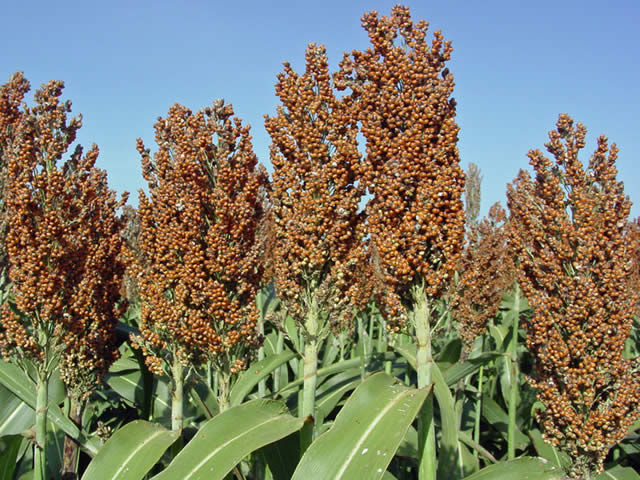
Edgar Vhera
Agriculture Specialist Writer
GOVERNMENT has announced compulsory traditional grain production in agro-ecological regions 4 and 5, as it outlined guidelines for Pfumvudza/Intwasa programme in the 2023/24 agriculture production season to counteract the forecast dry spell.
Outlining the additional agriculture climate-proofing measures recently, Government revealed the input distribution and crop suitability map that compelled farmers in agro-ecological 4 and 5 to establish two mandatory sorghum and/or millet plots plus one mandatory sunflower plot and two optional plots comprising any of African peas or groundnuts.
The document, which contained the measures also hinted that maize seed would only be issued to farmers in irrigation schemes under the Agricultural and Rural Development Authority (ARDA) management model.
Pfumvudza/Intwasa beneficiaries in regions 1 and 2 shall be provided with inputs to plant three mandatory maize fields and two plots comprising any of the following — sunflower, sorghum, pearl millet, groundnuts, African peas or sugar beans.
“Agro-ecological region 3 Pfumvudza/Intwasa beneficiaries shall be provided with inputs to undertake production of two mandatory maize plots and three plots comprising any of sunflower, sorghum, pearl millet, groundnuts, African peas or sugar beans,” read the directive.
It added that only farmers who would have met all Pfumvudza/Intwasa requirements were to receive inputs with holing out, mulch collection, liming and organic matter placement expected to be completed by October 31.
“Village heads must ensure that vulnerable households are assisted and each village must establish a farmer field school (FFS) by October 31. All beneficiaries must be registered on the e-distribution application by their Agritex officer to receive inputs with beneficiaries warned to use them for their intended purposes,” added the document.
Any abuse of inputs must be reported to the Agricultural and Rural Development Advisory Service (ARDAS) using the toll free number 0242 794381 or e-mail: [email protected]
Meanwhile, ARDAS chief director Professor Obert Jiri said the Grain Marketing Board (GMB) had started distribution of inputs throughout the whole country, with beneficiaries in some areas having already received some of their inputs. He revealed this during a recent interview with Zimpapers Radio.
Speaking at the annual national agribusiness conference at the 113th edition of the Zimbabwe Agricultural Show (ZAS) Strategic Policy, Planning and Business Development (SPPBD) chief director Mr Clemence Bwenje emphasised Government’s thrust to upscale traditional grain production.
“Farmers in agro-ecological regions 4 and 5 must plant traditional grains and can access maize in a one-to-one swap with the GMB,” he said.
The need to plant drought-resistant traditional grains is meant to ensure adequate staple grain production in view of the forecast El Nino weather pattern. The Government is targeting 3, 5 million households in the Pfumvudza/Intwasa programme.
One important principle of Pfumvudza/Intwasa involves awareness to soil health, minimum soil disturbance, mulching, timely implementation of all operations and use of crop rotation.



 Online Reporter