Online Reporter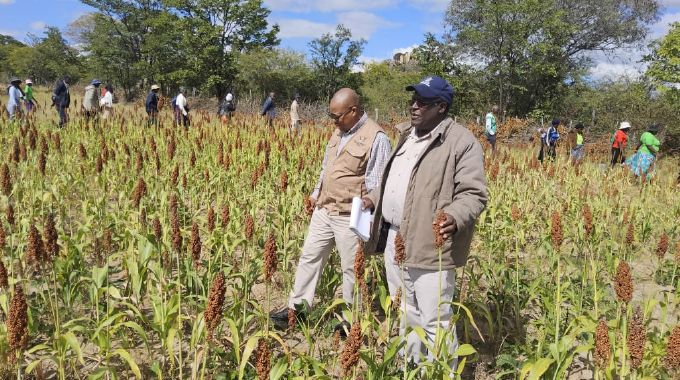
Nothando Zondo, [email protected]
FARMERS in Matabeleland South have been advised to embrace the production of traditional grains, which thrive under the prevailing climatic conditions in the province.
The renewed focus on small grains is expected to play a pivotal role in addressing household food and nutrition security, while at the same time providing an additional and reliable source of income for smallholder farmers who have long battled unpredictable seasons.
Traditional grains, commonly referred to as small grains, include indigenous and drought-resistant crops such as sorghum, pearl millet and finger millet (rapoko). These crops have, over generations, formed part of the region’s agricultural heritage and are once again being recognised for their resilience and value.
These crops are not only highly nutritious but are also climate-smart and culturally significant staples, offering an important alternative to less adaptable crops.
Their ability to withstand harsh weather conditions makes them particularly suitable for regions that frequently experience water shortages and extreme temperatures.
It is understood that agriculture in Matabeleland South relies heavily on drought-tolerant small grains such as sorghum and pearl millet, largely due to the province’s classification under the arid Natural Regions 4 and 5.
These regions are characterised by low and erratic rainfall patterns, making conventional crop production increasingly difficult.
With recurring dry spells and inconsistent rainfall becoming more pronounced in recent years, small grains have become essential for household food security and climate adaptation. They offer a level of resilience that traditional maize crops have struggled to provide, as maize often fails under such harsh and unpredictable conditions.
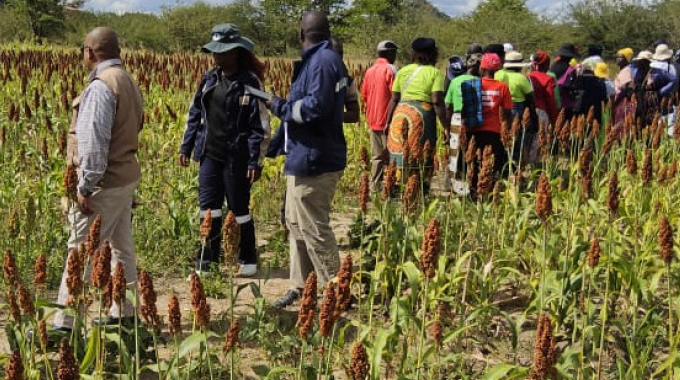
Insiza district Agricultural Business Advisor, Mr Augustine Mhike, made the clarion call while officiating at a field day held at Dandabagwa Village in Ward 5, hosted by Mr Dumisani Masuku and his family. The event provided a practical learning platform for farmers and stakeholders to exchange knowledge and experience.
Agricultural experts used the platform to urge communities to adopt climate-smart farming practices and scale up the production of small grains as a sustainable response to climate challenges.
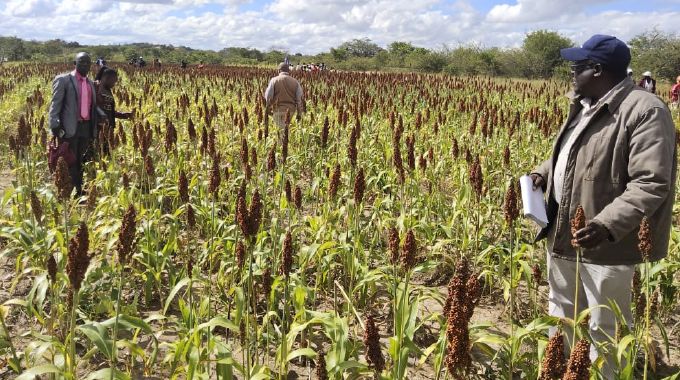
The event attracted a wide range of stakeholders, including agricultural officers, extension workers, Seed Co representatives, local leadership and farmers from surrounding areas, all united by a shared commitment to improving agricultural productivity in the district.
Discussions during the field day centred on the need for agro-ecological tailoring of crop production, ensuring that farming practices are aligned with the specific climatic and environmental conditions of Insiza district.
Mr Mhike also urged farmers to prioritise traditional grains, highlighting that they are better suited to dry conditions and are critical in strengthening food security across the province.
“We are encouraging our farmers to focus more on traditional grains because they are well adapted to our climatic conditions. Communities should produce crops that match their environment to improve household food security,” he said.
Mr Mhike further noted that climate change continues to have a significant impact on agricultural production, underscoring the urgency of adopting modern and sustainable farming methods that can withstand these changes.
“We can no longer rely solely on conventional farming methods. Farmers must climate-proof agriculture through programmes such as Pfumvudza/Intwasa and through the use of correct seed varieties that perform well under our conditions.
“Agriculture must be approached as a business. Proper planning, adoption of modern technology and correct seed selection are important if farmers are to improve productivity and incomes.”
Mr Mhike said the field day was designed to equip farmers with practical and applicable knowledge on sustainable crop production and strategies for building resilience against drought.
“The main emphasis was on agro-ecological tailoring of crop production, encouraging communities to increase production of traditional grains because of their resilience to drought,” he said.
He added that extension officers are working closely with farmers on the ground to promote farming methods that not only improve yields but also preserve natural resources for future generations. This support includes training on conservation agriculture, soil management, and efficient water use practices.
Mr Mhike emphasised that it was critical for farmers to fully appreciate the importance of proper planning and the adoption of technologies that enhance productivity, particularly in the face of changing weather patterns. Without such adaptation, he warned, farmers risk continued losses and food insecurity.
The field day also explored the 8.0 Rural Development Concept and its role in improving rural livelihoods, with agricultural officers stressing the importance of innovation, resilience and community-driven development in building sustainable rural economies.
Ward 5 Councillor Mr Ngobe Masonga described the programme as both educational and beneficial, noting that it had provided valuable insights that could be applied at community level.
“I have learnt a lot, especially on the importance of growing traditional grains. I will continue encouraging members of my community to increase production of small grains because they are suitable for our area,” he said.
The growing emphasis on small grains in Matabeleland South reflects a broader shift towards climate-resilient agriculture, with stakeholders increasingly recognising that sustainable food production lies in aligning crops with the environment. As farmers adopt these practices, the province stands to strengthen its food systems, improve livelihoods and build resilience against the uncertainties of climate change.