admin
admin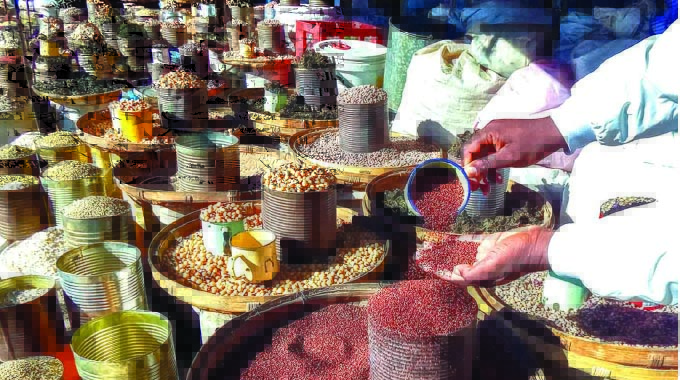
Elita Chikwati Features Editor
Maize has been a popular crop, with many farmers producing it at commercial level, while some in the drier parts of the country have also continued to try their luck despite low yields.
The value attached to traditional grains had been so low that some were viewing the crops as varieties for the vulnerable.
But traditional crops such as sorghum, millet and rapoko are slowly becoming popular as people are becoming aware of their high nutritional value and improvement in technology which has seen the introduction of machinery for processing them.
Climate change has also seen Government and non-governmental organisations promoting production of crops that can perform well under low rainfall conditions as part of efforts to ensure food self-sufficiency and reduce the number of people relying on humanitarian assistance.
Plans are underway for the introduction of traditional grains policy.
A number of farmers have since realised that they can make huge profits from growing and processing traditional grains, with some selling value added products at lucrative markets.
Agritex director, Mr Stancilae Tapererwa, said climate change had impacted negatively on crop production and it was important that farmers grow crops that were suitable for their specific agro ecological regions to maximise yields.
He said Government’s inputs programmes were taking into account the agro-ecological regions and soil type of the beneficiaries so they can be given appropriate crop varieties.
“This country has five ecological regions,” said Mr Tapererwa. “Region 1 in the Eastern Highlands that experiences high rainfall, region 2A, 2B and region 3 which are the bulk of Mashonaland provinces while the rest of the country like Masvingo, Matabeleland South, Matabeleland North and parts of Mashonaland West along the Zambezi Valley are in region 4 and 5.
“Regions 4 and 5 are dry and receive around 400mm of rainfall per annum and sometimes it does not even come. Sometimes the areas receive too much rains. So, we have realised that growing maize in those areas is not proper as the crop does not do well. The crops will fail year in and year out.”
Mr Tapererwa said Government had come up with a policy to promote production of traditional grains in dry regions.
“In the past, farmers in those areas were resisting, including the politicians in those areas,” he said. “They thought we were segregating by giving traditional grains in those areas while the rest of the country was receiving maize seed.
“We came up with strategies to promote traditional grains. We started with demonstrations. We were working with organisations such as the World Food Programme. We received seed for sorghum, millet and rapoko and gave it to the early adopters and demonstrated how to plant the crops and also went through all the agronomic practices involved.”
Filed days would also be organised so most farmers would come and have an appreciation.
That way a lot of farmers started appreciating the importance of traditional grains in those areas.
There have been concerns by some farmers willing to grow traditional crops as birds can cause huge losses, especially on white sorghum.
“The birds come and harvest almost the entire fields,” said Dr Tapererwa. “Government came in with a programme to control the birds particularly. The quelea birds used to be controlled in Botswana in summer so that in winter as they come to Zimbabwe their numbers would have been reduced.
“Now in our department of Agritex we have a division responsible for pest control so they are assisting farmers control the birds.”
Dr Tapererwa said farmers should not be discouraged from farming traditional grains.
“When it comes to harvesting time, it is quite tedious to harvest traditional grains,” he said.
“They should be cut and threshed and this has been a challenge for many farmers, especially the old who do not have labour.
“We have introduced machinery threshing machines, about two months ago we went to Chiredzi where farmers received threshing machines.”
There has also been a deliberate move to promote consumption of the traditional grains.
“When there are food shortages, the people will not be given maize, but traditional grains so they have a chance to taste the food and adopt it,” said Mr Tapererwa.
Lands, Agriculture, Fisheries, Water and Rural Development Deputy Minister Vangelis Haritatos said traditional grains were climate smart and performed exceptionally well in areas where there were poor rainfall patterns.
“By prioritising agro ecological region specific production, we are positive that the nation will be food and nutrition self-sufficient,” he said. “When the areas that were only given traditional grains as part of the Presidential Inputs programme package require maize, the Grain Marketing Board will be called in to issue the maize.”
Zimbabwe, like many other countries, has been facing a number of environmental and economic shocks and stresses.
Government and partners realised that despite meeting short-term humanitarian needs regarding survival, large-scale emergency interventions do not substantially improve regional or local capacity to withstand future shocks and stresses.
As a result, the concept of resilience was adopted as a plausible framework for substantially improving regional or local capacity to withstand shocks and stresses, ultimately reducing the need for humanitarian response.
The traditional grains policy is already enshrined into the design although the final policy document is still to be approved.
Government has endorsed the programme document for the second phase of the ZRBF Joint Programme, which will be known as the United Nations Zimbabwe Resilience Building Joint Programme.
Zimbabwe Resilience Building Fund field co-ordinator for MELANA project Mr Edison Dhlakama said they were setting up demonstration plots for communities to appreciate.
“We set demonstration plots and farmer field schools and at the end of the season we would compare yields from maize and sorghum plots so they make decisions on their own,” he said.
“This encouraged farmers to dedicate part of their plots to traditional rains. The introduction of mechanisation has also improved the uptake. The most difficult part in the traditional grains is the processing of the crop.
“The introduction of threshers and other labour saving technologies started to increase the area under traditional grains.”
Mudzi farmer, Mrs Mercy Ndemera of Brown Village who has benefited from the Zimbabwe Resilience Building Fund Project said they had increased production of traditional grains to boot household food security.
“We have learnt a lot from traditional grains,” he said. “Sometimes people shun traditional grains because they are not easy to process. Now that the system has been mechanised, it is easy to process the crop.
“We have also been empowered and through knowledge sharing we now have different recipes and our children love the food. We now prepare sorghum snacks, and this has improved nutrition.
“We now make biscuits, cakes, bread and may other products from traditional grains. The children now enjoy the nutritious food without having to pump out lots of money. Traditional grains have become our staple diet.”
Zimbabwe Indigenous Women Farmers Association Trust president Mrs Depinah Nkomo said most farmers were now aware of the benefits of growing traditional grains.
“We started growing traditional grains with support from the Women’s Bank and a number of farmers realised the crops were tolerant to harsh weather conditions.
“The GMB is also offering high producer prices.
“These, however, need to be constantly reviewed upwards o that ore farmers are affected to the crop. A farmer would be happy to grow traditional grains if there are nutritional gains and also high profits.”
Mudzi farmer, Mrs Elizabeth Zhuwawu, said value addition was another way of getting high value from the crops.
“Selling traditional grains without processing does not give much profits,” she said. “For instance, you sell a bucket at US$15, but the buyer will go and process and repack and get high profits.
“We welcome the idea of machinery for processing.”



 Online Reporter