admin
admin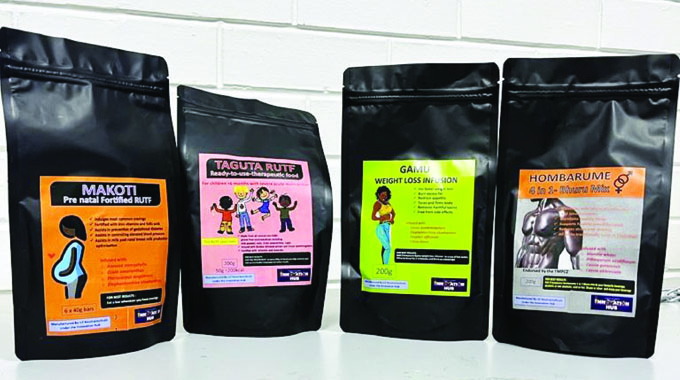
Sifelani Tsiko
Agric & Innovation Editor
A University of Zimbabwe (UZ) chartered industrial chemist and pharmaceutical nanotechnology expert is now tapping into the often unrealised economic and health restoration potential of traditional medicines to make nutraceuticals (medical foods) that aid disease prevention and ensure an overall healthy lifestyle.
For centuries, traditional healers in Zimbabwe had confined their knowledge of plant based remedies to a tight-knit community who guarded it as well-kept secrets.
The country is endowed with a rich mix of human and natural resources and has had a long history of traditional knowledge based on plant remedies.
Passed down through generations of traditional health practitioners, it is estimated that such knowledge still serves 80 percent of the population’s healthcare needs, highlighting the important role that it has played in the nation’s healthcare history.
Dr Joey Chifamba, who has won a string of awards for his pharmaceutical innovations, told The Herald at the just -ended UZ Research Innovation and Industrialisation Week that traditional knowledge has inspired him to develop four new nutraceutical products that translate traditional wisdom into modern lifestyle interventions.
“I have developed four new products using indigenous knowledge systems to address the contemporary problems of health and wellness of people,” he said.
“In nutrition, certain natural and processed foods are particularly useful in achieving and maintaining health goals. We have harnessed traditional wisdom in our herbal medicines to come up with nutraceuticals and innovative food products for healthy living and preventive care.”
Dr Chifamba has developed Makoti, Taguta, Hombarume and Gamu product range using fifth generation emerging technologies including nanotechnology and biotechnology.
Through his project: “The Development and Optimisation of ready to use food therapeutic food supplements,” he has harnessed traditional herbs to come up with nutraceuticals, simply, medical foods.
“These are foodstuffs that also treat conditions. It is basically what our traditional drugs are based on, most of the plants that used to treat conditions are also food as well. Muroro is used for diabetes treatment and it is also food,” he said.
“Most plants that are for treatment are also edible. They have little to minimal or negligible side effects. This is what we need to harness more in future. It is much easier for us to use traditional knowledge systems — the herbal medicine that have proven to be effective here for ages . . . they have been used for generations and generations and we need to modernise them using modern technology. We need to package it well so that it becomes attractive for people to use locally.”
His product range covers products for men, women, children and everyone. The four products are based on indigenous knowledge systems.
Dr Chifamba said he developed the Makoti product — a prenatal ready to use fortified therapeutic food for women who are pregnant, usually in the third trimester.
This product is based on the fact that women who are pregnant have cravings.
“We also found that women who are pregnant are also prone to getting diabetes, they are also prone to getting hypertension, also prone to be anaemic and a lot of other things,” he said.
“So we tried to make a product which looks at what traditionally women used to do to satisfy those cravings and also to make sure that there are appropriate medicine for use. So this product — Makoti — has four herbs in it . . . the first herb is really designed to lower the problem of gestational diabetes in women.
“The second one is a herb that is also designed to lower hypertension. The third one is a herb that boosts milk production and the fourth one is a herb that also reduces bloating in pregnant women.
“So we have put these herbs in a nice formulation which is chocolate based. It is more like a yoghurt. But what we have also done is that we have combined these herbs using modern technology. We have fortified these herbs with iron, because iron is needed for women who are pregnant and with less blood.”
But for iron to be utilised by the body, he said, it needs folic acid. He fortified Makoti with iron and folic acid and four herbs through a formulation which is edible and tasty.
“Women with cravings can take it. It is non- diabetic, it is non-hypertensive and it does not make them blot,” Dr Chifamba said.
The second product he developed is called Taguta ready to use therapeutic food.
Taguta is based on a concept that a lot of children are born to parents who are immune — compromised and have acute severe malnutrition.
“So these kids are being treated using Plumpy’Nut and Plumpy’Nut is coming all the way from France to treat children here as if we do not have our own food sources and supplies. This is mandated by the WHO to be given to all malnourished children, but it is coming all the way from France,” said the chartered industrial chemist and pharmaceutical nanotechnology expert.
“So what we have done is that we have designed the first ready to use therapeutic food supplement for malnourished children above six months.
Children below six months born to immune compromised parents should be exclusively breast fed. These kids above six months require a lot of kilo calories for them to get better.
“So our product has got 200 kilo calories for every 50g, so if they add 50g to porridge, 50g to maheu, they get a very good and high calorific food supplement which helps them with whatever conditions they are suffering from. So we also added traditional herbs, those which are endorsed by the Traditional Medicine Medical Practitioners Council of Zimbabwe.
“We work hand in hand with them to make sure that the products that we use are genuine and are products that are traditionally used for this. This product can also be used by adults who are suffering from cancer and other conditions.”
The other product he developed is called Hombarume and is based on the fact that a lot of men are suffering from erectile dysfunction.
“Men’s sexual health is a very pertinent issue in the community. Men have always been taking supplements. The nutraceuticals that we have made are targeted at prevention of diseases and conditions rather than just treating.
“So we found that the idea that men have always been taking traditional aphrodisiacs and so on, to boost their sexuality, has prevented them from eventually getting problems. So we have taken the four leading aphrodisiacs from traditional medicine in Zimbabwe and optimised them so that they dissolve better, they spread better, they are more efficacious and are less toxic.
“And what we have done with these formulations is to make them in such a way that they can be used with hot or cold water, in alcohol or non-alcoholic beverages and you can even put them in porridge. That is what Hombarume is all about — it is a nutraceutical to improve male sexuality and to reduce the heavy intake of imported sexual enhancing drugs which have serious side effects.”
The last product in our line — is an infusion — for weight loss. This combines traditional herbs that have always been used for body toning and muscle toning, that have been used for flatulent, reducing bloating and gases.
“These have been used for weight loss, reducing appetite, and burning excess fat. There are herbs like that in traditional medicine and they have been combined with other ingredients like lemon and ginger to create this infusion,” Dr Chifamba said.
“This infusion is taken as a hot beverage. It works much better if there is another lifestyle changing plan. Weight loss can actually be speeded up.”
Two years ago, Dr Chifamba developed a low-cost sun cream that harnesses zinc and titanium from natural sources and indigenous trees to reduce exposure from the sun’s radiation for people living with albinism.
This innovative product not only seeks to protect the skin of people with albinism from the sun’s radiation, but also slow down damages and infections to their skin.
This ground-breaking product sought to help people living with albinism who suffer from actinic (solar induced) skin damage — freckles and sunburn to various skin cancers which shorten their life spans considerably.
The albino cosmetic lotions have already been fully commercialised and are available to the general public from the UZ Innovation Hub.
The products were also showcased at the Arab Health Congress in Dubai in January this year. Albino Association of Zimbabwe is buying the products and they are testifying that the products are really working well for their members.


 Online Reporter