Online Reporter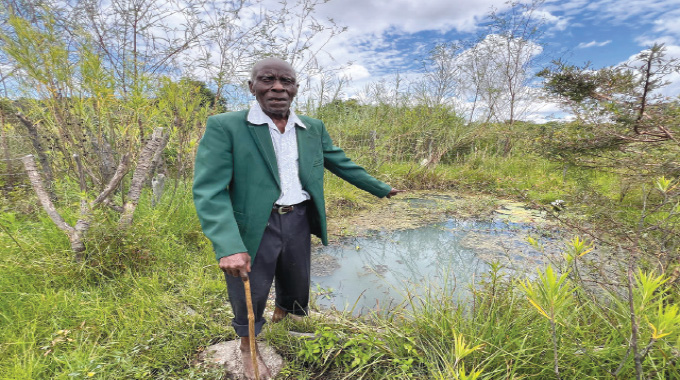
Sukulwenkosi Dube-Matutu, [email protected]
TRADITIONAL leaders should guide communities in taking a leading role in promoting the sustenance of wetland ecosystems, which play a key role in the survival of both humans and animals. Matabeleland South Provincial Affairs and Devolution Minister Albert Nguluvhe said this during the recent Provincial World Wetlands Day belated commemorations held at Manhange Wetland in Matobo District.
In a speech read on his behalf by environmental management officer in the Office of the President and Cabinet, Mrs Priviledge Nkomo, Minister Nguluvhe said the conservation of wetlands was vital for communities as it contributes to achieving the Sustainable Development Goals by 2030 and the attainment of Government’s Vision 2030.
He said water harvesting from wetlands can help reduce dependency on rain fed agriculture and support irrigation farming.
“Wetlands provide us with clean water, flood protection, and a home for vast biodiversity. This year’s theme speaks to the very heart of our identity as Zimbabweans. This theme also spotlights the timeless role of traditional knowledge in sustaining wetland ecosystems and preserving cultural identity. For centuries, our ancestors lived in harmony with these ecosystems.
“They understood the nature and flow of our rivers and the sacred nature of our springs. Today, we are not just talking about water and soil. We are talking about our history, our wisdom, and our future,” said Minister Nguluvhe.
This year’s commemorations were held under the theme: “Wetlands and Traditional Knowledge: Celebrating Cultural Heritage”, emphasising the need to accelerate conservation mainstreaming.
Minister Nguluvhe said wetlands are indispensable due to the countless benefits or ecosystem services they provide, including freshwater supply, food, building materials, biodiversity, flood control, groundwater recharge and climate change mitigation.
The country has committed to restoring 250 000 hectares of degraded ecosystems, with wetlands forming part of that target.
Minister Nguluvhe also urged the Environmental Management Agency (EMA), local authorities and development partners to deepen their engagement with traditional leaders in preserving wetlands.
“Wetlands are also essential for biodiversity. Though wetlands cover only around six percent of the earth’s land surface, 40 percent of all plant and animal species live or breed in wetlands. What is concerning is that wetlands are the most threatened ecosystem. The importance of wetlands conservation with traditional and indigenous knowledge systems at the centre cannot be over emphasised,” he said.
The importance of wetlands is highlighted in the National Development Strategy 2, which prioritises climate proofing the economy, with water and agriculture at the core.
According to the World Heritage and Ramsar Conventions, 64 percent of the world’s wetlands have disappeared since the beginning of the last century, and in most regions they continue to decline, compromising the benefits they provide to communities.
The Global Wetland Outlook also notes that wetlands are being lost three times faster than natural forests.
“Water harvesting from our wetlands can reduce the dependency on rain-fed agriculture and thus promote irrigation. So, let us as a community, district and province take note of the potential offered by wetlands in climate proofing our agriculture industry,” Minister Nguluvhe said.
Speaking during the same event, EMA acting provincial manager for Matabeleland South, Mr Gerald Muchanyerei, said wetlands have scientific properties that are crucial to the survival of both humans and animals.
“Wetlands improve our water quality and improve stream flow by intercepting surface run off and removing any impurities. They also offer flood protection as they store excess water and slowly release the water during dry seasons. They also offer economic benefits from the many plants and animal species found in wetlands.
“They also offer recreational, educational and research opportunities. If we destroy our wetlands we then deprive ourselves of all the ecosystem services I have mentioned. With a loss of our wetlands we then descend into perennial droughts and reduced food security,” he said.
Mr Muchanyerei said the agency does not restrict people from benefitting from wetlands, but communities are encouraged to utilise them safely. He urged communities to mainstream the use of wetlands into village planning and land use planning.
“People can embark on community projects instead of individual exploitative projects that bring more harm than good for the community. Avoid stream bank cultivation and site your gardens more than 30m from water sources. Fence off your wetlands to avoid wetland trampling by animals. Don’t dig within your wetlands as this disrupts wetland functions and leads to reduced water storage capacity,” he said.
— @DubeMatutu