Online Reporter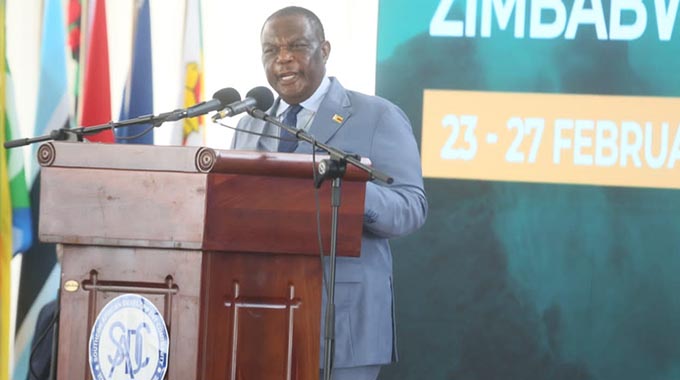
Rutendo Nyeve, [email protected]
SOUTHERN Africa must shift from being an energy‑deficient region to an energy‑surplus industrial hub, Vice-President Dr Constantino Chiwenga has said, adding that Zimbabwe is already positioning itself for that transition through far‑reaching reforms aimed at attracting private capital, liberalising the electricity market and achieving universal energy access by 2030.
Officially opening the second edition of the Southern African Development Community (SADC) Sustainable Energy Week in Victoria Falls on Wednesday, Vice-President Chiwenga outlined a roadmap to end Zimbabwe’s power shortages and seize opportunities created by the global shift towards clean energy.
“The global energy system is undergoing structural transformation. Capital flows are shifting and supply chains are being reconfigured. Strategic and critical minerals are redefining the Global Geopolitics as we enter a 4th Industrial Revolution,” he said.
“Southern Africa must not be a spectator to this transition, we must shape it. Therefore, we cannot remain behind while our God-given resources develop other already industrialised nations.”
Running under the theme, “Driving Regional Economic Growth Through Clean Energy and Energy Efficiency”, VP Chiwenga detailed a multi-pronged strategy that moves beyond traditional state-centric models by embracing private sector participation.
He said Zimbabwe is liberalising power generation to attract Independent Power Producers (IPPs) to accelerate project development and ease pressure on the national grid.
“We recognise the need to increase our access rate. Therefore, under National Development Strategy 2 and our Energy Compact, as we pursue universal access by 2030, we are liberalising generation to attract
Independent Power Producers, enabling direct power purchase agreements, expanding private sector participation in transmission and distribution, accelerating rural electrification targeting universal coverage of schools and clinics and mobilising domestic capital through structured engagement with local financial institutions,” he said.
VP Chiwenga said the approach marks a shift from a solely state owned utility structure, offering private players opportunities to participate across the generation, transmission and distribution value chain.
The introduction of direct power purchase agreements (PPAs) is expected to improve the bankability of energy projects, while mobilising domestic capital will create a more sustainable funding model.
Zimbabwe’s electricity access rate currently stands at about 62 percent, with rural access levels just above 20 percent. Achieving universal access by 2030 will depend heavily on the success of the reforms, particularly the accelerated rural electrification programme targeting every school and clinic.
Beyond Zimbabwe, VP Chiwenga urged the African continent and the SADC region to break from their historical role as exporters of raw materials.
He said Africa must aggressively pursue value addition to fully benefit from the global clean energy transition.
He challenged member states to determine whether the continent will remain a raw material provider or evolve into a value adding industrial hub within the clean energy supply chain.
The Vice President noted Africa’s paradox — despite holding nearly 60 percent of the world’s best renewable energy resources, the continent has harnessed only a fraction of its potential and continues to experience chronic power deficits.
VP Chiwenga also commended the SADC Centre for Renewable Energy and Energy Efficiency for its role in strengthening regional co-operation.
He cited strategic opportunities now emerging, including a Memorandum of Understanding promoting the peaceful application of nuclear science and technology in Africa, which he said would help build regulatory capacity and technical expertise.
VP Chiwenga further challenged key players — investment bankers, policymakers and academia — to play their part in accelerating progress.
“What is required now is execution, discipline and investment acceleration. If we act decisively, Southern Africa can transition from energy deficit to energy surplus, from commodity exporter to industrial hub, from climate vulnerability to climate resilience.
“Clean energy is no longer a future aspiration, it is an immediate economic strategy,” he said.
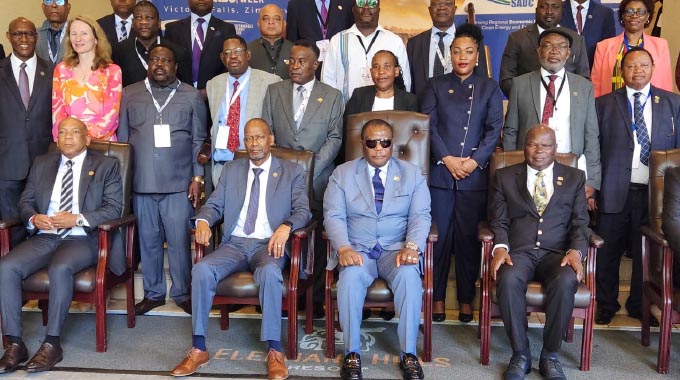
The second edition of the SADC Sustainable Energy Week began on Monday and ends tomorrow (Friday).


 Bongani Ndlovu