Online Reporter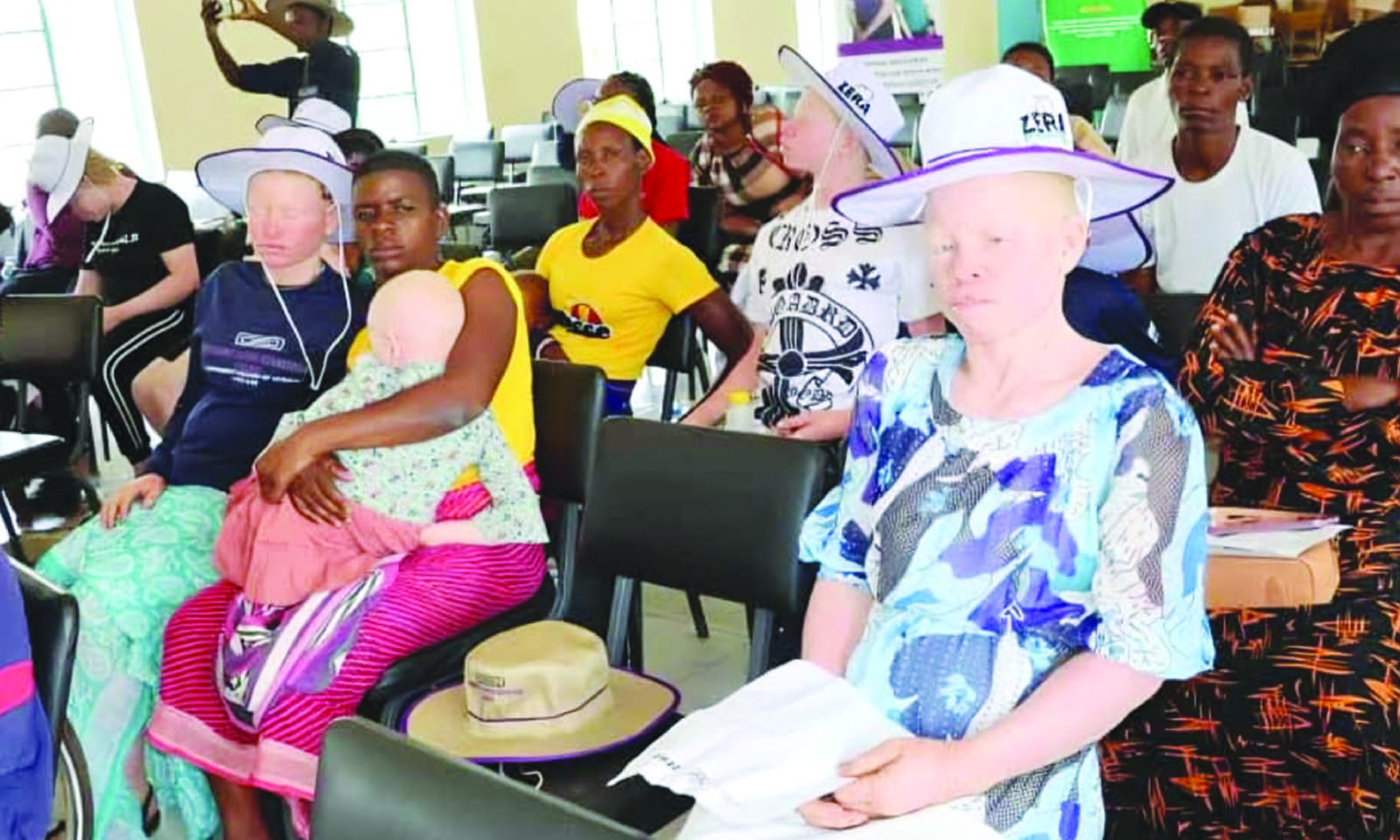
Fungai Lupande
Mashonaland Central Bureau
THE scorching heat sweeping through the border communities of Mbire has turned daily life into a struggle for people with albinism, forcing many into confinement within their homesteads as the sun becomes an ever-present threat.
From early morning until sunset, some people with albinism remain indoors, emerging only when necessary.
Every few minutes, they sprinkle themselves to cool down and protect their fragile skin from the harsh sun.
But this survival mechanism comes at a high cost. Parents are unable to engage in income-generating activities, while children are missing school, trapped indoors to avoid exposure that can cause severe burns and long-term complications.
Mobility is another major challenge. Poor eyesight makes it dangerous for people with albinism to travel alone, especially through wildlife-infested areas surrounding Mbire.
The journey to Mushumbi Business Centre, where basic services and assistance can be found, is fraught with fear of encounters with elephants, lions and other wild animals.
“We cannot move freely like others. The sun is dangerous for us and the roads are dangerous too,” said Mr Mamera Kadzingatsayi, a resident of Mbire living with albinism.
Mr Kadzingatsayi said high transport costs to Harare have worsened their situation, leaving many without sunscreen for extended periods.
“Bus fares are too high. Sometimes we go for months without sun protection because we cannot afford” he said.
“This exposes us to severe sunburns, and some wounds do not heal. Without proper medication, we end up using traditional herbs.”
He appealed for the establishment of a care group system, where one representative could travel to Harare to collect sunscreen and protective materials on behalf of others.
Beyond health, the confinement has had deep social consequences.
“We are stuck at home and this has also fuelled gender-based violence,” Mr Kadzingatsayi said.
“We are appealing for climate-friendly livelihood projects like poultry production so that we can contribute to household incomes.”
He expressed gratitude to organisations that have been mobilising and distributing sun protection materials, describing the support as life-changing.
People with albinism are particularly vulnerable to sun exposure, which can lead to severe skin damage and skin cancer.
Zimbabwe Albino Association (ZIMAS) director, Mrs Mercy Maunganidze-Chinanga, said every person with albinism has some form of skin damage.
“It can be an ulcer, a wound, a wart or a growth,” she said.
“Early detection saves lives. People with albinism must seek regular medical check-ups.”
Mrs Chinanga speaks from painful personal experience.
On November 25, 2023, her left leg was amputated after cancer spread to her tendons.
“The cancer had advanced, and my leg could not be saved. I urge parents to take children with albinism to clinics regularly. Do not nurse a wound for more than a week.”
She described cancer as the leading cause of death among people with albinism, stressing that early treatment can prevent fatal outcomes.
Mrs Chinanga said social challenges remain deeply entrenched, with many qualified people with albinism failing to secure employment.
“We cannot overcome these challenges alone. It requires a multi-sectoral approach to end stigma and discrimination,” she said.
Reflecting on her marriage to her late husband, Everisto Chinanga, she described a journey marked by resilience.
“It was not easy,” she said, expressing gratitude to her in-laws for accepting her.
She recalled painful moments during family gatherings when relatives would not allow her to cut vegetables.
“At face value, it looked like care, but it was discrimination,” she said.
“They did not want to eat food I touched.”
Instead of withdrawing, she chose to confront the stigma.
“I insisted on cutting tomatoes. Anyone who felt uncomfortable was free to eat elsewhere,” she said. “You need a thick skin to survive with albinism.”
Now a widow of 18 years, she said her in-laws continue to respect her.
Mrs Chinanga appealed to parents to love children with albinism and build their self-esteem.