

 admin
admin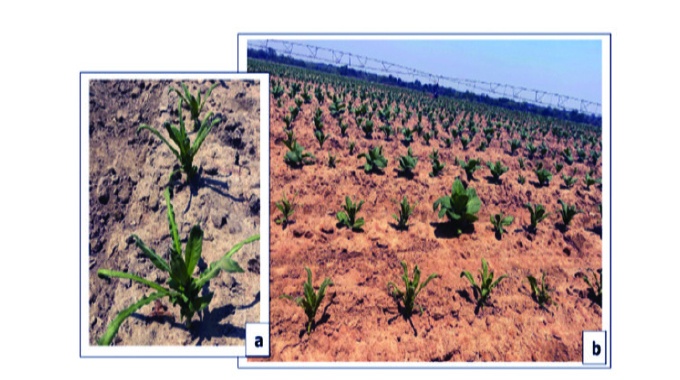
Edgar Vhera Agriculture Specialist Writer
WITH planting of the 2022/23 season dry land tobacco almost underway, the Tobacco Research Board (TRB) has urged farmers with the irrigated crop to be wary of an abnormal growth being exhibited by some of the plants.
In an advisory notice yesterday, TRB disclosed that there were several incidences of abnormally growing plants that had been observed on some farms under irrigated tobacco.
The affected plants are showing symptoms that include severe stunting and twisting/epinasty, cupping, curling and distortion of leaves. The distribution of affected plants in the field can be on rows or for the whole field.
According to TRB these symptoms and the observed distribution in the field are consistent with abiotic disorders (non-infective) most likely chemical phytotoxicity from some synthetic plant protection product.
TRB revealed that phytotoxicity cases can be caused by an incorrect dose application, an incorrect method of application and change in the formulation or source of the agrochemical. It can also stem from some contamination of a batch of an agrochemical.
The TRB is quickly undertaking investigations to establish the exact cause of the phytotoxicity and will advise of the outcome as soon as possible to prevent this from recurring in the dryland tobacco crop.
As a precautionary measure the TRB is urging affected growers not apply any chemical remedies as the problem is not a disease but an environmental disorder. They must, however, continue with irrigating their crops and ensuring optimal growth conditions while observing any positive changes.
However, depending on the severity of the problem and the grower’s assessment of the problem, the following four options are available;
(a) Leave as is – This is recommended where only a few plants are affected and the grower has noticed that the new top growth is normal. In this case it may be necessary to remove the bottom affected leaves and leave the new growth.
(b) Gap filling – This is an option where only a few plants are affected and the damage has been noticed early. However, growers must note that late gap filling will affect the uniformity of the crop and later plantings may not grow optimally as they will be smothered by the bigger plants.
(c) Replanting – This is an option where the problem is severe and the crop is not showing any signs of recovery. It is also only practical if additional seedlings are available.
(d) Ratooning – It has been observed that some of the badly affected plants totally fail to recover, but start producing normal and health looking suckers. An option in this case will be to ratoon the severely affected plant and encourage one sucker to grow. The downside to this option is that it will generally delay the crop and yield potential may be affected.
The TRB has deployed several teams around the country to collect information that will assist with establishing the cause of the problem.
TRB is also appealing to farmers to assist the team with information when they visit their farms.
Alternatively, growers with this problem can get in touch with the Plant Health Services Division on telephone 8688002604-ext 202, 206, 214 or 236 or toll-free, 0800 4511 or Email: [email protected] to request for a visit or to provide the required information.



 Online Reporter