Rumbidzayi Zinyuke-Senior Health Reporter
TREASURY has approved the release of about US$30 million for the procurement of a new batch of cancer diagnostic machines, as the Government accelerates efforts to strengthen oncology services in the country.
The greenlight comes as the first two low-energy cancer treatment machines, procured at a cost of about US$8 million from the Netherlands, have already arrived in the country, marking a significant milestone in the ongoing modernisation of public health infrastructure.
Procurement of the cancer equipment is being funded through proceeds from the Sugar Tax introduced in 2024, a fiscal measure aimed at curbing non-communicable diseases while ring-fencing revenue for critical health sector investments.
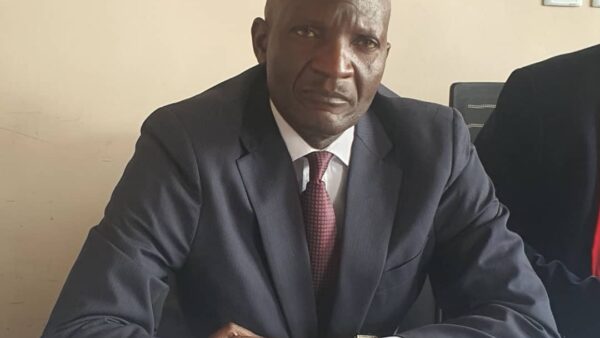
In an interview yesterday, Health and Child Care Minister Dr Douglas Mombeshora said Treasury approval allowed the Government to move into the second phase of the cancer equipment procurement programme.
“We now have authority to do the procurement for the second phase. We have been given permission by the Minister of Finance and we are looking at various pieces of diagnostic equipment to help in the diagnosis of cancer,” he said.
The latest investment comes at a time when Zimbabwe is witnessing a significant increase in cancer cases and other non-communicable diseases (NCDs) such as hypertension, diabetes and cardiovascular illnesses.
According to the National Cancer Registry, Zimbabwe recorded 7 841 new cancer cases in 2018 with women bearing a disproportionate burden.
Health experts have attributed the growing burden to changing lifestyles, urbanisation, dietary shifts and an ageing population, trends that have increased pressure on an already stretched public health system and heightened the need for improved diagnostic and treatment infrastructure.
Dr Mombeshora said the second phase of the procurement process will see the procurement of CT scanners for all five central hospitals and selected provincial hospitals, MRI machines for all central hospitals, as well as ultrasound and X-ray machines, among other essential diagnostic equipment.
“We are also going to be procuring mammograms to detect breast cancers which we will be deploying in all our central hospitals. So, I think we are moving,” he said.
While the second phase of the procurement programme will focus on strengthening early diagnosis of cancer, the first phase concentrated on expanding treatment capacity. Under the programme, four cancer treatment machines were procured.
Dr Mombeshora said the newly delivered machines now await installation, with construction of specialised radiation bunkers set to begin soon.
“We are very excited because the first two machines, low-energy machines, have arrived.
“They are now at NatPharm and work is going to start soon in terms of construction of the bunkers,” he said.
The bunkers are a critical component of the project, as the machines emit radiation and therefore require specially designed structures to ensure safety.
They protect both patients and the environment by preventing radiation leakage.
“Of the two machines that have arrived so far, one will be deployed at Mpilo Hospital and the other one will be at Parirenyatwa Hospital.
“So, we are now at the stage of construction of the bunker so that the equipment can be placed,” said Dr Mombeshora.
He added that the remaining two multi-energy linear accelerator machines, valued at about US$19 million, have already been manufactured and await pre-shipment inspection in the Netherlands.
“We are now waiting for the visas for the team that is going to go to the Netherlands for pre-shipment inspection and that will complete the procurement for the four machines that were done,” he said.
Dr Mombeshora acknowledged that delays had been experienced in the first phase due to manufacturing processes that only begin after payment of deposits.
“The challenge is that the suppliers of these machines only start manufacturing when we have paid the deposit.
“So, those were the delays but I can say we are now at a very advanced stage in terms of the equipment coming to Zimbabwe,” he said.
On the construction of radiation bunkers, the Minister said timelines could not yet be confirmed, but indicated that progress was expected soon following clearance of plans by the Public Works Department.
“The bunkers are going to take maybe three months but I cannot say exactly because it was part and parcel of the procurement system and I hope since they have already now cleared the plans and everything with the Public Works Department, work is going to start soon,” he said.