admin
admin
Nelson Gahadza
Senior Business Reporter
The Government plans to consolidate the Treasury’s reserves with the foreign exchange and mineral assets held by the Reserve Bank of Zimbabwe (RBZ) following the introduction of the Zimbabwe Gold (ZiG).
On Friday the RBZ introduced the ZiG), a structured currency anchored and fully backed by a composite basket of reserves comprising foreign currency and precious metals, mainly gold.
For more business news visit http://www.businessweekly.co.zw
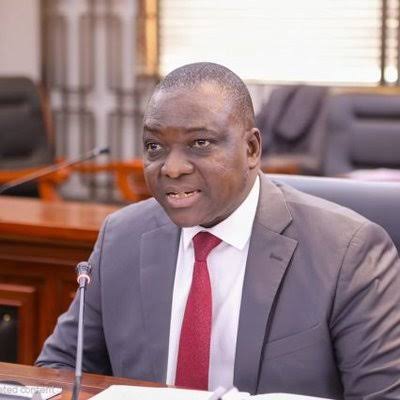
As of April 5, 2024, the central bank had foreign exchange reserves of US$100 million in cash and 2 522 kg of gold worth US$185 million to back the entire local currency component of reserve money, which stood at $2,6 trillion, requiring full cover of gold and cash reserves amounting to US$90 million. Finance, Economic Development, and Investment Promotion permanent secretary Mr George Guvamatanga said at the 2024 monetary policy statement breakfast meeting on Tuesday that going forward, there would no longer be need to have separate reserves.
“Over and above the US$285 million that is sitting at the central bank, the Government also has some reserves of around US$300 million that we call on if the US$285 million is fully utilised.
“Obviously, now that we have a stable currency, and we are moving with our de-dollarisation plan, we are planning to consolidate reserves into one.
“We are actually now going to look at whether we can consolidate what is sitting in Government (coffers) and what is sitting at the central bank into one single reserve at the central bank,” he said.
Mr Guvamatanga said the Treasury was ready to cooperate, coordinate, and complement what is being done by the monetary authorities, noting that the Reserve Bank remained independent.
“But there is no way we can work without cooperating. We almost have to talk to the governor on a daily basis, but that does not reduce his independence. We just have to collaborate and work together for the betterment of this economy,” said Mr Guvamatanga.
Already, some traders have started accepting ZiG currency after banks successfully configured their digital platforms and the shops reset their prices to the new currency.
Other traders are now at an advanced stage of migrating to the use of the new local currency, while mainstream large retailers are transacting in both ZIG and foreign currencies.
According to a market update by Zimswitch, which has already completed the rollout of the ZiG processing system, about 15 banks were live with the ZIG as of Wednesday.
Meanwhile, Mr Guvamatanga said since the coming of the Second Republic, the Treasury has not borrowed from the Reserve Bank and the central bank has never printed money on behalf of the Government.
“We have never paid the contractors, whether for roads, dams, or salaries for civil servants, on borrowed money or even on an overdraft.
“We simply operate a very strict cash budget and we only use revenues raised from taxes to support Government programmes,” he said.
He noted that during the time of the inclusive Government, the law said that the Government could borrow up to a maximum of 20 percent from the central bank.
“But when we came in, we lowered that to 5 percent, suffice to say, we have never borrowed even on that 5 percent because this has created problems for us in the past. We don’t intend to cause any problems for the Government by going back to borrowing, even on that 5 percent,” said Mr Guvamatanga.
He said the RBZ used to go out to various multilateral lenders to borrow money so that it could get the industry letters of credit and support them with money on the auction.
Mr Guvamatanga said many of the funds that were borrowed from those banks were not utilised by the Government and the US$4,5 billion spent in goods and equipment by the private sector is what we are today calling quasi-fiscal activities.
“As Government, we should expect the industry to give us back our money so that we repay the bank, but we haven’t, and we assume that we haven’t because we want the economy’s balance sheet to grow.
“But it explains to them why five years ago, 20 percent of goods that were available on our shelves were local and 80 percent foreign.
“Over the course of the past five years, it’s now 80 percent local, 20 percent foreign and we have even newer innovative products funded by the bank that we are no longer able to import,” he said.
According to Zimnat Asset Management Company, in its review of the 2024 monetary policy, the introduction of the new structured currency is a welcome development as the country needs a vibrant and stable local currency to support its economic growth aspirations.
The asset management firm said a stable local currency is crucial for enhancing export competitiveness and rebuilding foreign currency reserves, which act as an important economic shock absorber.
For more business news visit http://www.businessweekly.co.zw


 Online Reporter