Online Reporter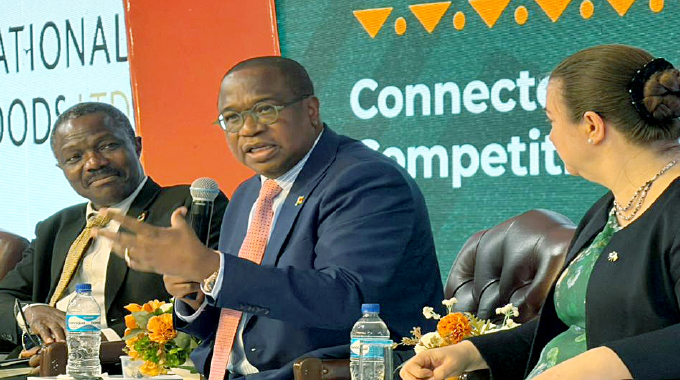
Rutendo Nyeve, [email protected]
FINANCE, Economic Development and Investment Promotion Minister Professor Mthuli Ncube, says the recent monetary policy interventions are already delivering tangible results, including reduced transaction costs and increased use of formal banking channels, improved liquidity circulation and renewed confidence in the country’s financial system.
Speaking at the Connect Africa Symposium held on the sidelines of the 2026 Zimbabwe International Trade Fair (ZITF) on Friday, Prof Ncube outlined a series of measures implemented by the Reserve Bank of Zimbabwe that are reshaping the financial landscape.
“Cash withdrawal charges are now capped at two percent for both USD and ZiG transactions, while point-of-sale (POS) charges have been reduced to a maximum of 1,5 percent, with a ceiling of US$20 per transaction and the elimination of minimum charges,” said Prof Ncube.
He further noted that RTGS transaction fees have been lowered, while several banking charges, including account balance inquiries, cash deposit fees and card issuance costs have been either eliminated or aligned to cost-reflective levels.
“These measures are already reducing transaction costs across the economy, promoting the use of formal banking channels, enhancing liquidity circulation and strengthening confidence in the financial system,” the minister added.
The reforms form part of a broader co-ordinated effort led by the Office of the President and Cabinet, with technical assistance from the World Bank, to improve the ease of doing business across 12 key sectors of the economy.
Prof Ncube also highlighted the introduction of a Targeted Finance Facility by the Reserve Bank to ensure productive sectors such as manufacturing, agriculture and SMEs continue to access affordable credit.
“This intervention is critical in supporting production while maintaining macro-economic and exchange rate stability,” he said.
This comes as Zimbabwe’s economy continues to outperform expectations. Following better-than-projected Gross Domestic Product growth of 7,5 percent in 2025, the country is targeting five percent growth in 2026, underpinned by normal-to-above-normal rainfall, currency and price stability, improved electricity generation and stable mineral commodity prices.
On the domestic front, Prof Ncube said the year has begun on a positive footing, with the country achieving single-digit local currency inflation for the first time in three decades.
“Our message to the investment community is clear: Zimbabwe is implementing practical, results-oriented reforms that make it easier, more predictable and more cost-effective to do business,” he said.
Prof Ncube further urged developing countries to build resilience against geopolitical tensions, including through diversifying trade partners, accelerating value addition on key minerals and expanding strategic fuel reserves from three months to at least six months of cover.
“We, therefore, invite investors, captains of industry, financiers and trading partners to take advantage of the opportunities emerging from these reforms,” he said.