onlinemedia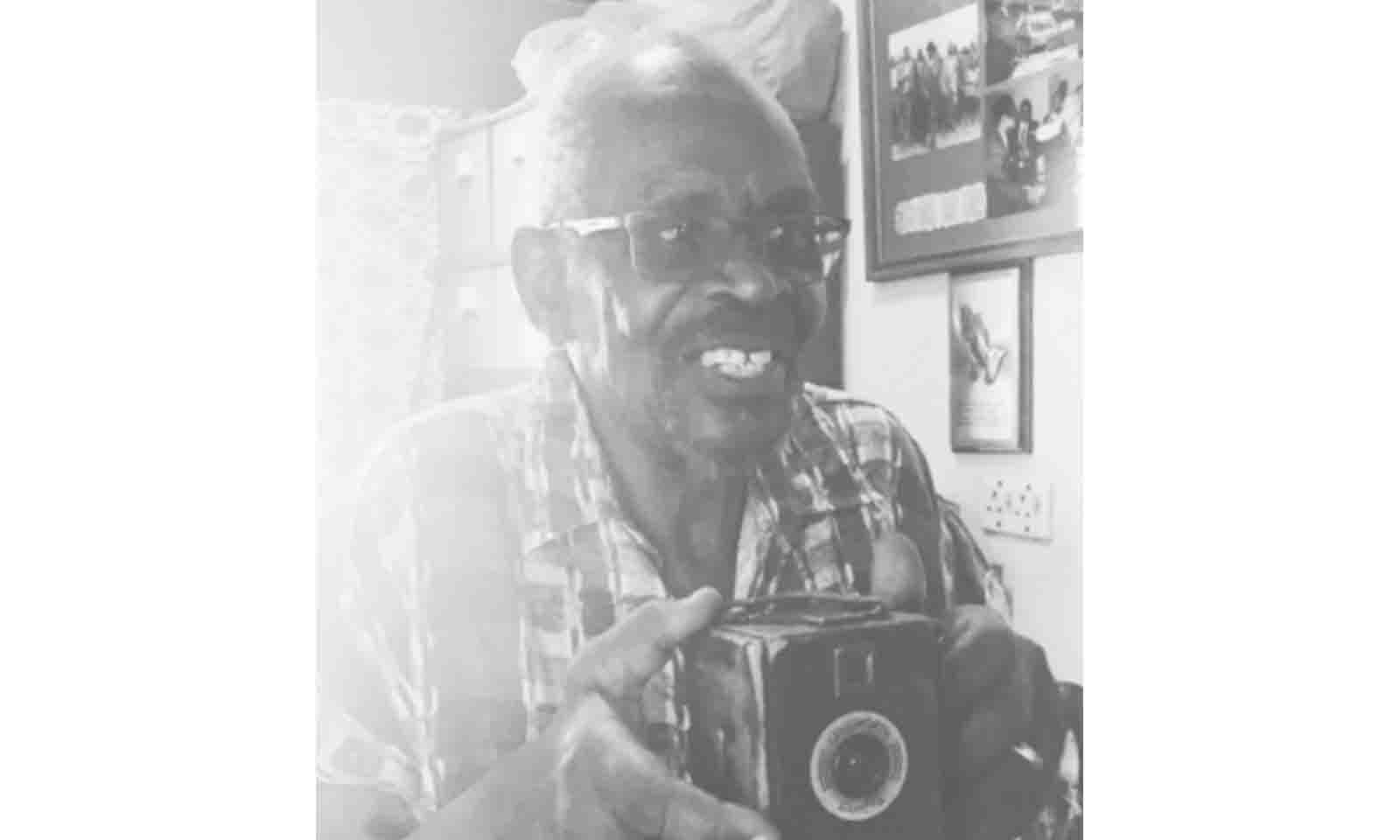
Trust Khosa
Zimpapers Arts, Entertainment Hub
His pictures — mostly in black and white- before the advent of colour photography — still hang on the wall of many old homes and it is only when you tip them over that you find a stamp and inscription “Picture By Betsa Kanyama”.
These memories from as early as late 1960s were captured through Kanyama’s camera lens right into the ’70s and ’80s when the colour pictures came in and a lot of youngsters were trained by him.
Today the brigade of park photographers you see are simply following in the footsteps of Kanyama.
But as the sun rose yesterday, news of the death of the iconic Kanyama spread.
Glowing tributes are pouring in for retired veteran photographer Kanyama, who passed away yesterday in Harare.
The pioneering Zimbabwean wedding and events photographer, researcher and filmmaker had been unwell for some time.
He was 93.
Leading the tributes, his son, Davis Kanyama, hailed him as a role model.
“We have lost a family man who was disciplined and well-mannered. He was a retired photographer who captured countless moments through his work. My father taught me to be resourceful, hardworking and focused,” he stressed.
“As a family, we are going to miss his wisdom and all the teachings he gave us as he raised us peacefully. He was the definition of what a real father should be. We have lost a loving dad, teacher and counsellor.”
Kanyama, who rose to prominence as a photographer in the 60s, was also regarded as a courageous individual by his son.
“He began his career during the colonial era and captured some of the most iconic photographs of that time. As a family, we have lost a pillar and a shield,” his son lamented.
Davis, who was set to return from South Africa last night, informed Zimpapers Arts and Entertainment Hub that burial arrangements would be announced upon his arrival.
“I am currently boarding a plane to Harare, where the burial arrangements will be disclosed. People in Harare are waiting for me and everything will be announced once I arrive,” he emphasised.
Family friend and Kanyama’s filmmaking mentee, Ernest Sando — better known as Tanga wekwa Sando — described Kanyama as a principled man who commanded respect in the community.
“Words are not enough to express how remarkable this person was. Growing up in Highfield, we looked up to him as a mentor, father figure and role model,” Sando shared.
“I was also friends with his son Davy, as we grew up together in Highfield. He introduced me to acting in my teens while I was also pursuing music, and I will always cherish those moments.”
Sando, who worked closely with Kanyama, urged the bereaved family to find comfort in the Lord during these trying times.
“We urge the family to be comforted and celebrate his legacy that he built many years ago. Living in the same neighbourhood with him before he relocated to Southerton was, in itself, a blessing to us. He will be missed and I fondly remember all the memories I had with him in both Highfield and Southerton,” he added.
Sentiments were echoed by his grandson, Tinashe, who was set to fly from the United Kingdom.
“I am his grandson, and I am about to board a plane to Harare for his burial in Zimbabwe,” said the grandson in a telephone interview.
In the colonial era, he also worked for The Daily News, which used to be the mouthpiece of rising nationalism in the country.
He represented his neighbourhood of Highfield with pride before relocating to Southerton as one of the first affluent black individuals who succeeded through photography.
Funeral arrangements are still underway. Known for his bravery, which earned him many accolades, Kanyama’s life as a photographer has left footprints that are hard to ignore.
On September 30, 2018, our sister paper, Sunday Mail, chronicled his journey as a photographer with the help of his widow, Hilda Kanyama, now 89 years old.
Kanyama, whose life revolved around photography, was hailed as a genius with a special calling for what he did.
As age caught up with him, Kanyama, revered as a “creator and captor of memories,” suffered from dementia, which affected his memory.
He will also be remembered by people of his generation for compiling the Parade Foto Action, a collection of photographs.
Avid readers will acknowledge him for his contributions to the original Daily News, the publication that was banned by the Ian Smith regime. This paper propped up nationalist movements during the colonial era.
When Zimbabwe gained its independence in 1980, Kanyama’s works dominated the pages of The Herald and The Sunday Mail.
He also covered State functions extensively, proving that he had mastered the art of photography.
To him, it was not just work but a religion, which allowed him to amass wealth during the colonial era.
Further research has shown that he was largely self-taught, after receiving his first camera as a gift from his father when he was a post office worker in Shurugwi.
“It must have been for his birthday. I am not sure why my father-in-law bought him a camera, but that was how he got into photography. He received that gift in 1947,” narrated Hilda in the same article.
Determined to evolve as a photographer, Kanyama eventually opened a small studio in Chitomborwizi, just outside Chinhoyi, where his father had acquired a small-scale commercial farm that still operates today.
“He would cycle to Gatooma (now Kadoma) from the farm to buy film, photographic paper and chemicals for his studio. It was there that Canaan Buchanan, then running a Kodak shop in the town, asked if he would like to join him.”
Using the same camera he received from his father in 1947, he rose from being a darkroom assistant in Kadoma and slowly established himself.
He received training from Buchanan, which enabled him to contribute photographs to The Daily News, then the mouthpiece of rising nationalism in the country.
His stint with The Daily News allowed him to make adventurous forays, driving to Sango Border Post, where Gonakudzingwa was located, to meet Joshua Nkomo and others. Kanyama was born a winner, coming fourth in the Asahi Pentax International Photo Contest in 1965 while working for Parade magazine.
The winning photo is still kept in his lounge, according to the same article.
He was never shy about upgrading himself, moving from Highfield after buying a house in Southerton.
“I stand to be corrected, but I think we were the first blacks to buy a house in Southerton, which was then reserved for Indians, Portuguese and other nationalities,” proudly recounted Hilda in the same article.
Besides the 1965 Asahi Pentax International award, in 1983 he won second prize in the USSR International Fellowship photo contest. In 1987, he was awarded an Excellence in Visual Arts gong by the National Gallery of Zimbabwe for his Baringa Exhibition.
In 1970, he published a photography manual, Kutora Mifananidzo, in Shona.
With the heroes month underway, individuals of Kanyama’s calibre, who served in the then Department of Information and Publicity with distinction, are hard to ignore.
He is survived by wife Hilda Kanyama, son Davis and six grandchildren.
Mourners are gathered at No. 37 Cavell Drive, Southerton, Harare.



 Online Reporter